
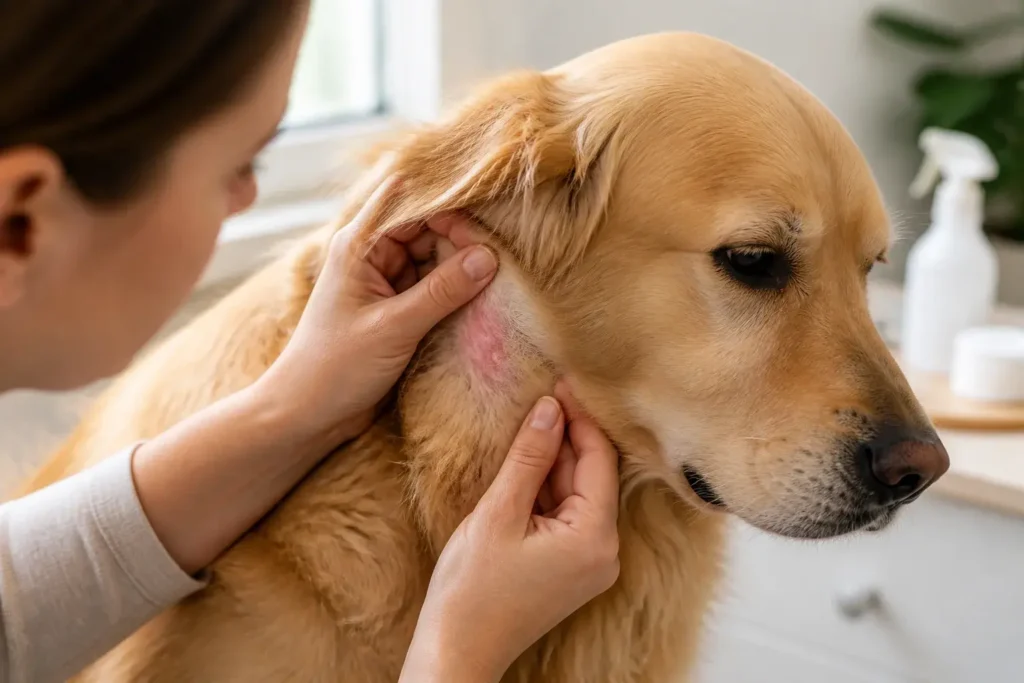
Your dog’s scratching like they’re auditioning for a DJ set. You’re worried, they’re miserable, and the couch is paying the price.
Good news: most dog rashes have clear fixes, and many are safe to try at home while you line up a vet visit.
Let’s walk through vet-approved remedies that actually help, when to DIY, and when to call the pros.
First, Spot The Rash: What Are We Dealing With?
You don’t need a microscope, but you do need a quick look. Different rashes call for different fixes, so start here:
- Red, itchy patches with hair loss: Often allergies, hot spots, or contact irritation.
- Small red bumps or pustules: Bacterial folliculitis or flea bites.
- Greasy flakes with odor: Yeast overgrowth, especially in skin folds.
- Ring-shaped patch with scaly edges: Possible ringworm. Contagious. Call your vet.
- Tiny black dots and intense tail-base itching: Flea dirt and flea allergy.
Red flags to call your vet ASAP: widespread rash, open wounds or pus, fever, lethargy, rash on the nose/eyes/genitals, or any swelling of the face. If you see those, skip the home hacks and get help.
Vet-Approved At-Home Remedies That Actually Work
These are safe for most dogs, but always test a small area first. If irritation worsens in 24 hours, stop.
1) Hypoallergenic Rinse: Diluted Chlorhexidine
Chlorhexidine 2 to 4 percent is a vet favorite for mild bacterial or yeast flare-ups.
- How to use: Use a chlorhexidine dog shampoo or wipe. For shampoo, lather, wait 5 to 10 minutes, rinse thoroughly. Use 2 to 3 times a week for 2 weeks, then taper.
- Why it works: It reduces surface bacteria and yeast without stinging.
- Pro tip: Avoid eyes and ears. If the skin looks raw or ulcerated, see your vet first.
2) Soothing Oat Bath
An oatmeal soak calms itch and redness for allergic rashes.
- How to use: Use a colloidal oatmeal dog shampoo or add plain, unscented colloidal oatmeal to lukewarm bathwater. Soak 10 minutes, rinse well, pat dry.
- Good for: Seasonal allergies, dry skin, post-flea-bite itch.
3) Topical Hydrocortisone 1% (Dog-Safe)
Great for hot spots and insect bites when the skin isn’t infected.
- How to use: Apply a thin layer of a pet-labeled hydrocortisone cream 1 to 2 times daily for up to 5 days.
- Rules: Prevent licking for 10 to 15 minutes. If your dog licks non-stop, use a recovery collar temporarily.
- Skip if: You see discharge, ring-shaped lesions, or deep wounds.
4) Antihistamines (With Your Vet’s Okay)
Some dogs respond well to plain antihistamines for allergy-driven itch.
- Common options: Cetirizine or diphenhydramine. Doses vary by weight, so ask your vet first. Many dogs need prescription meds like Apoquel or Cytopoint for real relief, FYI.
- Watch for: Drowsiness. Never use products that include decongestants or combo cold meds.
5) Flea Control: The Non-Negotiable
If you see fleas or flea dirt, treat the dog and the environment now.
- Use: A vet-recommended oral or topical preventive monthly. Treat all pets in the home.
- Clean-up: Vacuum daily for a week, wash bedding hot, consider an environmental spray approved for homes with pets.
6) Yeast-Prone Areas: Medicated Wipes
Skin folds, paws, chin acne, and tail folds love yeast and bacteria.
- Use: Wipes with chlorhexidine, ketoconazole, or miconazole 1 to 2 times daily for 1 to 2 weeks.
- Bonus: Keep folds dry with a soft cloth after walks or meals.
7) Paw Soaks For Lick-A-Lot Dogs
If your dog licks their paws after walks, try a gentle antiseptic soak.
- Recipe: Lukewarm water plus pet-safe antiseptic solution as directed on label.
- How long: 5 minutes per paw, then dry well and apply a barrier balm made for dogs.
Home Care Habits That Speed Up Healing
A few simple routines turn “itchy mess” into “fluffy cuddle bug” faster.
- Clip the fur around damp, raw spots with blunt-tipped scissors to let air reach the skin. Be gentle.
- Use an e-collar or recovery suit to block licking. Licking keeps rashes alive, IMO.
- Switch to a fragrance-free laundry detergent and skip fabric softeners for pet bedding.
- Wipe paws and bellies after grassy walks, especially during pollen season.
- Feed a complete, balanced diet and add omega-3s from fish oil with your vet’s guidance. Omega-3s support skin health and reduce inflammation.
When You Need Prescription Muscle
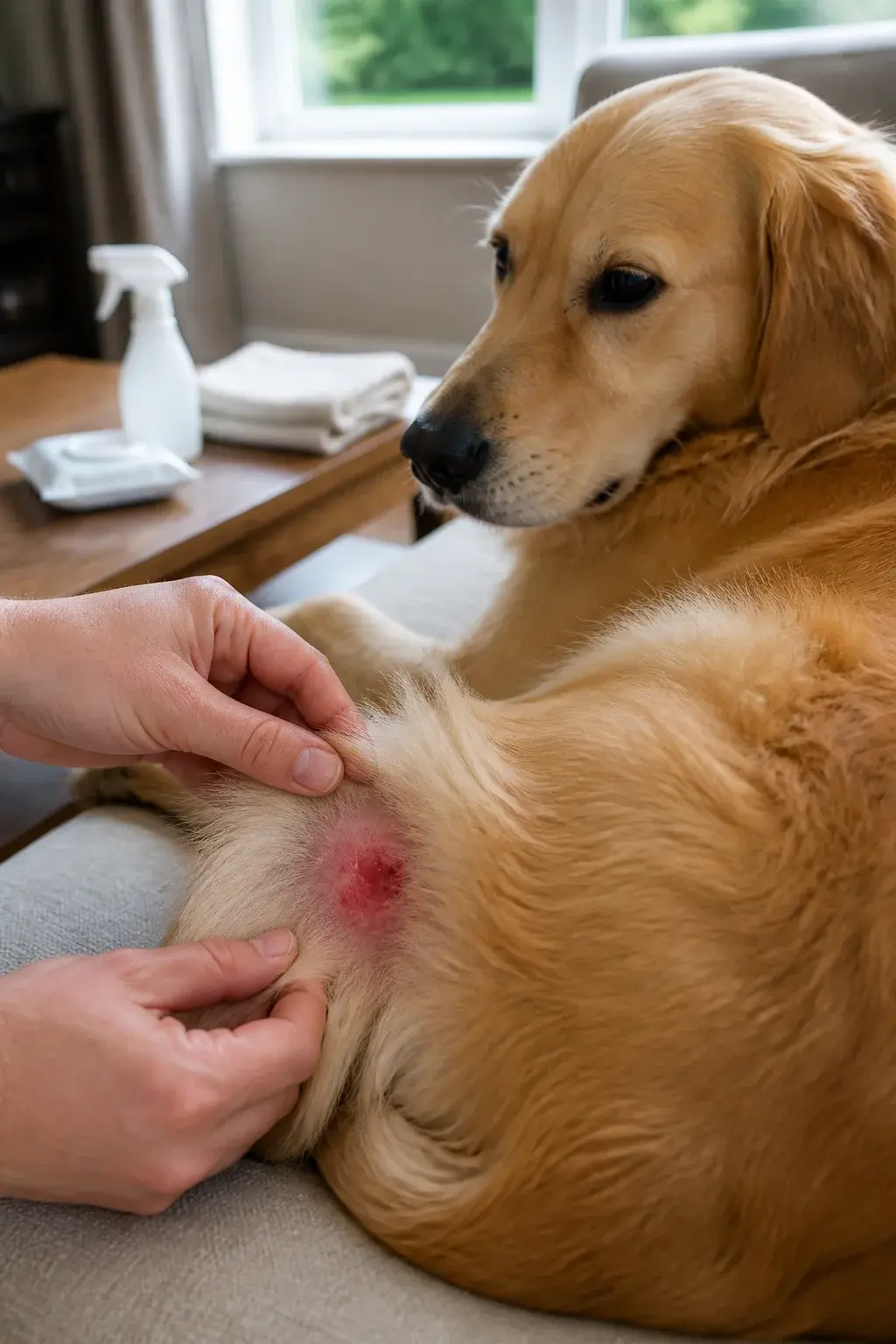
DIY has limits. Your vet may prescribe:
- Oral anti-itch meds: Apoquel, short steroid courses, or Cytopoint injections for allergic itch.
- Antibiotics or antifungals: For confirmed bacterial or yeast infections.
- Medicated shampoos: With stronger concentrations or combos, used on a schedule.
- Allergy workup: Food trial or skin testing for long-term control.
If the rash keeps coming back, consider allergies, mites, or hormonal issues. Recurring equals “let’s investigate.”
Safe Ingredients Vs. Hard No’s
Let’s keep it real: not everything “natural” is safe for dogs.
Safe, Dog-Friendly Options
- Colloidal oatmeal: Soothing for mild itch.
- Chlorhexidine 2 to 4%: Antiseptic for mild infections.
- Hypoallergenic moisturizers: Pet-formulated creams or sprays with ceramides or lipids.
- Hydrocortisone 1% (pet-labeled): Short-term relief for non-infected hot spots.
Hard No’s (Please Don’t)
- Tea tree oil: Toxic if ingested, even in small amounts.
- Undiluted essential oils: Irritating and risky.
- Hydrogen peroxide on skin: Delays healing and burns tissue.
- Human prescription creams: Many contain steroids or antibiotics unsafe for dogs.
- Homemade vinegar or bleach mixes: Just no. Your dog’s skin barrier will hate you.
Common Rash Types And What Helps
Quick matches so you’re not guessing forever.
Allergic Dermatitis (Seasonal or Environmental)
- Signs: Face, belly, paws itch like crazy; flare-ups during certain seasons.
- Try: Oat baths, paw rinses, antihistamines with vet approval, hydrocortisone on small spots, omega-3s.
- Vet may add: Apoquel or Cytopoint, allergy testing, prescription shampoos.
Flea Allergy Dermatitis
- Signs: Intense itch near tail base, red bumps, flea dirt.
- Try: Immediate flea control for all pets, chlorhexidine shampoo for secondary infection, soothing sprays.
Hot Spots (Acute Moist Dermatitis)
- Signs: Raw, wet, painful patch that grows fast.
- Try: Trim surrounding fur, clean with chlorhexidine, apply pet hydrocortisone if not infected, block licking. If large or oozing, see your vet for antibiotics.
Yeast Overgrowth
- Signs: Red-brown discoloration, musty smell, itch in folds or paws.
- Try: Antifungal wipes or shampoos with miconazole or ketoconazole, dry thoroughly after cleaning.
Contact Irritation
- Signs: Rash on areas that touched grass, cleaners, or new bedding.
- Try: Rinse with lukewarm water, mild shampoo, barrier balms on vulnerable areas before walks, switch to fragrance-free products.
Recovery Timeline And When To Pivot
You should see small wins fast if you picked the right remedy.
- 24 to 48 hours: Itching eases a bit. Less redness.
- 3 to 5 days: Visible healing on mild rashes. Less licking. Hair starts to look better.
- No improvement by day 3 or worse at any time: Call your vet. Time for cultures, skin scrapings, or a different plan.
FAQ
Can I use coconut oil on my dog’s rash?
You can use a tiny amount on dry, flaky areas if your vet approves, but it won’t cure infections and some dogs break out more. If your dog licks everything, skip it. I prefer ceramide-rich pet moisturizers because they support the skin barrier without the greasiness.
How do I stop my dog from licking the rash?
Use a comfy recovery collar or a soft surgical suit. Keep sessions of medicated wipes or creams short and distract with a lick mat or puzzle feeder. Licking equals longer healing time, FYI.
My dog keeps getting rashes. Is it food?
Maybe, but environmental allergies cause far more flare-ups than food. If your vet suspects food allergy, they’ll guide a strict 8 to 12 week elimination diet with a hydrolyzed or novel protein. Random food switches won’t answer the question.
Are human hydrocortisone creams safe?
Only if they are plain 1% hydrocortisone with no added salicylates or zinc and only if your vet gives the green light. Pet-labeled products are safer. Always prevent licking and avoid eyes and genitals.
What if my dog’s rash smells bad?
Odor usually means yeast or bacterial infection. Use antiseptic or antifungal shampoos and wipes and plan a vet visit, because moderate to severe infections need prescriptions to clear completely.
Does bathing make rashes worse?
Too many baths dry the skin, but properly using a medicated shampoo 2 to 3 times weekly for a short course helps a lot. Always rinse thoroughly and dry gently. In between, use targeted wipes rather than full baths.
The Bottom Line
You can calm most mild dog rashes with smart, vet-approved steps: gentle antiseptics, soothing soaks, flea control, and anti-itch support. Block the licking, keep things clean and dry, and watch for quick improvement. If the rash spreads, smells, oozes, or just won’t quit, your vet brings the stronger tools. IMO, a little structure and a lot of love turn “itchy chaos” into “happy snooze” fast.
About the Author

David
Blogger/YouTuber
A guitar nerd, the myth, the legend.