

Golden Retrievers have that uncanny ability to walk into a room and make everyone smile. They’re sunshine in fur form, with manners your grandma would approve of.
If you’ve wondered whether a Golden fits your crew, let’s talk about what life actually looks like with one. Spoiler: it involves tennis balls, belly rubs, and a lot of happy chaos.
The Golden Personality: Big Hearts, Bigger Smiles
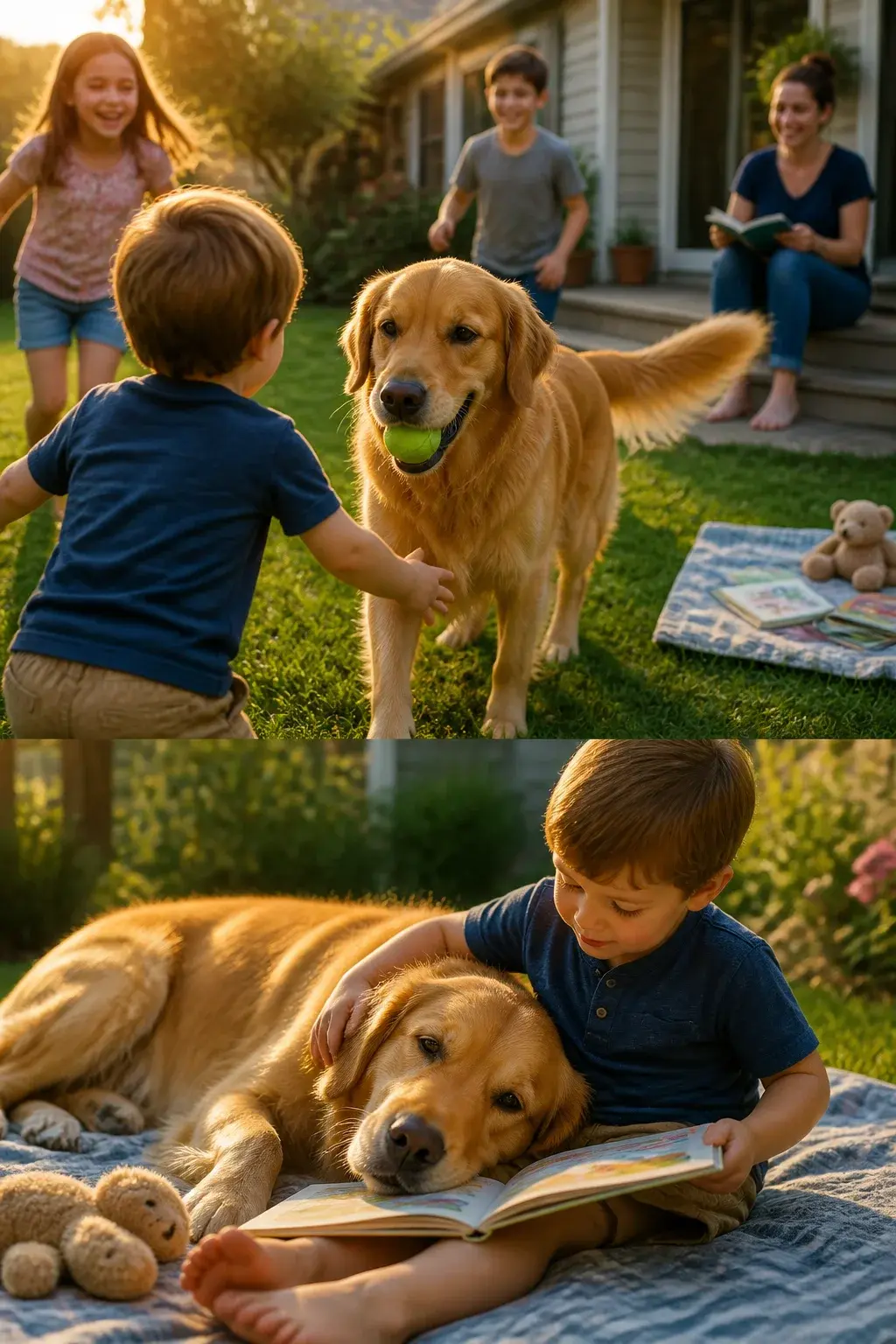
Goldens love people like it’s their full-time job. They don’t just tolerate kids, they thrive with them. They’ll play gentle chase in the yard, then flop down and become a fuzzy pillow for story time.
They aim to please and read the room fast. Wild toddler energy? They match it. Quiet Sunday afternoon? They’ll curl up and nap. That flexibility makes them amazing family companions.
Affection Without Neediness
Goldens want to be near you, but they don’t meltdown if you leave the room. Give them structure and attention, and they’ll settle beautifully. They’re velcro-ish, not clingy.
Trainability That Makes Life Easy
These dogs rank as some of the easiest to train. They love treats, praise, and jobs. That combo means you can teach good manners quickly and keep them mentally fulfilled.
Start early with simple cues like sit, down, wait, and leave it. Keep sessions short, upbeat, and consistent. They’ll ace the basics and happily learn party tricks like “spin” or fetching specific toys.
Kid-Friendly House Rules
– Practice “four on the floor” to curb jumping on excited visitors.
– Teach a soft mouth with treat hand-feeding and gentle tug play.
– Use “place” to send your Golden to a mat when the doorbell rings.
– Rotate toys so they stay interesting and outcompete your kid’s socks.
Energy Levels: Fun, Not Frenetic
Goldens bring healthy energy, not chaos. They need daily activity, but you don’t need marathoner legs. Think a solid walk, fetch, some training games, and chill time with the family.
Ideal daily rhythm:
– Morning: 20–30 minute walk plus 5 minutes of training.
– Afternoon: Quick backyard fetch or puzzle toys.
– Evening: Another walk or play session, then couch snuggles.
Weather and Exercise Tips
– Heat sensitive: Walk early or late, bring water, and stick to shade.
– Rainy day plan: Nose work, hide-and-seek, and stuffed Kongs keep minds busy.
– Growth plates: For puppies, keep high-impact exercise minimal until about 12–18 months. Short, fun bursts beat long jogs.
Gentle With Kids, Goofy With Everyone
Goldens don’t take themselves too seriously. They’ll parade around with plushies, do the classic full-body wag, and roll over for applause like furry comedians. Kids love that, and honestly, so do adults.
Teach kids how to greet politely: approach from the side, scratch the chest or shoulders, and avoid ear pulling. Mutual respect equals magical bonds.
Social Butterflies Done Right
– Early socialization with strollers, bikes, and friendly strangers pays off.
– Positive exposure to other dogs helps shape that calm park etiquette.
– Invite friends over for “training parties” so your pup practices manners with distractions.
Grooming: Fluff Happens, But You’ve Got This
Yes, they shed. A lot. You’ll find “Golden glitter” on your leggings and probably in your coffee. The good news? A simple routine keeps it manageable.
Easy grooming game plan:
– Brush 3–4 times a week with a slicker brush and metal comb.
– Bathe every 4–8 weeks with a gentle dog shampoo.
– Trim feathering and paws for a tidy look.
– Check ears weekly and keep them dry to prevent infections.
– Nail trims every 2–3 weeks. Your hardwood floors will thank you.
Seasonal Shedding Survival
– During spring and fall coat blows, brush daily and use a de-shedding tool lightly.
– Add omega-3s (vet-approved dose) to support coat health.
– Vacuum once or twice a week and embrace washable throws. Sanity preserved.
Health and Longevity: Plan Smart, Love Longer
Goldens typically live 10–12 years. With good care, many stay spry well into their senior seasons. They can face breed-specific risks, so proactive care matters.
Common considerations:
– Hips and elbows: Keep puppies lean, avoid repetitive jumping, and discuss screening if you’re adopting from a breeder.
– Skin and ears: Dry thoroughly after swims and address itchiness early.
– Cancer risk: Regular vet checks, healthy weight, and a clean lifestyle help you catch issues early.
Nutrition Basics That Work
– Choose a complete, AAFCO-compliant dog food that fits your dog’s life stage.
– Keep them lean. You should feel ribs without digging and see a waistline.
– Treats: Up to 10 percent of daily calories is fine. Use training treats you can break into tiny pieces.
Dog-Safe “Recipe” Ideas
Not a full meal replacement, just fun toppers and treats:
– Frozen Kong: Plain unsweetened yogurt, mashed banana, and a few blueberries. Freeze and serve.
– Broth cubes: Freeze low-sodium, onion-free chicken broth into ice cubes for hot days.
– Crunchy topper: Steamed, plain green beans and carrots chopped small.
Always avoid onions, garlic, grapes, raisins, xylitol, chocolate, alcohol, and anything seasoned with heavy salt or spices.
Adaptable Lifestyles: Suburbs, Cities, and Everything Between
Goldens don’t demand a giant yard. A moderate space plus daily walks and play keeps them content. They shine in busy households, and they also chill with retirees who love strolling and puzzle games.
Apartment success tips:
– Elevator socialization early.
– Good chews and puzzle feeders during work calls.
– Midday potty breaks. Hire a walker if needed.
Travel and Adventures
– Crate train for safe car rides.
– Pack a go-bag: collapsible bowl, water, long line, poop bags, towel, and a familiar toy.
– Teach a solid recall and “wait” before exploring hiking trails.
Choosing Your Golden: Rescue or Breeder
You can’t go wrong if you pick thoughtfully. Rescues often have wonderful adults who already know house rules. Reputable breeders prioritize health testing and stable temperaments.
What to look for:
– Health clearances: Hips, elbows, eyes, and heart.
– Clean, cheerful facilities and transparent communication.
– Curious, confident puppies raised with enrichment.
– For rescue, ask about foster notes on energy, house training, and kid compatibility.
Set Your Household Up for Day-One Wins
– Baby gates to manage freedom.
– A comfy crate and a quiet rest area.
– Two or three chew options: rubber toy, rope, and a safe edible chew.
– A schedule for meals, potty, and play. Consistency beats chaos.
FAQ
Do Golden Retrievers bark a lot?
Most Goldens bark to alert or invite play, not to serenade your neighbors at 2 a.m. Give them plenty of exercise, teach “quiet,” and manage triggers like window patrol. Boredom causes most nuisance barking, so keep minds busy.
Are Golden Retrievers good with toddlers?
Yes, with supervised interaction and basic training. Teach toddlers to pet gently and respect nap time, and teach your Golden calm greetings and a go-to “place.” That combo keeps everyone safe and happy, IMO.
How much exercise does a Golden need daily?
Plan for about 60–90 minutes split into chunks, plus mental work like training or puzzles. Puppies need shorter, age-appropriate play with lots of naps. Seniors still enjoy sniffy walks and gentle games.
Do Golden Retrievers get along with other pets?
Usually yes. Their friendly nature pairs well with other dogs and even cats. Use slow introductions, scent swapping, and baby gates to keep early meetings mellow. Treat calm behavior generously.
What’s the biggest mistake new Golden owners make?
Underestimating how much their brains need work. You’ll nail exercise, but don’t skip training and enrichment. Ten minutes of practicing cues and a puzzle toy can defuse chaos better than a second long walk, FYI.
Can a Golden stay home while I work?
Yes, with a routine. Morning exercise, a safe space with chews, and a midday break set you up for success. Consider dog walkers, doggy day care a couple days a week, or playdates to keep things balanced.
Conclusion: The Family MVP With a Feathered Tail
Golden Retrievers bring easy affection, eagerness to learn, and a goofy spirit that fits right into family life. They handle kid chaos, live for your approval, and cuddle like professionals. Give them structure, exercise, and a brush that sees regular action, and you’ll have a best friend who brightens every day. If you want a loyal teammate and a little more joy in your routine, a Golden might just be your perfect match.
About the Author

David
Blogger/YouTuber
A guitar nerd, the myth, the legend.