You adore your dog, but that funky “eau de puddle” scent? Not so much.
Good news: you can get your pup clean, soft, and fresh without turning bath time into a wrestling match.
Let’s break down simple, dog-safe steps that keep fur healthy, shiny, and cuddle-worthy every day.
Know Your Pup’s Coat Type First
Not all fur behaves the same. Your cleaning routine depends on your dog’s coat, so let’s keep it tailored and drama-free.
- Short/Single-Coated: Think Beagles or Boxers. Easy to wash, quick to dry, but still need regular brushing to remove dead hair and dirt.
- Double-Coated: Huskies, Shepherds, Labs. They shed in seasons and trap undercoat. You’ll focus on de-shedding tools and thorough rinsing.
- Curly/Wooly: Poodles, Doodles. Mats happen fast. You’ll brush before bathing and use a conditioner to prevent tangles.
- Silky/Long: Yorkies, Afghan Hounds. Gentle brushing daily, frequent detangling, and careful drying keep that glam look.
- Wire-Coated: Terriers. Hand-stripping exists, but for basic home care you’ll brush, wash, and keep it textured with the right shampoo.
Why Coat Type Matters
The wrong tools can cause discomfort and damage. The right ones save time and tears. FYI: double-coated dogs do not need shaving for cleanliness. A good bath and de-shed session works wonders.
Gear Up: What You Actually Need
Skip the 20-piece influencer grooming haul. You only need a few proven basics.
- Dog-Safe Shampoo: Gentle, pH-balanced, no human shampoo. Sensitive skin or oatmeal formulas work for most pups.
- Dog Conditioner or Detangler: Especially for curly, long, or easily tangled coats.
- Brushes/Combs: Slicker brush for most coats, undercoat rake for double coats, metal comb for finishing and checking mats.
- Non-Slip Bath Mat: Reduces stress and keeps paws steady.
- Large Towels and/or a Pet Dryer: Human hairdryers can run too hot. If you use one, keep it on cool or warm and move it constantly.
- Cotton Balls: Lightly shield ears from splashes. Do not shove them deep.
- High-Value Treats: Peanut-butter on a lick mat is basically spa bribery. It works.
Brush Before You Soak
Always brush first. Water tightens mats like glue, and then you’re in for a long night.
- Check for Tangles: Use your comb to find small knots behind ears, under the collar, armpits, hind legs, and tail base.
- Detangle Gently: Spritz a dog-safe detangler. Hold hair near the skin and work from the tips inward to avoid yanking.
- De-Shed: For double coats, use an undercoat rake with light pressure. Stop if you see irritation.
Mat Triage 101
Small mat? Work it apart with your fingers and a comb. Big felted mat? You might need a groomer to avoid hurting your pup. IMO, safety beats stubbornness every time.
Bath Time: Clean Without Drama
We’re aiming for clean, not chaos. Prep the space and keep calm energy. You’re the steady ship; your dog is the adorable storm.
- Water Temp: Lukewarm. Think baby bath, not hot tub.
- Ear Safety: Lightly place cotton in the outer ear. No deep stuffing. Keep water away from ear canals.
- Rinse First: Wet thoroughly from neck to tail. Lift the fur to reach the skin, especially on thick coats.
- Shampoo Dilution: Mix shampoo with water in a squeeze bottle. It spreads easier and rinses cleaner.
- Massage, Don’t Scrub: Work from neck down, chest, belly, legs, tail. Use gentle circles to lift grime and help circulation.
- Face Care: Use a damp cloth around eyes and muzzle. No direct spray to the face.
- Rinse Twice: Keep rinsing until water runs clear, then rinse again. Residue causes itchiness and dullness.
- Condition If Needed: Especially for curly/long coats. Let it sit a couple minutes, then rinse thoroughly.
Pro Tip: The Final Rinse
Run your hand along the grain of the fur. If you feel any slickness, keep rinsing. Residue equals post-bath scratchies and a sad, itchy pup.
Drying Done Right
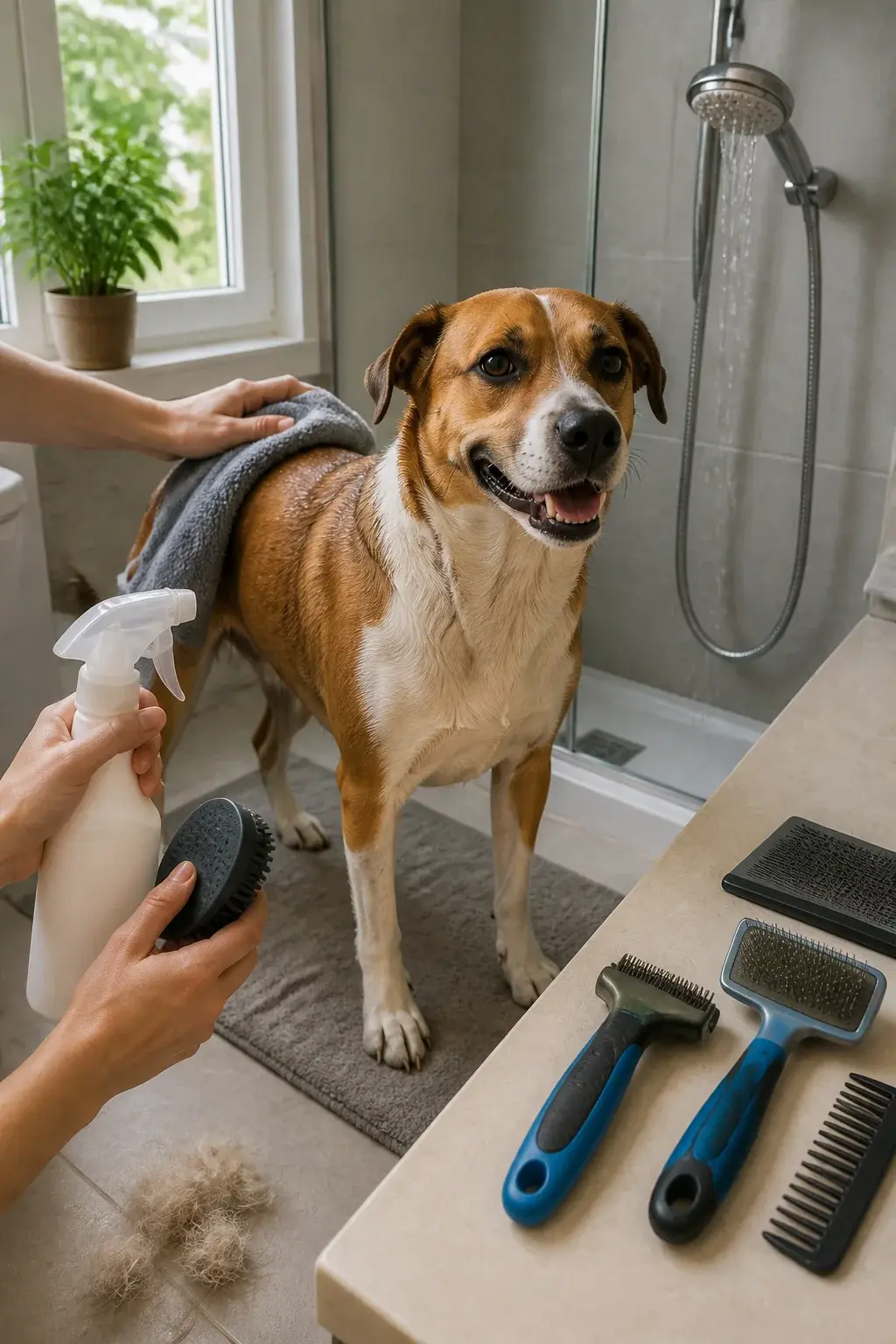
Don’t stop at “mostly dry.” Damp coats invite odor and tangles.
- Towel Sandwich: Press, don’t rub. Rubbing frizzes fur and tightens knots.
- Air vs. Dryer: Air-drying works for short coats on warm days. For thick, curly, or long coats, use a pet dryer or a human dryer on cool or warm with constant movement.
- Brush While Drying: Slicker for curly/long coats, undercoat rake for doubles. Work in sections to avoid tangles.
- Paws and Pits: Dry these hot spots first to prevent moisture rash.
Fluff With Purpose
For curly coats, brush upward as you dry to prevent tight curls from matting. For double coats, dry all the way to the skin. If the undercoat stays damp, that “dog smell” returns fast.
Between-Bath Maintenance That Saves Your Sanity
Bathing too often strips natural oils, so let maintenance do the heavy lifting.
- Brushing Schedule: 2–3 times a week for most dogs. Daily for curly and long coats.
- Spot Cleans: Muddy paws? Use a damp cloth or dog wipes. Keep it chill and quick.
- Deodorizing Spritz: Dog-safe spritzes add shine and freshen up. Avoid heavy perfumes.
- Paw Care: Trim fur between pads if it mats or traps debris. Check for burrs after hikes.
- Nutrition Matters: Omega-3s from fish oil support skin and coat health. Ask your vet for dosing.
How Often Should You Actually Bathe?
– Short coat: Every 4–8 weeks, or when dirty
– Double coat: Every 6–10 weeks, plus regular de-shedding
– Curly/long coat: Every 3–6 weeks, especially with frequent brushing and trims
Adjust for lifestyle. Beach dog? More rinses. Couch potato? You can stretch it.
Common Mistakes To Avoid
Let’s dodge the usual bath blunders.
- Using Human Shampoo: Wrong pH, can dry and irritate dog skin.
- Skipping the Pre-Brush: Traps mats and makes them worse.
- Half-Rinsing: Residue equals itchiness, flakes, and dull fur.
- Hot Dryers: Can burn skin. Keep it cool or warm and always moving.
- Water In Ears: Increases risk of ear infections. Be gentle and keep the face area cloth-cleaned.
- Overbathing: Strips oils and triggers flaky skin. Let brushing do the daily work.
Make It Positive: Training Tips For Stress-Free Baths
Bath time doesn’t need to feel like a soap opera. Build good vibes.
- Start Slow: Introduce the tub dry. Reward for stepping in. Then add water later.
- Use A Lick Mat: Smear dog-safe peanut butter on a suction lick mat at snout height.
- Short Sessions: End before your dog panics. Lots of praise and treats.
- Consistency: Same spot, same tools, same routine. Predictability lowers anxiety.
- Post-Bath Party: Playtime or a walk after drying seals the positive association.
When To Call A Pro
Severe matting, impacted undercoat, sensitive skin, or if your dog simply loathes the tub. Groomers have tools, dryers, and techniques that make it faster and safer.
FAQs
Can I use baby shampoo on my dog?
You can in a pinch, but it’s not ideal. Dogs have different skin pH than humans. Use a dog-specific shampoo for routine baths so you protect the skin barrier and avoid dryness or irritation.
How do I reduce shedding after a bath?
Brush before the bath, then again while drying. Use an undercoat rake on double coats and be thorough with rinsing and drying to lift loose hairs. A healthy diet with omega-3s also helps reduce excessive shedding over time.
What if my dog hates the sound of the dryer?
Desensitize slowly. Start with the dryer off in the same room, reward calm. Turn it on far away at a low setting, reward, then move closer over a few sessions. If your dog still panics, towel dry thoroughly and air dry in a warm room, brushing as you go.
How do I clean my dog after swimming in a lake or the ocean?
Rinse with fresh water ASAP to remove minerals, algae, and salt. Follow with a gentle shampoo if there’s a smell or visible grime, then condition if your dog’s coat tangles easily. Dry fully, especially the ears and undercoat, to prevent odor and irritation.
Is a blowout necessary for double-coated dogs?
It helps a ton. After a bath, a cool or warm air dryer plus an undercoat rake loosens and removes trapped undercoat. That reduces shedding tumbleweeds in your house and keeps the skin breathing.
What’s the best way to clean my dog’s face safely?
Use a soft, damp cloth. Avoid direct spray. For tear stains or beard gunk, use a dog-safe face wash, rinse with a cloth, and dry gently. Check folds on brachycephalic breeds and keep them clean and dry to prevent irritation.
Wrapping It Up
Clean, healthy fur starts with the basics: the right tools, a good pre-brush, thorough rinsing, and careful drying. Keep sessions positive and short, and let brushing do the daily heavy lifting. Stick with dog-safe products, watch the ears, and you’ll have a sweet-smelling, soft, happy pup in no time. And yes, you absolutely deserve a victory snack after bath time too. Your dog agrees.
About the Author

David
Blogger/YouTuber
A guitar nerd, the myth, the legend.