
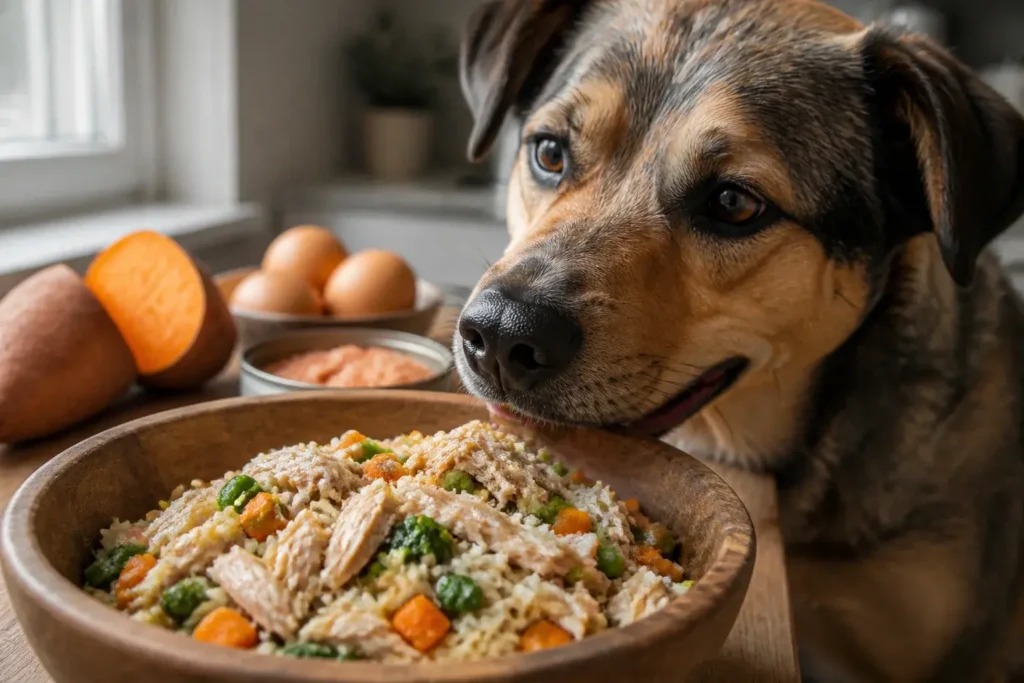
Skip the pricey boutique kibble and cook meals your dog actually loves. You’ll save money, control ingredients, and get those happy tail thumps at dinner.
We’ll cover balanced, budget-friendly recipes and smart swaps you can make from your pantry.
No weird additives, no mystery meats — just whole foods your dog can digest and enjoy.
Why Bother Making Dog Food at Home?
You know exactly what goes into the bowl. That means fewer fillers and more real nutrition. Plus, homemade meals help picky eaters, sensitive stomachs, and pups who need you to manage weight or allergies.
Homemade doesn’t need to get complicated. Think simple proteins, digestible carbs, and colorful veggies. You can batch-cook on Sunday and freeze portions for the week. Easy.
Quick note: Always introduce new foods slowly over 3 to 5 days. If your dog has medical issues, talk to your vet first, IMO.
Core Building Blocks: Keep It Balanced
Dogs need protein, carbs, healthy fats, fiber, vitamins, and minerals. You can nail that on a budget with smart choices.
- Protein: Chicken thighs, ground turkey, lean beef (80–90%), eggs, canned salmon in water, sardines in water.
- Carbs: White rice, brown rice, oats, quinoa, sweet potatoes, plain pasta (small amounts).
- Veggies: Carrots, green beans, peas, spinach, pumpkin puree, zucchini, broccoli florets.
- Healthy Fats: Salmon oil, olive oil, sardines. Seeds like chia or ground flax in tiny amounts.
- Extras: Plain kefir or yogurt (unsweetened), low-sodium bone broth, blueberries, apples (no seeds).
Aim for a rough ratio: about 40% protein, 50% carbs/veg, 10% healthy fats. This is a general guide, not medical advice. Puppies, seniors, and dogs with conditions need tailored plans.
Foods to Avoid, FYI
Absolutely skip: onions, garlic, chives, leeks, grapes, raisins, chocolate, xylitol, alcohol, macadamia nuts, cooked bones, high-salt deli meats, avocado pits/skin, excessive dairy, over-seasoned or spicy foods.
Budget-Friendly Recipes Your Dog Will Love
I built these for affordability and simplicity. Each recipe makes about 6 to 8 cups. Portion based on your dog’s size and activity level. Freeze extras in meal-sized containers.
1) Chicken, Rice, and Veggie Comfort Bowl
- Ingredients: 2 lb chicken thighs (skin removed), 2 cups white rice, 2 cups chopped carrots and green beans, 1 tbsp salmon oil (added after cooking), 4 cups water or low-sodium chicken broth.
- Method: Boil chicken until cooked through, shred. Cook rice in broth/water. Steam veggies until soft. Combine and cool, then stir in salmon oil.
- Why it works: Gentle on tummies, easy on wallets, great for most adult dogs.
2) Turkey, Oats, and Pumpkin “Meatloaf”
- Ingredients: 2 lb ground turkey, 1.5 cups rolled oats, 1 cup plain pumpkin puree, 2 eggs, 1 cup chopped spinach, 1 tbsp olive oil.
- Method: Mix everything, press into a lined loaf pan, bake at 350°F for 35–45 minutes. Cool, slice, portion.
- Why it works: High-protein, fiber-rich, and very freezer-friendly.
3) Beef, Sweet Potato, and Pea Skillet
- Ingredients: 1.5 lb lean ground beef, 2 large sweet potatoes (cubed), 1 cup frozen peas, 1 tsp ground turmeric, 1 tbsp sardines-in-water mashed (optional for omega-3s).
- Method: Brown beef, drain excess fat. Boil or steam sweet potatoes until tender. Combine with peas and turmeric. Stir in sardines after cooling.
- Budget tip: Sub half the beef with lentils if your vet says okay and your dog tolerates legumes.
4) Salmon, Quinoa, and Broccoli Florets
- Ingredients: 2 cans salmon in water (drained), 1.5 cups quinoa (rinsed), 1.5 cups broccoli florets (chopped small), 1 tbsp olive oil.
- Method: Cook quinoa per package. Steam broccoli until soft. Flake salmon, combine, drizzle oil.
- Why it works: Omega-3 boost for skin and joints, and quinoa brings complete amino acids.
5) Egg, Brown Rice, and Veggie Scramble
- Ingredients: 6 eggs, 2 cups cooked brown rice, 1 cup mixed veggies (carrots, zucchini), 1 tbsp kefir or plain yogurt.
- Method: Soft-scramble eggs with a splash of water. Fold in rice and steamed veggies. Cool, then stir in kefir.
- When to use: Perfect quick meal or topper for kibble on busy nights.
Seasoning? Keep it plain. No salt, no onion/garlic powder, no spicy stuff. Your dog isn’t auditioning for a cooking show.
How Much Should You Feed?
Body size and activity rule everything. Start with these ballpark daily totals and adjust 10–20% based on your dog’s weight trend.
- 10–20 lb dogs: 1 to 1.5 cups total per day, split into 2 meals.
- 20–40 lb dogs: 1.5 to 3 cups per day.
- 40–60 lb dogs: 3 to 4.5 cups per day.
- 60–90 lb dogs: 4.5 to 6 cups per day.
Monitor: You should feel ribs with light pressure and see a waist from above. If your dog looks like a walking ottoman, cut portions. If energy dips and ribs protrude, add a bit more. Simple, right?
Calorie Checks, IMO
Different proteins vary. Chicken and turkey run leaner than beef. Sweet potatoes and rice add calories fast. If your dog needs weight control, lean meats and green beans help.
Supplements: Do You Need Them?
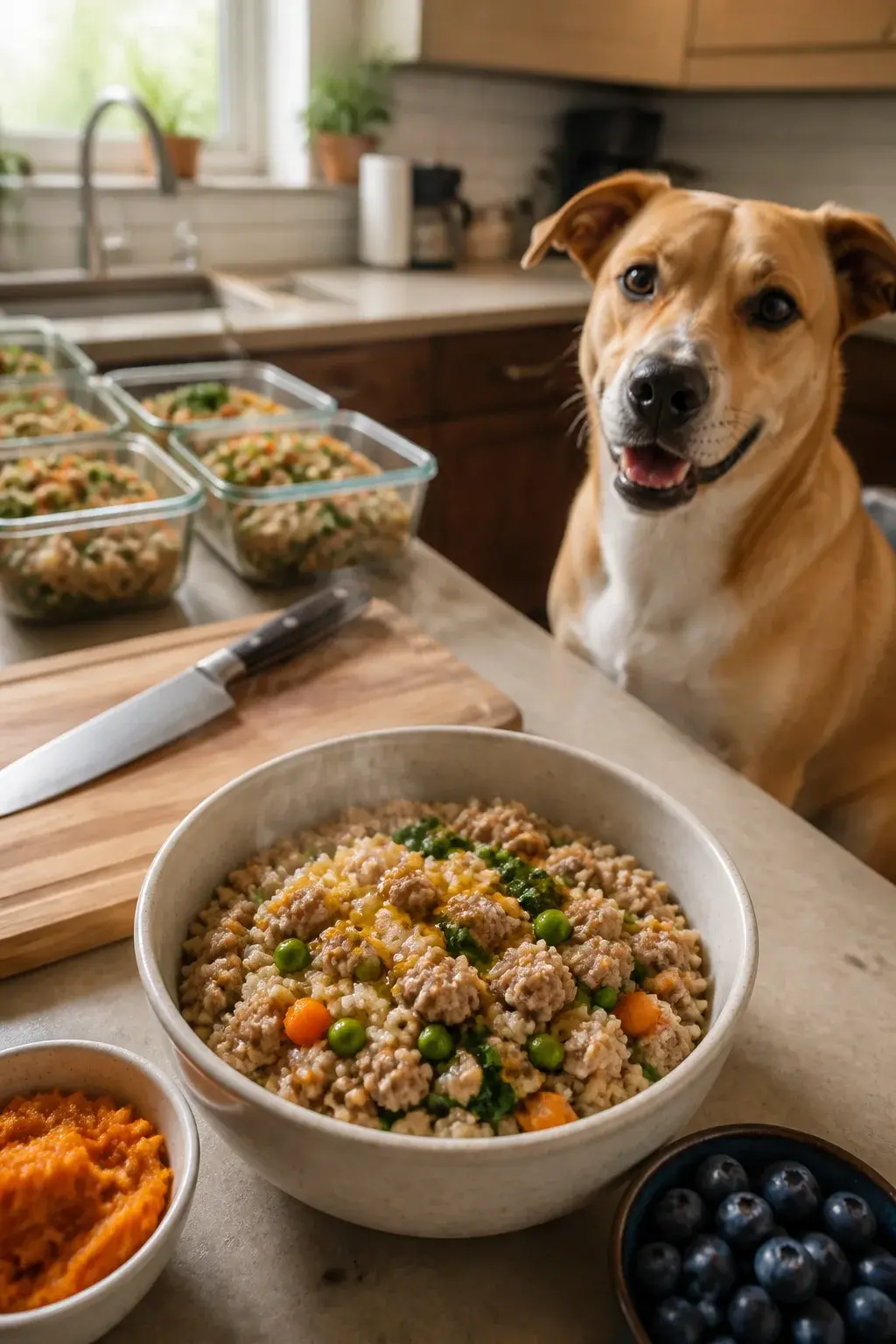
Homemade diets sometimes miss certain micronutrients. A basic add-on can help.
- Fish oil or salmon oil: For omega-3 fatty acids that support skin, coat, and joints.
- Calcium source: If you never use bones, you can add a vet-approved calcium powder per label directions.
- General canine multivitamin/mineral: Optional but handy if you rotate recipes a lot.
Talk to your vet before adding supplements, especially for puppies, pregnant dogs, or dogs on meds.
Smart Shopping: Keep It Cheap Without Compromising Quality
You don’t need fancy. You need consistent.
- Buy in bulk: Chicken thighs, ground turkey, rice, oats. Freeze what you won’t use in 2–3 days.
- Use store brands: Plain pumpkin puree, frozen veggies, low-sodium broth. Read labels and skip added seasonings.
- Shop seasonal produce: Carrots, squash, and sweet potatoes stay affordable year-round.
- Rotate proteins: Keeps nutrition rounded and reduces cost swings.
- Use a scale and measuring cups: Saves money because you won’t overfeed.
Batch-Cooking Like a Pro
– Cook large batches once a week.
– Portion into daily containers or freezer bags, flatten for quick thawing.
– Label with date and contents, because “mystery meat mush” is not a vibe.
– Refrigerate for up to 3–4 days. Freeze for up to 2–3 months.
Easy Toppers That Upgrade Any Meal
Don’t want to go full homemade? Add simple toppers to kibble for nutrition and excitement.
- Spoonful of pumpkin puree: Fiber for gut health.
- Blueberries or chopped apple (no seeds): Antioxidants and crunch.
- Low-sodium bone broth: Hydration and flavor.
- Scrambled egg: Protein boost that most dogs worship.
- Sardines in water: Omega-3s on a budget.
What About Raw?
If you want raw, work with your vet or a board-certified nutritionist to balance calcium, phosphorus, and pathogens risk. Raw can get pricey and tricky, and food safety matters. Cooked recipes are simpler and cheaper for most people.
Signs Your Dog Loves This Plan
Watch your dog, not just the bowl.
- Good signs: Bright eyes, steady energy, normal poops, soft shiny coat, stable weight.
- Red flags: Itchy skin, vomiting, diarrhea, gas that could clear a room, or weight swings. Call your vet if these pop up.
FAQ
Can I switch my dog to homemade food overnight?
Transition over 3–5 days. Start with 25% new food and 75% old, then increase daily. Sudden switches can upset stomachs, and nobody wants to mop at 2 a.m.
How do I store homemade dog food safely?
Cool completely, then refrigerate in sealed containers for up to 3–4 days. Freeze portions for 2–3 months. Thaw in the fridge, not on the counter. Reheat gently to room temp and never serve piping hot.
Do I need a canine multivitamin?
Not always, but many homemade diets benefit from one. If you rotate proteins, veggies, and add fish oil and a calcium source, you usually cover bases. Ask your vet for a brand and dose that fits your dog.
What if my dog has allergies?
Pick a single protein and simple carb, like turkey and sweet potato, and keep the ingredient list short. Add one new item per week so you can spot problems fast. For diagnosed allergies, follow your vet’s elimination plan strictly.
Is brown rice better than white rice?
Brown rice brings more fiber and nutrients, but some dogs digest white rice easier, especially after tummy trouble. Choose what your dog tolerates best. The best rice is the one your dog can actually handle.
Can I use beans or lentils to cut costs?
Small amounts can work for some dogs, but introduce slowly and watch for gas or soft stools. Keep legumes to a supporting role, not the main protein, unless your vet gives the green light.
Wrap-Up: Healthy, Cheap, and Tail-Wag Approved
Homemade dog food doesn’t require a culinary degree or a second mortgage. Use simple proteins, easy carbs, and budget veggies, then batch-cook like a boss. Track your dog’s weight and energy, tweak portions, and keep it safe with proper storage.
FYI, your dog doesn’t care about presentation. They care that dinner hits the bowl on time. Cook with love, keep it balanced, and enjoy the happy dance at mealtime.
About the Author

David
Blogger/YouTuber
A guitar nerd, the myth, the legend.