
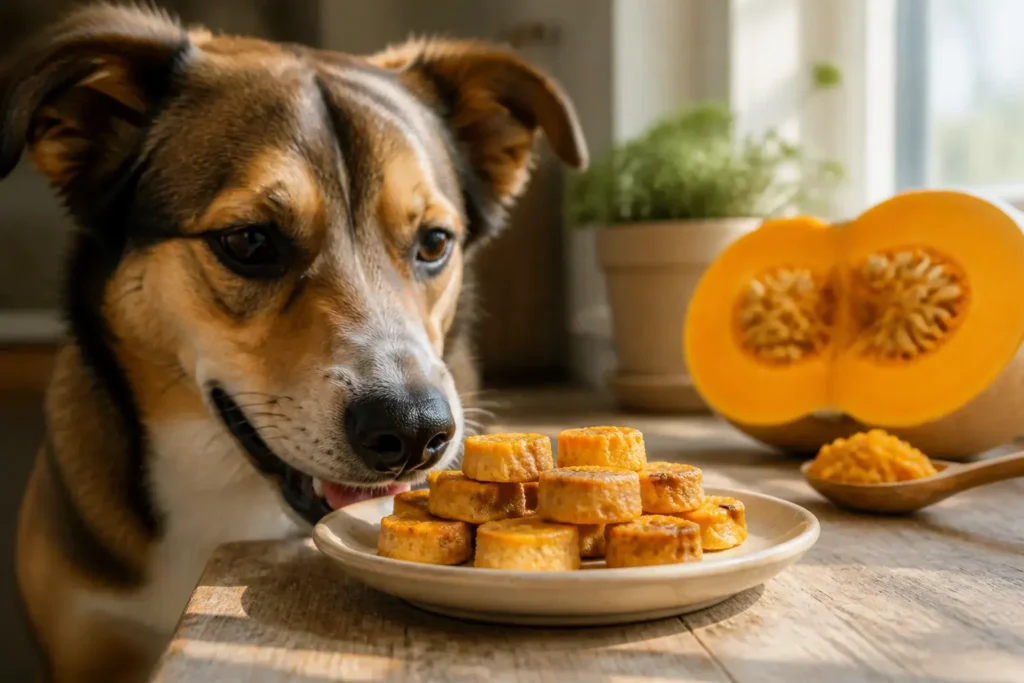
Pumpkin has a fan club, and yes, your dog is ready to join. These bright orange bites can support digestion, deliver vitamins, and keep snack time exciting.
You want simple, dog-safe treats that actually help your pup feel great. Pumpkin checks the boxes, then high-fives your wallet.
Ready to learn why pumpkin treats might be your new go-to? Let’s dig in.
Why Pumpkin Has Dog Parents Buzzing
Pumpkin brings flavor and function in one tidy package. It’s packed with fiber, vitamins A and C, and a mix of minerals that help your dog feel good from nose to tail.
Here’s the big win: pumpkin supports healthy digestion. Whether your dog battles loose stools or occasional constipation, the fiber in plain pumpkin helps normalize things. That means fewer late-night yard runs. You’re welcome.
Bonus: Pumpkin is low in calories, so it works as a treat base for pups watching their waistlines. If your vet suggested shaving a few pounds, pumpkin treats can help you reward good behavior without piling on extra calories.
The Fiber Factor
Pumpkin contains both soluble and insoluble fiber. Soluble fiber helps firm up runny stools by absorbing water. Insoluble fiber adds bulk and keeps things moving. Together they help your dog’s gut stay balanced, especially when transitions or stress throw a wrench into their routine.
Nutrition Benefits That Go Beyond the Belly
Pumpkin isn’t just a fiber bomb. It also brings a mix of micronutrients your dog actually uses.
- Beta-carotene (vitamin A): Supports eye health, skin, and coat. It also plays a role in immune function.
- Vitamin C: Helps with antioxidant defense. Dogs make some on their own, but a little extra can’t hurt.
- Potassium: Supports muscle and heart function, especially after zoomies or long walks.
- Moisture content: Canned pumpkin is mostly water, which can help with hydration. Not a substitute for the water bowl, obviously, but it helps.
FYI: We’re talking about plain, unsweetened pumpkin puree, not the sugary pie filling that belongs in Grandma’s recipe box.
When Pumpkin Treats Really Shine
Pumpkin fits nicely into daily life for most dogs. You can use it in training treats, meal toppers, or frozen snacks. It can help in a handful of everyday situations.
Tummy Troubles
If your dog has mild stool irregularities, a small amount of pumpkin often helps. It can firm up loose stools and soften dry ones. Think of it like fiber with a cape.
Weight Management
Need to reduce calories but keep your dog happy? Mix a spoonful of pumpkin with kibble to add volume. You get a bigger-looking meal for fewer calories. Your dog gets satisfaction without the “I’m still starving” side-eye.
Picky Eaters
A little pumpkin can make bland food more interesting. Just don’t let your pup turn into a tiny food critic who refuses dinner without his orange garnish.
How Much Pumpkin Is Safe?
Moderation keeps you out of trouble. Even good things go sideways when you overdo it.
- Small dogs (under 20 lb): 1–2 teaspoons per day
- Medium dogs (20–50 lb): 1–2 tablespoons per day
- Large dogs (50+ lb): 2–4 tablespoons per day
Always start low and see how your dog responds. Too much fiber can cause gas or diarrhea. And if your dog has a chronic GI condition, diabetes, or kidney issues, talk to your vet first. IMO, that quick call saves headaches later.
Choosing the Right Pumpkin Products
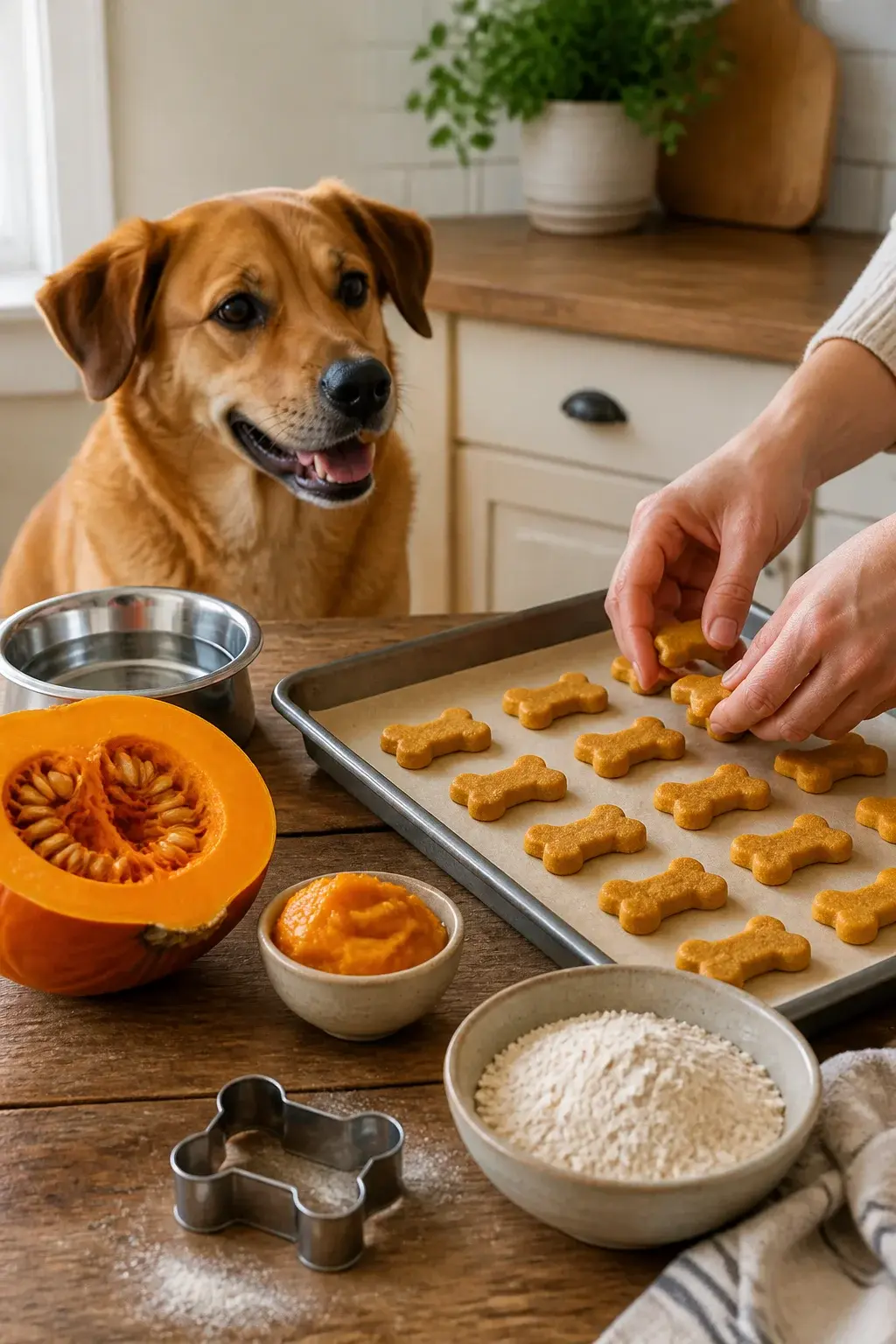
Walk past the pumpkin-spice traps and go straight for the pure stuff. Labels matter more than the color of the can.
What to Buy
- Plain pumpkin puree: Only ingredient should be pumpkin.
- Fresh pumpkin: Roast and puree it yourself if you want. Remove skin and seeds.
- Dehydrated pumpkin: Great for travel. Rehydrate with warm water.
What to Avoid
- Pumpkin pie filling: Contains sugar, spices, and sometimes xylitol, which is toxic to dogs.
- Heavily spiced products: Nutmeg and clove can irritate dogs. Keep it simple.
- Salty or sweet pumpkin snacks: They’re for humans, not hounds.
Three Easy, Dog-Safe Pumpkin Treat Recipes
I love recipes that don’t have 15 steps. These three deliver big flavor and tail wags without the culinary drama.
1) Two-Ingredient Pumpkin Pupsicles
Perfect for warm days or after a long walk.
- 1 cup plain pumpkin puree
- 1 cup plain, unsweetened yogurt (no xylitol)
Instructions:
- Mix pumpkin and yogurt until smooth.
- Spoon into silicone molds or ice trays.
- Freeze for 3–4 hours. Serve 1–2 cubes for small dogs, 2–3 for larger dogs.
Tip: Use goat’s milk yogurt if your dog struggles with cow’s milk.
2) Crunchy Pumpkin Oat Bites
Great for training. They break cleanly and don’t crumb-bomb your pockets.
- 1 cup pumpkin puree
- 2 cups oat flour (blend rolled oats until fine)
- 1 egg (binds; skip if allergic and add a splash of water)
Instructions:
- Preheat oven to 325°F.
- Mix all ingredients to form a dough. Add a little water if dry.
- Roll to 1/4 inch and cut into small squares.
- Bake 20–25 minutes until firm and lightly golden. Cool completely.
Storage: Keep in an airtight container for 5 days or freeze for 2 months.
3) No-Bake Pumpkin Peanut Butter Drops
Quick, soft, and super fragrant. Dogs go nuts for these.
- 1/2 cup pumpkin puree
- 1/3 cup unsalted peanut butter (xylitol-free)
- 1–1.5 cups quick oats
Instructions:
- Stir pumpkin and peanut butter.
- Fold in oats until the mixture holds its shape.
- Scoop teaspoon-sized balls onto a tray. Chill 1 hour.
Portion control: 1–2 balls for small dogs, 2–3 for large dogs. These are richer, so keep them occasional.
Pumpkin Seeds: Yes or No?
Short answer: sometimes, if you handle them right. Pumpkin seeds contain healthy fats, antioxidants, and fiber. But they need prep.
How to Offer Seeds Safely
- Use plain, unsalted seeds only.
- Lightly roast to dry them out, then grind to a coarse powder.
- Sprinkle a pinch over meals for a crunch and nutrition boost.
Seeds are calorie-dense. Stick to small amounts, especially for small dogs.
Potential Pitfalls to Watch
I love pumpkin, but I also love avoiding 2 a.m. surprises. Keep these in mind.
- Too much fiber can cause bloating or diarrhea. Start small.
- Hidden sugars and spices sneak into human pumpkin products. Read labels every time.
- Underlying health conditions may change how your dog handles fiber or potassium. Quick vet check if you’re unsure.
- Calorie creep happens if you add pumpkin on top of full meals. Adjust portions slightly when you add daily toppers.
FAQ
Can puppies have pumpkin treats?
Yes, in tiny amounts. Start with 1/2 to 1 teaspoon mixed into meals and watch for changes. Puppies have sensitive stomachs, so keep it simple and skip spices, sweeteners, and rich add-ins.
Is canned pumpkin as good as fresh?
Absolutely. Plain canned pumpkin works great and keeps things easy. Just avoid pie filling and check that pumpkin is the only ingredient.
How fast will pumpkin help with diarrhea or constipation?
Many dogs improve within 24–48 hours. If your dog shows no change, gets worse, or seems lethargic, call your vet. Sudden or severe symptoms need professional eyes.
Can diabetic dogs eat pumpkin treats?
Possibly, but check with your vet. Pumpkin contains fiber that may help with satiety, but carbohydrates still count. Your vet can guide safe amounts and timing relative to insulin and meals.
What if my dog hates the taste of pumpkin?
Mix a little pumpkin with something irresistible, like a spoon of xylitol-free peanut butter or low-sodium chicken broth. You can also bake it into oat bites so the texture wins them over. Some dogs need a second or third try, IMO.
Are store-bought pumpkin dog treats okay?
Many are fine, but scan the ingredient list. Choose treats with short, recognizable ingredients and no added sugar, artificial sweeteners, or heavy spices. When in doubt, DIY beats mystery crumbs.
Conclusion
Pumpkin dog treats punch way above their weight. They support digestion, deliver useful nutrients, and keep calorie counts friendly. With a few pantry staples and a can of puree, you can whip up snacks your pup will chase you for. Keep portions sensible, watch labels like a hawk, and enjoy those very enthusiastic thank-you tail thumps.
About the Author

David
Blogger/YouTuber
A guitar nerd, the myth, the legend.