You brought home a wiggly ball of fluff. Your heart? Stolen. Your schedule? Chaos.
Let’s set you up with the essentials so you can enjoy the cute without the overwhelm.
I’ll show you what you actually need, what’s nice to have, and what to skip. No fluff. Well, except your puppy’s.
Set Up Your Puppy Home Base
Your pup needs a safe, cozy zone where they can decompress. Think of it like a nursery, but with chew toys.
What to include:
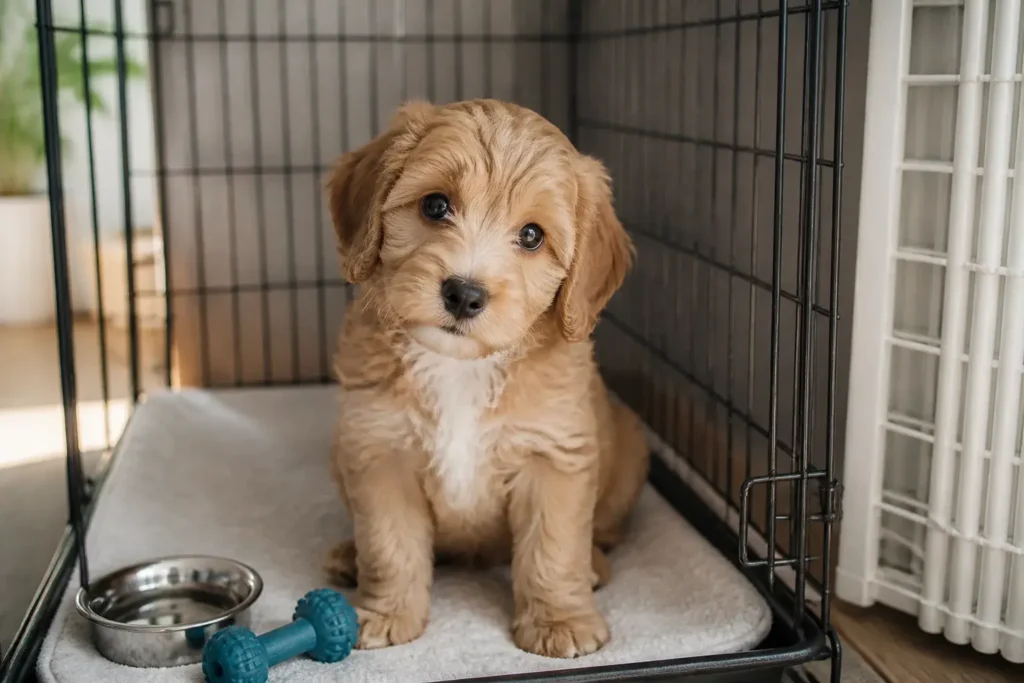
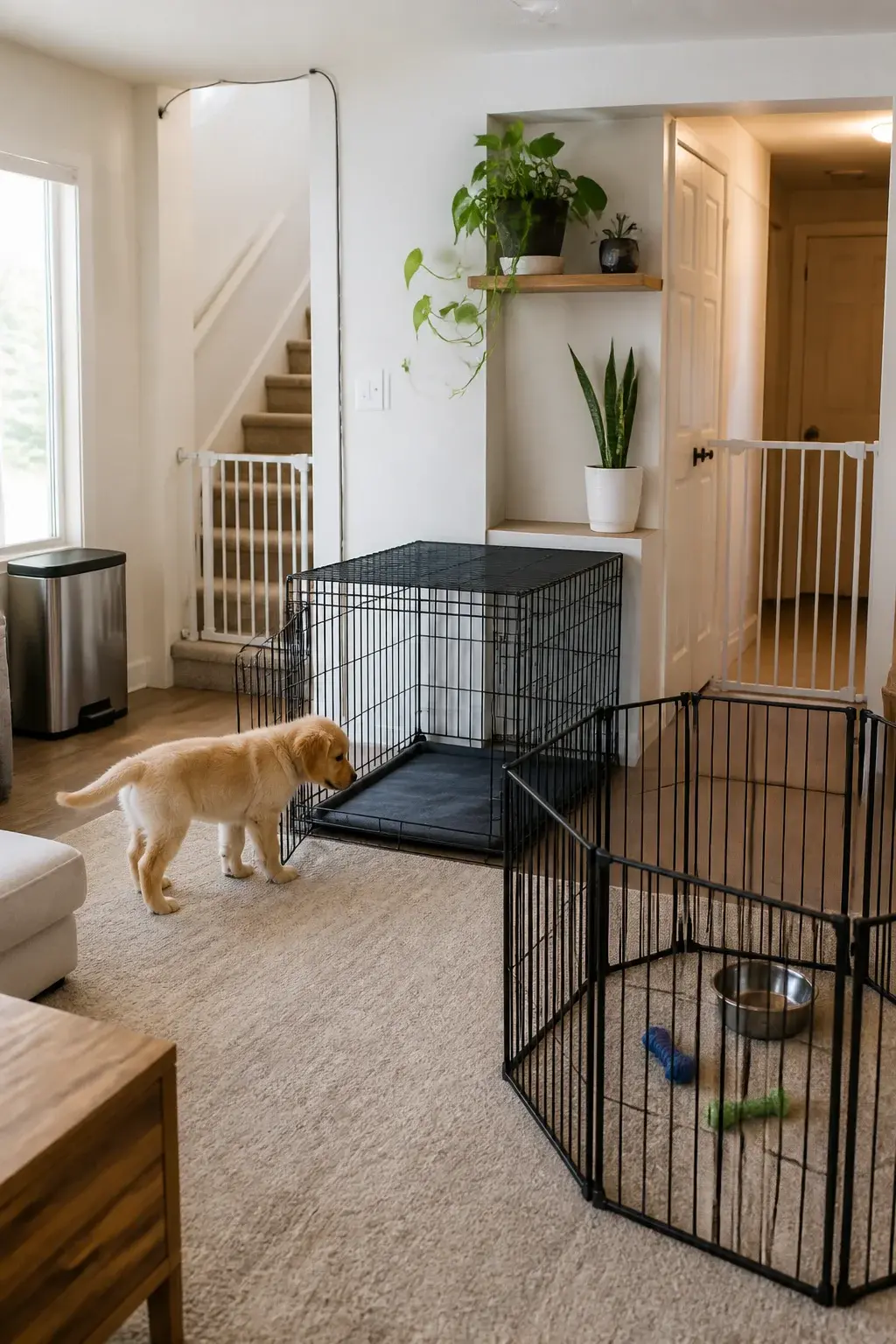
- Crate sized so your puppy can stand, turn, and lie down comfortably. Add a washable mat. Skip plush beds until teething ends if your dog loves shredding.
- Playpen or gated area for supervised hangouts. It saves your shoes and sanity.
- Baby gates to block stairs and no-go rooms.
- Puppy-proofing: hide cords, move toxic plants, secure trash, stow meds and cleaners out of reach.
Crate Training Quick Start
- Feed meals in the crate so it feels like a happy place.
- Short sessions only. Open door often, toss treats in, celebrate calm.
- Cover three sides to make it den-like. Nighttime = quieter, darker space.
Food, Bowls, and Treats (Dog-Safe Only)
Your puppy’s belly runs the show, so fuel it right.
Must-haves:
- Puppy-formulated food appropriate for size and breed. Large-breed puppies need specific calcium-to-phosphorus ratios. Ask your vet for brand recs, IMO.
- Two stainless steel bowls. They’re durable, easy to clean, and don’t hold odors.
- Treats that are soft and tiny for training. Use part of their daily food as rewards to avoid chonky pup status.
- Fresh water station in the home base and another where you hang out most.
Simple Puppy-Safe Frozen Kong Ideas
- Layer of plain unsweetened Greek yogurt, their kibble, and a smear of xylitol-free peanut butter. Freeze.
- Banana mash with a bit of canned pumpkin and kibble. Freeze.
FYI: Always check ingredients for xylitol, garlic, onions, raisins, grapes, alcohol, and artificial sweeteners. Hard no.
Collars, Harnesses, and Leashes That Actually Work
Outfit your pup with gear that keeps walks fun and safe.
- Flat collar with an ID tag. Two-finger rule for fit.
- Front-clip harness for better control during training and to protect growing necks.
- 6-foot leash made of nylon or biothane. Skip retractable leashes for now. They teach pulling and can cause rope burns.
- Seatbelt tether or travel crate for the car. You buckle up. So does your dog.
Microchip and Tags
Do both. Microchip with updated info, plus a tag with your number. Puppies are escape artists. Plan accordingly.
Potty Training: The System That Saves Your Floors
Consistency beats luck every time.
The routine:
- Out every 2–3 hours, after naps, play, and meals. Praise like they solved world peace when they go outside.
- Use a consistent potty spot and cue word like “Go potty.”
- Accident? Clean with enzymatic cleaner only. Otherwise it’s an engraved invitation to pee there again.
Night Schedule Tips
- Limit water 2 hours before bedtime, but never withhold access all day.
- Last potty break right before lights out. Set an alarm for one middle-of-the-night trip for young pups.
Chew Toys and Mental Enrichment (Or: Save Your Furniture)
Puppies explore with their mouths. Give them stuff they can use without a lecture.
- Teething toys: rubber chew toys, puppy-safe nylons, soft rubber rings.
- Food puzzles: snuffle mats, wobble feeders, stuffed Kongs.
- Interactive play: tug toys and fetch toys. Rotate toys weekly so they feel new.
What to Avoid
- Antlers and very hard bones that can crack puppy teeth.
- Rawhides that can cause blockages. Look for easily digestible chews labeled for puppies.
Grooming Basics You’ll Actually Do
Start now so future you doesn’t need oven mitts just to brush your dog.
- Brush suited to coat type: slicker for long or curly coats, bristle or rubber curry for short coats.
- Nail trimmer or grinder. Do one nail a day with treats. Normalizing it early is everything.
- Dog-safe shampoo. Bathe only when needed to protect their skin barrier.
- Toothbrushing kit with dog toothpaste. Daily is ideal, 3–4 times weekly is a win.
- Ear cleaner and cotton pads for breeds prone to ear gunk.
Grooming Desensitization Game
- Show brush. Treat. Touch with brush. Treat. One gentle stroke. Treat. Keep sessions short and happy.
Training: The Fun, Fast Wins
You don’t need to be a pro. You just need clear cues and great timing.
- Name game: Say name once. Puppy looks. Mark “Yes!” and treat.
- Sit and down: Lure with a treat. Reward the instant tush hits the floor.
- Come: Start indoors. Say “Come,” back up, reward heavily. Make it a party.
- Leave it: Present a treat in your fist. When your pup stops pestering, mark and reward with a different treat.
- Loose-leash walking: Reward at your side every few steps. If they pull, stop. When the leash slackens, move again.
Socialization, But Make It Smart
Expose your puppy to sights, sounds, surfaces, people, and calm, vaccinated dogs. Keep sessions short and positive. Pair every new experience with treats. Avoid dog parks until your vet okays it, FYI.
Health, Safety, and Vet Stuff You Can’t Ignore
Your vet is your co-pilot. Make that first appointment early.
- Vaccination schedule: series for distemper/parvo, then rabies per local law.
- Parasite prevention: fleas, ticks, and heartworm meds as recommended.
- Pet insurance or emergency fund: puppies eat socks. Financial buffer = instant relief.
- First-aid kit: gauze, non-stick pads, saline, tweezers, styptic powder, digital thermometer, vet wrap, and your vet’s number.
- Safe chews and treats only: check ingredients and size-appropriate labels.
Red Flags That Need A Vet
Lethargy, repeated vomiting or diarrhea, refusal to eat, distended belly, coughing, trouble breathing, or sudden pain. Don’t Google it to death. Call.
House Rules and Routine: The Secret Sauce
Dogs love patterns. You will too.
- Daily schedule: sleep, potty, meal, play, train, nap. Repeat. Calm puppy = happy household.
- Clear boundaries: if you don’t want couch privileges later, don’t start now. Consistency beats negotiation.
- Alone-time training: give a stuffed Kong, step out for 2–5 minutes, return before whining. Build up gradually.
Enrichment Routine Example
- Morning: potty, breakfast via puzzle, short training burst.
- Midday: potty, sniffy walk, nap.
- Evening: gentle play, grooming touch, dinner in a slow feeder, calm chew, bedtime.
Nice-to-Have Extras (But Not Essential)
These add convenience, not clutter.
- Biothane long line for recall practice in open spaces.
- Slow feeder bowl for vacuum eaters.
- Poop bag holder you’ll actually clip to the leash.
- Training pouch so treats don’t coat your pockets in mystery crumbs.
- Pet camera if you’re curious what chaos happens at noon.
FAQ
How many times a day should my puppy eat?
Most puppies thrive on three meals a day until about six months old. After that, shift to two meals. Keep portions consistent and adjust for growth and activity with your vet’s guidance.
When can my puppy go on walks outside?
Short neighborhood walks on low-traffic sidewalks are usually fine after the first vaccine or two, but avoid high-dog-traffic areas until your vet clears you. Stick to safe surfaces and keep it brief. Socialization matters, but so does disease prevention.
My puppy bites a lot. Is that normal?
Yes, puppies nip during play and teething. Redirect to a chew toy, end play if they get too amped, and reward calm mouth behavior. Consistent redirection beats scolding, IMO.
What’s the best way to stop accidents indoors?
Supervision, a schedule, and quick interrupts. If you catch them mid-squat, calmly guide them outside and then reward when they finish there. Clean with an enzymatic cleaner so the scent doesn’t invite repeat performances.
Do I really need pet insurance?
You don’t need it, but you’ll be grateful when emergencies happen. If insurance isn’t your thing, build a dedicated savings fund. Either way, plan for the unexpected.
When should I start formal training classes?
As soon as your vet says your puppy can attend a well-run, vaccinated puppy class. Early positive training builds confidence and great manners fast. Plus, it’s fun.
Conclusion
You don’t need a mountain of gear to raise a great dog. You need smart basics, a steady routine, and a sense of humor for the inevitable oops moments. Focus on safety, positive training, and daily enrichment, and you’ll build a solid foundation for a happy, confident pup. Now go enjoy that puppy breath while it lasts.
About the Author

David
Blogger/YouTuber
A guitar nerd, the myth, the legend.