
You just brought home a tiny tornado with paws. Congrats and buckle up.
The first week shapes your puppy’s habits, confidence, and bladder control. No pressure, right?
Breathe. You’ll create routine, build trust, and survive the zoomies. Let’s make this week awesome.
Set Up Your Puppy’s Home Base
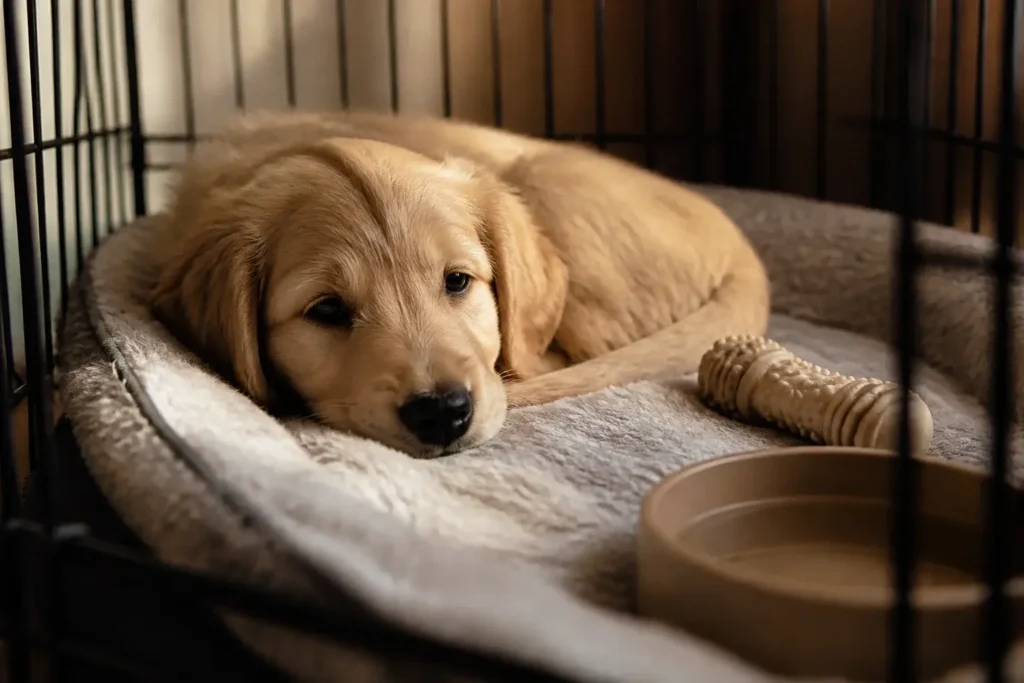
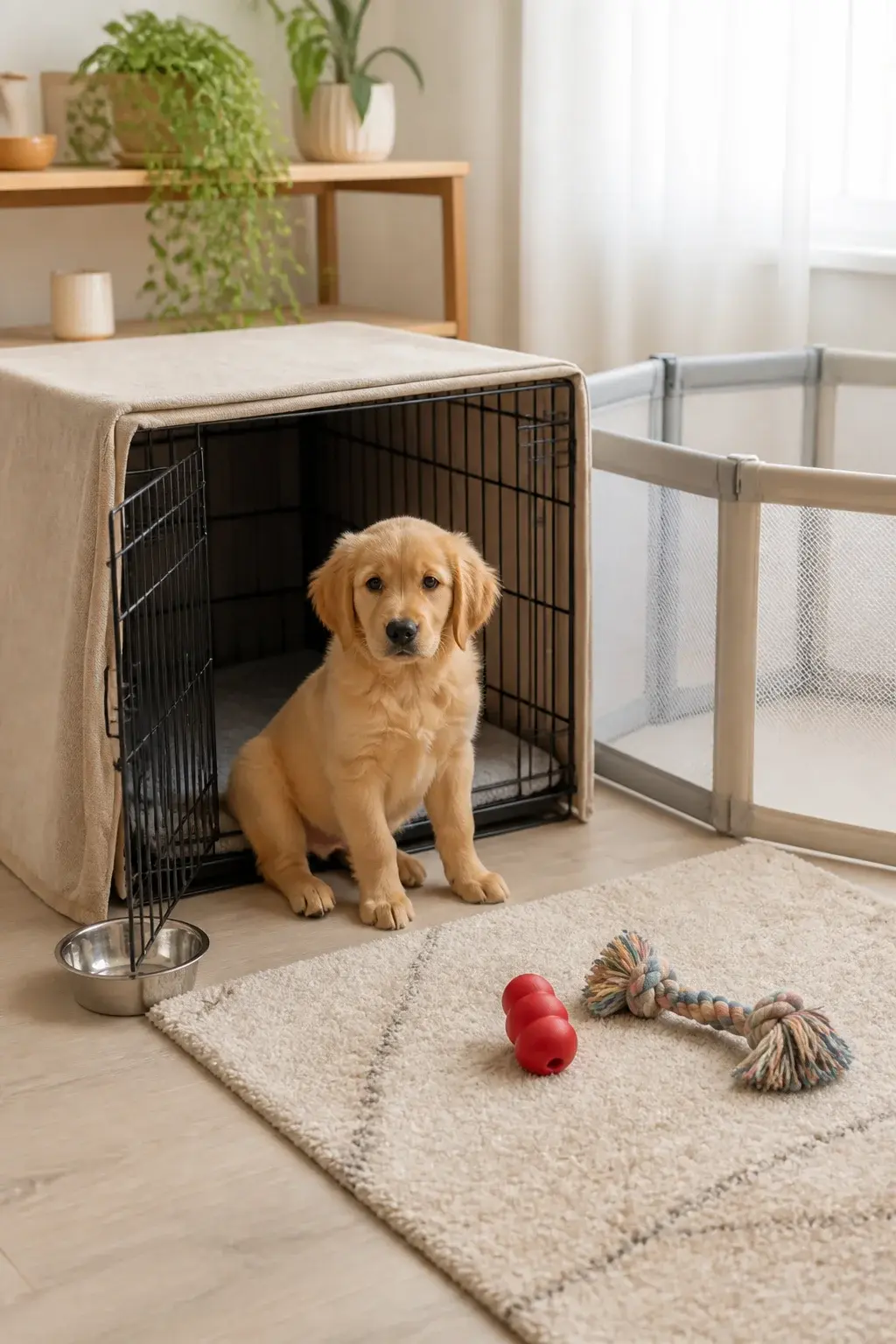
Before the grand arrival, set a safe, cozy zone your pup can relax in. Think crate or playpen with a comfy bed, water bowl, and a couple of chew toys. This zone becomes their chill spot, not puppy jail.
Why it matters: Puppies need structure to relax, and you need a place to park them while you eat, shower, or remember your own name.
Crate Setup Tips
- Pick a crate big enough for standing and turning, but not big enough to potty in one corner and nap in the other.
- Use a washable bed or crate pad. Accidents happen, and towels forgive everything.
- Cover three sides to make it den-like. Darkness = comfort for many pups.
Safe Toys Only
- Great: Rubber chew toys, food puzzles, frozen Kongs with puppy-safe stuffing.
- Avoid: Rope with loose threads, squeakers for heavy chewers, anything that can splinter.
The First 24 Hours: Calm, Routine, Potty
Your pup’s brain feels like 47 tabs open at once. Keep it quiet. Show the potty spot immediately, then introduce the crate, water, and a tiny meal. Family reunion vibes? Later.
Potty schedule basics:
- Out first thing in the morning, after naps, after play, after meals, and before bed.
- Take them out every 2 to 3 hours during the day. Yes, set timers.
- Lead to the same spot, say a cue like “Go potty,” quiet praise, treat within 2 seconds.
Night One Survival
- Place the crate near your bed. Your voice calms them and you’ll hear the “I gotta go” whimper.
- Plan 1 to 2 potty breaks overnight for young pups. Quick trips, no party.
- If crying happens, wait for a pause before opening the crate so crying doesn’t become the magic key.
Build a Daily Rhythm That Works
Puppies thrive on predictable patterns. Think short cycles of potty, play, train, rest. It sounds simple because it is.
Sample daytime loop (repeat):
- Potty break.
- 5 to 10 minutes of play or training.
- Chew time in the pen or crate.
- Nap for 1 to 2 hours.
Feeding Schedule
- 8 to 12 weeks: 3 to 4 small meals a day.
- Use part of meals as training treats to avoid overload.
- Fresh water available, but remove it an hour before bedtime to help nighttime bladder success.
Potty Training Without Drama
You’ll have accidents. You’re not a failure; you’re living with a baby dog. Focus on management, not punishment.
Keys to success:
- Supervise like a hawk. If you can’t watch, the pup goes in a safe zone.
- Interrupt mid-accident with a gentle “outside,” then take them to the spot. Praise if they finish there.
- Clean with an enzymatic cleaner so your carpet doesn’t become a scented billboard.
Signs Your Pup Needs to Go
- Circling and sniffing, sudden wandering, whining near the door, leaving play to lurk in corners.
- After 10 minutes of play? Potty. After a nap? Potty. After you blink? Maybe also potty.
Training: Tiny Brains, Tiny Sessions
Teaching starts on day one. Keep it short, fun, and loaded with rewards. No lectures, no scolding. You’re building trust and clarity.
Start with:
- Name game: Say their name, mark the eye contact with “Yes,” treat. Repeat everywhere.
- Sit: Lure with a treat to the nose and back. Butt hits floor, say “Yes,” treat. Easy win.
- Come: Start indoors. Say “Puppy, come!” kneel, open arms, party when they arrive.
- Drop/Trade: Offer a high-value treat and say “Trade.” Never chase. Chasing = best game ever to a puppy.
Bite Inhibition Without Tears
- Puppies mouth to learn. Offer a chew toy every time they grab skin.
- If biting gets intense, calmly stand up, disengage for 5 to 10 seconds, then resume play.
- Playdates with vaccinated, gentle dogs teach better bite control than you ever could.
Socialization: Safe, Not Scary
The first week kickstarts socialization. Your goal: hundreds of positive micro-experiences, not one chaotic field trip. Pair new sights and sounds with treats.
Make a “First Week Bingo”:
- People with hats, umbrellas, sunglasses.
- Surfaces: grass, gravel, wood floors, carpet, rubber mats.
- Noises: doorbell, blender, vacuum at a distance, cars rolling by.
- Handling: touch paws, ears, collar; treat every gentle touch.
Health and Safety FYI
- Until vaccinations progress, avoid dog parks and unknown dogs. Safe, clean areas only.
- Schedule a vet visit in the first week for a wellness check and parasite prevention.
- Bring treats to the vet so the clinic = treat party. IMO this pays dividends forever.
Sleep, Enrichment, and the Zoomies
Puppies need 16 to 20 hours of sleep daily. Overtired pups = bitey gremlins. You’ll feel it when they start doing frantic zooms and tasting your ankles.
Balance the day:
- 2 to 3 short training sessions.
- Gentle play and sniffy walks in safe spaces.
- Chew sessions with puppy-safe chews to decompress.
- Multiple naps in their crate or pen.
Mental Enrichment Ideas
- Snuffle mats with a portion of kibble.
- Frozen Kong: smear with plain unsweetened yogurt or pumpkin and kibble. Puppy-safe only, no xylitol ever.
- Cardboard box “treasure hunt” with kibble sprinkled inside. Supervise, then recycle the mess.
Nipping Common Problems Early
Let’s fix the small stuff before it becomes a sitcom plotline you didn’t sign up for.
Jumping:
- Reward four paws on the floor. Turn away when they pogo.
- Ask for a sit before petting or greeting. Sit = magic unlock.
Alone time:
- Start day one with 1 to 2 minutes of you leaving the room. Return before whining starts.
- Build to 10 to 20 minutes with a safe chew in the crate.
Leash skills:
- Clip the leash indoors. Treat for calm while it’s on.
- Practice a few steps at your side, treat at knee height for staying close. No tug-of-war.
House Rules Everyone Follows
Humans need training too. Mixed messages confuse puppies and slow progress.
- Agree on cue words: “Sit,” “Down,” “Off,” “Leave it,” “Go potty.”
- Feeding plan: brand, amounts, and mealtimes. Sudden changes upset tummies.
- Where pup sleeps, where pup chews, and which rooms stay off-limits.
- All rewards come through training moments: doors open for sits, leashes clip on for calm, attention flows for gentle behavior.
FAQ
How much should my puppy eat in the first week?
Follow the food label for weight and age, then watch body condition and energy. Split into 3 to 4 meals and use some kibble for training. If stools look loose, scale back treats and keep the same food for at least a week before making changes.
What if my puppy cries in the crate?
Make sure all needs are met: potty, a short play, and a safe chew. Put the crate near you, cover it partially, and reward calm moments. Wait for a brief pause before opening so crying doesn’t become the “open sesame” cue. FYI, small regressions are normal.
When can I start walks outside?
You can start controlled, low-risk outings immediately in clean areas. Avoid dog parks and unknown dog traffic until your vet clears it. Short sniffy strolls and carrier trips to see the world count as great socialization.
How many hours should a puppy sleep?
Aim for 16 to 20 hours total. If your puppy turns into a mouthy gremlin, that’s a big neon sign for nap time. Protect naps like gold and you’ll get a nicer housemate.
Is it normal for my puppy to bite a lot?
Totally normal. Redirect to chews, take short play breaks when biting escalates, and set up playdates with safe, vaccinated dogs. Teach “Trade” so giving things up pays well. Consistency wins here, IMO.
Do I need a trainer in the first week?
You don’t need one immediately, but a positive reinforcement class or a reputable trainer helps you avoid common mistakes. Look for credentialed pros who use reward-based methods only. A quick consult now saves headaches later.
Conclusion
Your first week with a puppy sets the vibe for everything. Keep it simple: potty, play, tiny training, naps, repeat. Celebrate small wins, laugh at the chaos, and keep treats in every pocket. You’ve got this, and your pup thinks you’re a superhero already.
About the Author

David
Blogger/YouTuber
A guitar nerd, the myth, the legend.