
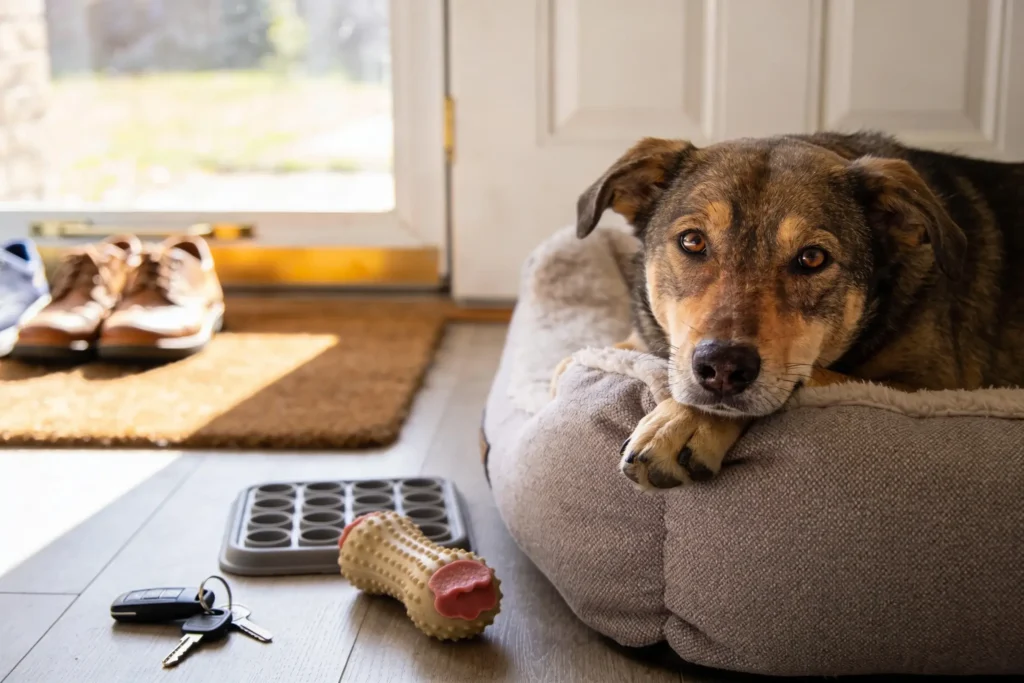
You love your dog like family, but you also need to run errands, go to work, and, you know, live. Cue the side-eye from those big, soulful eyes.
Good news: you can teach your pup to chill while you’re out without wrecking your furniture or your sanity.
Let’s break it down into simple steps that actually work, without turning your home into a canine boot camp.
Understand What Your Dog Feels When You Leave
Dogs don’t plot revenge. They react to stress, boredom, or habit. If your dog barks, paces, or chews when alone, they usually feel overwhelmed, not mischievous.
Separation anxiety differs from normal “ugh, I’m bored.” True anxiety can look like howling for hours, drooling puddles, or trying to escape crates and doors. If you see those big signs, pair this plan with a chat with a vet or trainer. For mild cases, you can make strong progress at home.
Red Flags That Need Extra Help
- Destructive chewing focused on exits or crates
- Injuries from escape attempts
- Continuous howling or barking the whole time you’re gone
- Eliminating indoors only when left alone
Build a Calm Pre-Departure Routine
Your goodbye routine teaches your dog what’s coming. If you hype them up, you set them up to crash later.
Keep departures quiet and predictable. Grab your keys, put on shoes, and leave like it’s no big deal. Skip the high-pitched “Mommy will be back soon!” speech. Dogs read your energy. Act normal, and they learn to do the same.
Desensitize the Departure Triggers
Your dog probably reacts to cues like keys, a coat, or the sound of the door. Turn those into background noise:
- Pick up keys, put them down. No leaving.
- Put on shoes, walk around, then take them off.
- Open and close the front door a few times a day without going anywhere.
Do this for a week. It breaks the association between “keys” and “oh no, you’re leaving me.”
Create a Chill-Spot Your Dog Actually Likes
No one relaxes in a space that feels like a time-out. Build a hangout zone that screams cozy, not jail.
Options that usually work:
- A crate with a comfy mat and chew-safe toys (only if your dog crate-trains well)
- A gated room with a bed, water, and a safe view
- An exercise pen for puppies or chewers
Keep this area associated with good stuff:
- Feed meals there sometimes.
- Give long-lasting chews or puzzle toys only in that space.
- Play calming music or brown noise to mask outdoor sounds.
Make The Alone-Time Buffet Irresistible
Offer high-value, safe enrichment that lasts:
- Stuffed and frozen Kongs with wet food, banana, or yogurt
- Snuffle mats with kibble or dehydrated treats
- Lick mats with peanut butter (xylitol-free) or pumpkin
- Durable chews like bully sticks or dental chews
Rotate the goodies so your dog thinks, “What’s today’s special?”
Train The Skill: Alone Time In Tiny, Boring Doses
This is the heart of the plan. You don’t just leave and hope. You shape calm in baby steps.
Step-by-step progression:
- Settle nearby: Ask your dog to relax on a mat while you sit a few feet away. Reward calm with quiet praise and the occasional treat. Aim for 3 to 5 minutes of boredom. Yes, boredom is the goal.
- Micro-absences: Step out of the room for 2 to 5 seconds, then come back and drop a treat without fanfare. Repeat 8 to 10 times. Keep it bland.
- Short exits: Leave the room for 10 to 30 seconds. If your dog stays calm, slowly nudge up to 1 to 2 minutes across several reps.
- Door practice: Do the same with your front door. Out for 10 seconds, in, treat down, neutral vibe. Build to 2 to 5 minutes.
- Realistic outings: Take a quick walk to the mailbox or down the hallway. Aim for 5 to 10 minutes. If your dog stays relaxed, increase later sessions by 5-minute chunks.
Golden rule: Always return while your dog still feels okay. If you come back to panic, you pushed too far. Scale back next time.
How Often Should You Train?
- Daily if possible. Short sessions beat long marathons.
- 2 to 3 runs per day works great: morning, lunch, evening.
- Track your dog’s calm threshold. When in doubt, trim 20 percent off your last successful time.
Teach Independence Skills Outside Your Exits
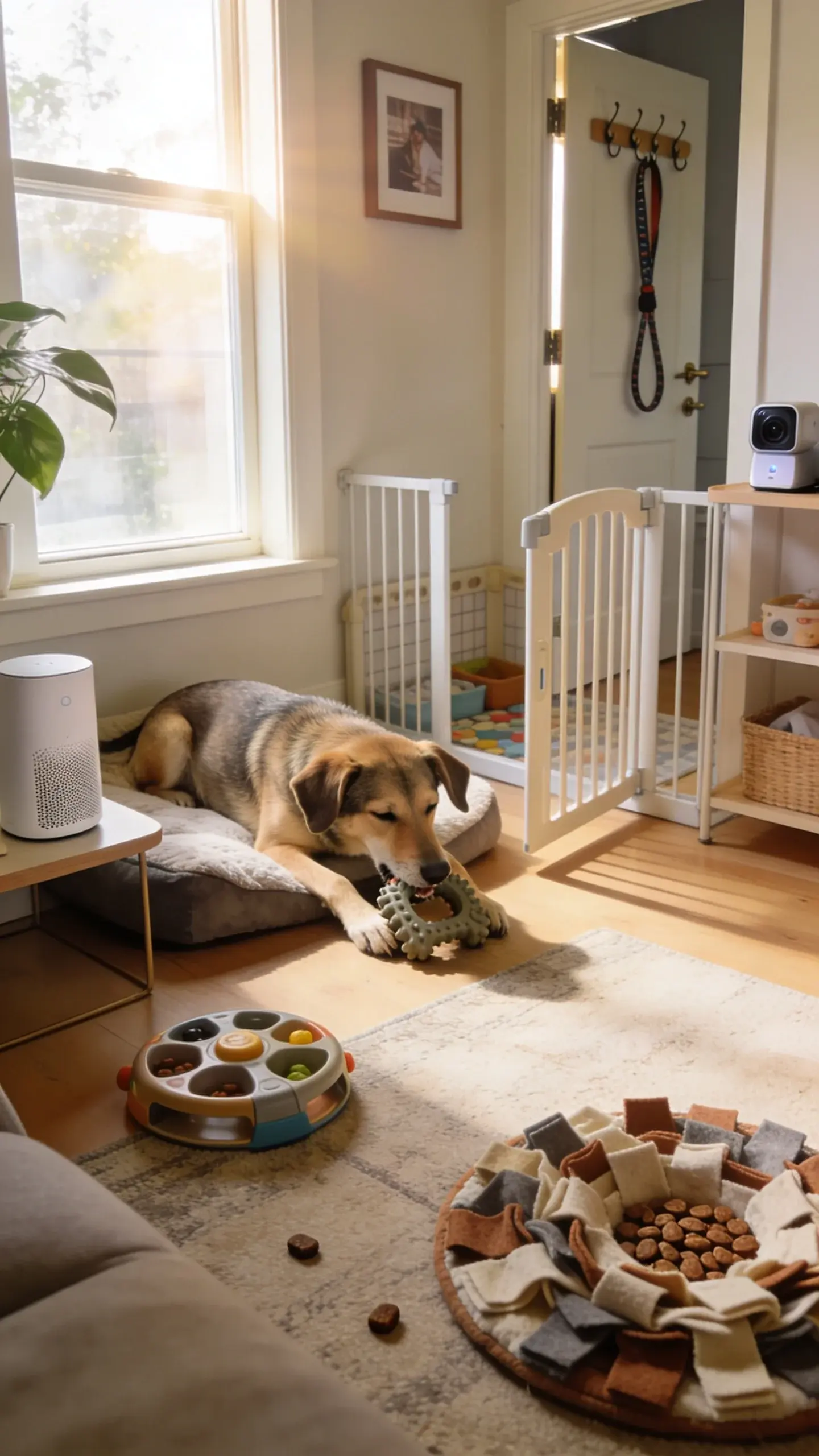
You can build alone-time confidence without any doors. Sprinkle these exercises throughout your day.
- Place training: Send your dog to a mat, reward calm, release after a minute. Build to 5 minutes while you cook or scroll.
- Scatter feeding: Toss 10 pieces of kibble across a small area. Let them sniff and hunt. It satisfies their brain and tires them out.
- Chew time on cue: Hand a chew, say “settle,” and step away for 30 seconds. Return, praise calm, then step away again for a bit longer.
- Independence walks at home: Move room to room and don’t invite them every time. If they follow, gently close a baby gate for 30 seconds, then reopen without comment.
Energy Matters: Match Output To Your Dog
Tired dogs cope better, but don’t flood them before you leave. Overarousal can rebound.
- Before leaving: 15 to 20 minutes of sniffy walk or light training works wonders.
- Avoid: Intense fetch right before you go. That spikes adrenaline.
- After you return: Keep greetings calm for 2 minutes, then party.
Use Smart Tools (And Skip The Gimmicks)
Tech and gear can smooth the process, but they won’t replace training.
Helpful picks:
- Pet camera to check stress signs and adjust timing
- Treat dispenser for mid-absence rewards
- White noise machine or speaker for brown noise playlists
- Baby gates and pens for safe confinement
Skip or be cautious with:
- Unsupervised soft toys for chewers
- Punishment collars or yelling at recorded barking
- Crates for dogs who panic in them
FYI, crates help many dogs, but they are not a cure-all. Comfort first, duration second.
Troubleshooting: When It Goes Sideways
Even with a solid plan, life happens. If your dog backslides, don’t sweat it. Adjust and keep going.
If Your Dog Barks Right Away
- Lower your duration. Try 10 to 30 seconds again.
- Increase easier reps with more frequent but shorter exits.
- Deliver a surprise jackpot on return, then reset to tiny steps.
If Destruction Happens
- Dog-proof the zone. Remove chewable rugs and wires.
- Offer a tougher puzzle or frozen chew right before you leave.
- Reduce the alone-time window for now and rebuild.
If Your Dog Won’t Touch The Enrichment
That usually means stress runs too high. Shorten the absence until they chew or lick comfortably. Then build time slowly again.
When To Call In Reinforcements
If you cannot get past 5 to 10 minutes without signs of panic, bring in a certified trainer or vet. Medication or supplements sometimes support training. IMO, getting professional help early saves months of frustration.
Sample Two-Week Plan You Can Steal
Use this as a template and tweak for your dog’s pace.
Week 1
- Daily desensitization to keys, coat, door sounds
- Place training 5 minutes twice a day
- Alone-time drills: 5 to 30 seconds out of the room, 10 reps
- Front-door exits: 10 to 60 seconds, 6 to 8 reps across the week
- Enrichment practice: Frozen Kong in chill zone with you nearby
Week 2
- Mailbox runs: 2 to 5 minutes, 1 to 2 times daily
- Calm pre-departure routine every morning
- Gradually extend to 10 minutes, then 15 minutes if calm holds
- Rotate enrichment so it stays exciting
- Use a camera to confirm your dog settles within 3 to 5 minutes
If your dog shows stress, drop back to the last easy level for a day or two. Progress isn’t linear. That’s normal.
Real-Life Tips That Make A Big Difference
- Leave without a fanfare, return without a parade. Save the hype for after you put your bag down.
- Keep departures at different times. Randomize so your dog doesn’t clock-watch.
- Hire a walker or sitter during the training phase if you need longer absences than your dog can handle.
- Feed part of breakfast in a puzzle toy so alone time equals mealtime jackpot.
- Use scent comfort: Leave a worn T-shirt in the chill zone. It helps some dogs relax.
- Mind the bathroom break. Empty bladders and calm brains go hand in hand.
IMO, consistency beats intensity here. A little every day builds a rock-solid habit.
FAQ
How long can I leave my dog alone once trained?
Most adult dogs do fine for 4 to 6 hours with proper exercise, enrichment, and water. Puppies need potty breaks every 2 to 4 hours depending on age. Even well-trained dogs appreciate a midday break if you can swing it.
Should I crate my dog when I leave?
Crate only if your dog sees the crate as a safe den. If they pant, scratch, or try to escape, switch to a gated room or pen and retrain the crate slowly. Comfort first, containment second.
Will getting a second dog fix separation anxiety?
Sometimes it helps, but it often doesn’t. Dogs bond to humans, not just other dogs. Train independence first. If you add a second dog, do it because you want another companion, not as a quick fix.
Do calming supplements or pheromones work?
They can take the edge off for some dogs. Pheromone diffusers, calming chews, or vet-prescribed meds may help when paired with training. None of these replace gradual desensitization.
What if my dog cries the moment I touch the doorknob?
Start inside the house. Touch the knob, treat. Open and close it, treat. Walk out for one second, treat on return. Build microscopic wins until the knob means “boring” again.
Can I talk to my dog through a camera while I’m out?
Use voice sparingly. For some dogs it helps. For others it frustrates them because they hear you but can’t find you. Try silent treat drops instead and watch which option keeps them calmer.
Conclusion
You don’t need superhuman patience to teach alone-time confidence. You need tiny steps, consistent routines, and rewards that make your dog think, alone time rocks. Keep absences boring, enrichment delicious, and progress gradual. Do that, and you’ll leave the house without guilt, and your dog will nap like a pro. Win-win, couch intact.
About the Author

David
Blogger/YouTuber
A guitar nerd, the myth, the legend.