
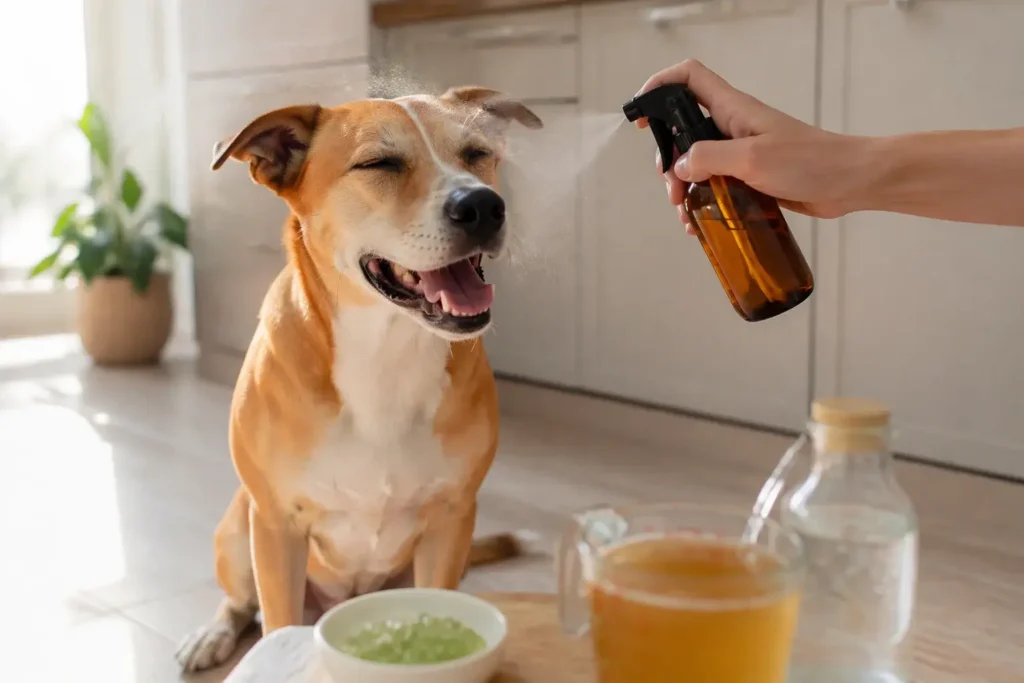
You love your dog. Your nose? Not always a fan.
If your pup smells like they rolled in “Eau de Mystery Puddle,” I’ve got you. Let’s whip up a safe, dog-friendly deodorizing spray you can make at home in minutes.
No heavy perfumes. No sketchy chemicals. Just simple ingredients that neutralize stink and keep coats happy.
Why DIY Beats Store-Bought Sprays
Store shelves overflow with “fresh” dog sprays, but have you read those labels? Many include strong fragrances that can irritate sensitive dog noses. Some even leave coats sticky or dry. Hard pass.
Homemade sprays give you control. You pick gentle ingredients. You skip overpowering scents. You save money. And you can tailor it if your dog has allergies or sensitive skin. Win-win.
The Core Recipe: Simple, Safe, and Actually Works
This recipe focuses on odor neutralizing, not covering smells with perfume. It’s light, clean, and dog-approved.
Ingredients
- 1 cup distilled water
- 1 tablespoon 100% aloe vera juice (no alcohol, no additives)
- 1 teaspoon fractionated coconut oil or argan oil
- 1 teaspoon food-grade vegetable glycerin (optional for softness)
- 2 teaspoons organic apple cider vinegar (ACV), well-diluted
Why these?
- Distilled water keeps the mix clean and shelf-stable longer.
- Aloe juice soothes skin and helps with minor itchiness.
- Light oils add shine without greasiness.
- Glycerin softens the coat and locks in moisture.
- ACV helps neutralize odors and balance the coat. We keep it very diluted so it stays gentle.
Instructions
- Add all ingredients to a clean, 12-ounce spray bottle.
- Shake well for 10 to 15 seconds before each use.
- Lightly mist your dog’s coat from the neck down. Avoid eyes, nose, mouth, and inside ears.
- Brush through for even distribution and extra shine.
Frequency: Use as needed, up to once daily. If your pup has sensitive skin, start with every other day and see how they do.
Dog-Safe Scent Options (If You Really Want a Hint of Fresh)
Most dogs hate strong fragrances, and their noses work way better than ours. If you want a whisper of scent, stick with super diluted, dog-safe hydrosols instead of essential oils.
- Lavender hydrosol: Calming and very gentle. Start with 1 tablespoon per 1 cup water.
- Chamomile hydrosol: Great for sensitive skin. Same 1 tablespoon per cup.
- Rose hydrosol: Light floral scent, but go easy. 1 teaspoon per cup to start.
FYI: Hydrosols differ from essential oils. They’re far less concentrated and usually better tolerated by dogs. IMO, avoid essential oils in DIY dog sprays unless you’ve cleared it with your vet.
Safety First: What Not To Use On Dogs
We love a good DIY, but a few popular “freshening” ingredients don’t belong on dogs.
- Essential oils like tea tree, peppermint, eucalyptus, citrus: often too strong and can irritate or even harm dogs.
- Human perfumes or body sprays: loaded with alcohols and synthetic fragrance.
- Baking soda: can irritate skin when left on the coat as a spray. Save it for odor control on carpets.
- Hydrogen peroxide: too harsh for routine use on skin or coat.
- Witch hazel with alcohol: drying and irritating. If you must, choose alcohol-free and test first.
When in doubt, ask your vet. If your dog has allergies, hot spots, or chronic itchiness, keep things ultra simple and skip the vinegar and scents.
Upgrade Ideas For Specific Needs
You can customize the base recipe depending on your dog’s coat and lifestyle.
For Dry or Dull Coats
- Add 1 extra teaspoon of fractionated coconut oil or swap for jojoba oil.
- Increase glycerin to 2 teaspoons for more softness. Don’t go higher or the coat might feel tacky.
For Stink After Rainy Walks
- Use 1 extra teaspoon of ACV to help neutralize that wet-dog aroma.
- Towel-dry first, then spray lightly and brush.
For Sensitive Skin
- Remove ACV entirely at first. Test the base recipe for a week.
- Replace with 1 tablespoon chamomile hydrosol if you want mild soothing benefits.
For Double-Coated Breeds
- Brush before and after spraying to reach the undercoat.
- Use a detangling brush or slicker to distribute evenly and avoid clumping.
Application Tips So Your Dog Doesn’t Side-Eye You
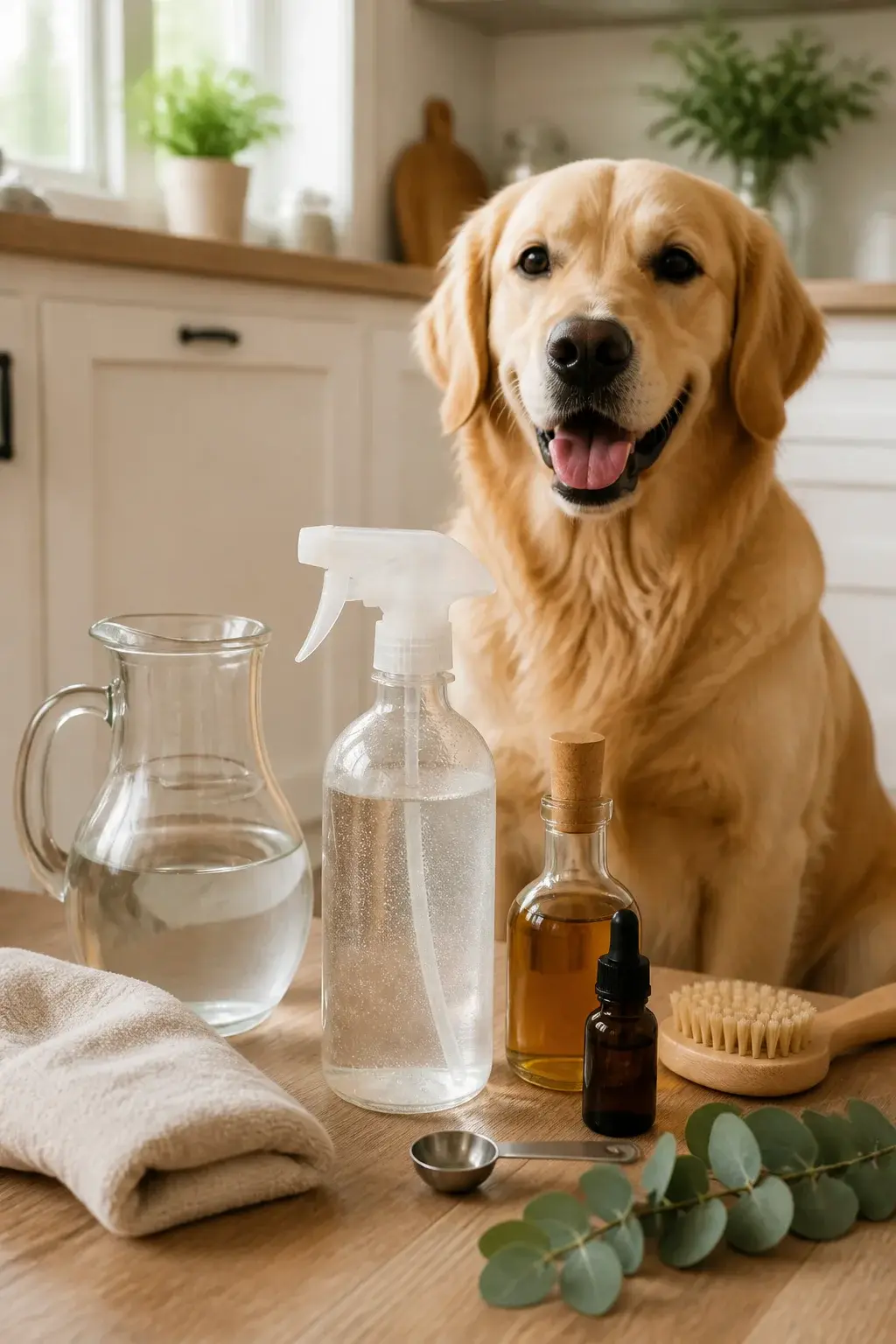
Most dogs want nothing to do with mist in their face. Fair. Use a slow, calm approach.
- Introduce the bottle first. Let your pup sniff it. Treat. Praise. Repeat.
- Spray into your hands and wipe on the chest and neck if the sound spooks them.
- Always avoid face, eyes, nose, mouth, and inside ears.
- Mist lightly. You want a gentle refresh, not a bath.
- Brush or hand-scrunch coat after spraying for even coverage.
Crate and Car Freshening
Spray the inside of a crate pad or car blanket lightly, let it dry, then let your dog back in. Never soak bedding. A light mist avoids damp smells and keeps skin happy.
Storage, Shelf Life, and Clean Bottles
Water-based sprays last longer when you keep things clean.
- Use distilled water to reduce microbes.
- Wash and dry the bottle thoroughly before each new batch.
- Label the bottle with the date and ingredients. Future you will appreciate it.
- Refrigerate to extend freshness, especially in warm climates.
- Discard after 2 to 3 weeks or sooner if you notice any change in smell or color.
If you want a longer shelf life, make smaller batches. It’s quick. No need to add preservatives for a simple home spray you use frequently.
When Deodorizing Spray Isn’t Enough
Sometimes the stink has a root cause. A spray helps temporarily, but persistent odors can hint at health or grooming issues.
- Ear infections smell yeasty or sour. Check for redness, head shaking, or scratching.
- Dental problems cause bad breath that no spray will fix. Schedule a vet dental check.
- Skin infections or hot spots can smell funky. Look for redness, hair loss, or licking.
- Anal gland issues smell fishy. If you know, you know. Time for the vet or groomer.
Also, regular grooming works wonders:
- Brush several times a week to remove dirt and trapped odors.
- Bathe every 4 to 8 weeks with a dog-safe shampoo, depending on breed and activity.
- Rinse thoroughly. Residue equals itch and stink.
Quick Variations You’ll Actually Use
Want different vibes without a chemistry lab? Try these easy swaps.
The Ultra-Gentle “Puppy Lite”
- 1 cup distilled water
- 1 tablespoon aloe vera juice
- 1 teaspoon fractionated coconut oil
No vinegar, no scents. Great for puppies and sensitive adults. Always check with your vet for very young pups.
The Post-Park Neutralizer
- 1 cup distilled water
- 1 tablespoon aloe vera juice
- 2 teaspoons ACV
Simple, light, and surprisingly effective after muddy romps.
The Shine Booster
- 1 cup distilled water
- 1 tablespoon aloe vera juice
- 1 teaspoon argan oil
- 1 teaspoon glycerin
Leaves coats glossy, especially on short-haired breeds.
Pro Groomer Moves You Can Steal
Want that freshly-groomed vibe without a salon bill?
- Brush first, spray second, brush again. That sandwich method distributes evenly and lifts dander.
- Use a microfiber towel to gently buff the coat after spraying. Instant shine.
- Target hot zones: chest ruff, collar line, belly fur, and feathers. Skip the face.
- Clean the collar and harness. Those soak up stink. Hand-wash weekly for a huge difference.
FAQ
Can I use essential oils in my dog’s deodorizing spray?
I strongly recommend skipping them. Many popular oils can irritate or harm dogs, and concentration matters a lot. If you want a hint of scent, use a small amount of dog-safe hydrosol instead. Always introduce new ingredients slowly and watch your pup for any reaction.
Is apple cider vinegar safe for dogs’ skin?
In low amounts, yes for most dogs. It can help neutralize odors and balance the coat. Keep it very diluted, avoid any open sores, and stop if you notice redness or itching. If your dog has sensitive skin, try the base recipe without ACV first.
How often can I spray my dog?
You can use a light mist daily if needed. If your dog has any skin issues, limit it to a few times a week and check in with your vet. More important than frequency: apply lightly and brush through.
Can I spray my dog’s face?
Nope. Avoid eyes, nose, mouth, and inside ears. Spray into your hands and gently wipe the fur on the cheeks or under the chin if needed. Never aim the bottle at their face.
What if the spray doesn’t fix the smell?
Persistent odor often means something else needs attention: ears, teeth, skin, or anal glands. Also check the collar, harness, and bedding. If you rule those out and the smell sticks around, schedule a vet visit.
Does this replace baths?
Not quite. Think of it as a refresher between baths or a post-walk clean-up. Regular baths with a dog-safe shampoo plus brushing will do more for long-term freshness than any spray, IMO.
Conclusion
You don’t need heavy perfumes to beat dog stink. A simple DIY deodorizing spray with distilled water, aloe, a touch of light oil, and a little ACV keeps coats fresh without irritating your pup. Customize it for sensitive skin, use it lightly, and pair it with regular grooming. Your dog stays comfy, your home smells better, and your nose finally gets a break. Victory indeed.
About the Author

David
Blogger/YouTuber
A guitar nerd, the myth, the legend.