
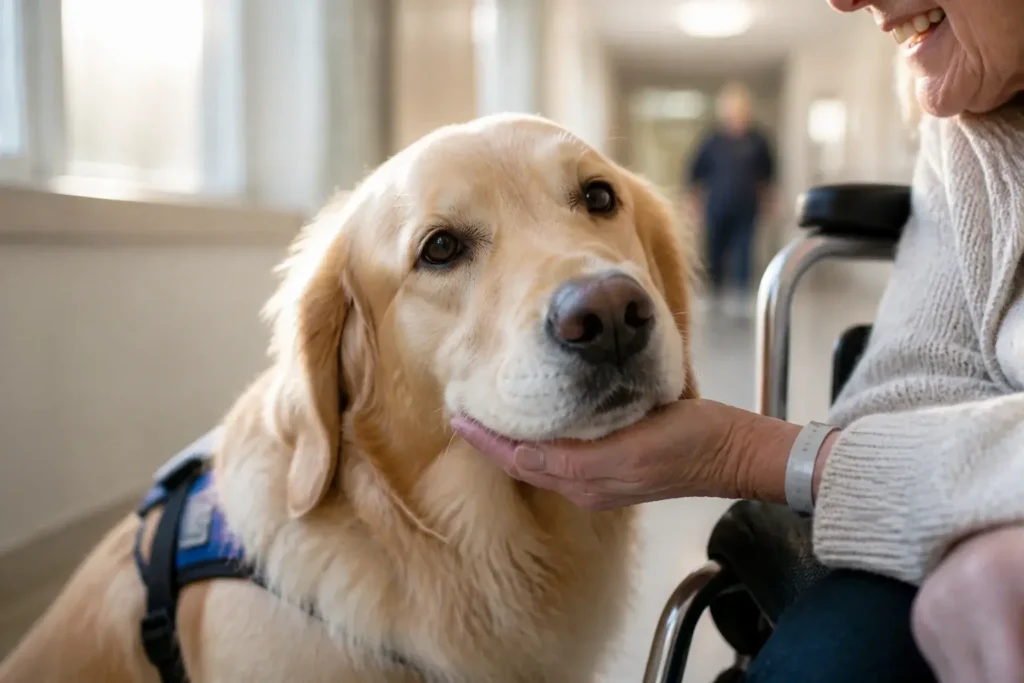
You want to train your dog to bring comfort, confidence, and calm to people who need it most. That’s a beautiful goal.
Good news: with the right approach, many friendly, steady dogs can become fantastic therapy partners.
Let’s map out what works, what to avoid, and how to keep both you and your dog smiling through the process.
What Makes A Great Therapy Dog, Really?
Not every sweetheart pup wants the therapy gig, and that’s okay. Therapy work asks for a dog who enjoys strangers, unpredictable environments, and plenty of touching. Think waggy tail plus chill vibes.
Core qualities to look for:
- Stable temperament: Recovers quickly from surprises like wheelchairs, clattering carts, or sudden laughter.
- People-focused: Leans into gentle touch and actively seeks human connection.
- Polite manners: No jumping, mouthing, or demand-barking for attention.
- Calm confidence: Comfortable on slick floors, around medical equipment, and in tight spaces.
- Solid health: Up-to-date on vet care, clean coat, trimmed nails, and no pain issues.
Quick Temperament Check
Ask yourself: does your dog soften when a child hugs them? Can they ignore dropped food? Do they startle and then recover within a breath or two? If you said yes across the board, your pup might love this job.
Essential Obedience Your Dog Must Nail
We’re not talking competition-level obedience. We’re talking everyday politeness that feels effortless in busy environments. Keep it fun and upbeat.
Teach and proof these basics:
- Loose-leash walking: No towing you like a sled. Practice around distractions with treats at your knee.
- Sit and down on cue: Holds position while people greet and pet.
- Stay and wait: Keeps cool when you step away or when a nurse rolls by.
- Leave it: Ignores pills on the floor, snacks on tables, or tempting tissues. Yes, tissues are apparently gourmet.
- Come when called: Reliable recall in hallways and lobbies.
- Settle on a mat: Parks their body and relaxes between visits.
Proofing Around Real-World Distractions
Work near wheelchairs, walkers, canes, and beeping sounds. Start at a distance, reward calm curiosity, and then move closer as your dog relaxes. Keep sessions short so your dog leaves wanting more.
Socialization That Actually Builds Confidence
Therapy dogs meet people of all ages, abilities, and energy levels. Your job: create a library of positive experiences so nothing feels new on visit day.
Make a socialization checklist:
- People wearing hats, masks, uniforms, and gloves
- Children who move fast and adults who move slowly
- Shiny floors, elevators, automatic doors, and echoey hallways
- Medical equipment that rolls, beeps, or rattles
Keep sessions brief and joyful. Treats, soft praise, and gentle petting help your dog link “weird thing” to “nice feelings.” If your dog stiffens or looks unsure, back up and reward at a calmer distance. FYI, brave dogs aren’t born brave. They learn it with your help.
The Art Of Consent-Based Greeting
Teach your dog to approach, pause, and look to you for a cue. You say “go say hi” only when the person looks ready. If your dog turns away or leans back, you honor that and give them space. Consent-based greetings build trust and reduce stress for everyone.
Polite Petting And Handling Skills
Therapy dogs get touched in ways regular pets might not. You’ll want to train for gentle hugs, hand-over-head petting, and awkward angles.
Handling games to practice:
- Chin rest: Dog places their chin on your palm or lap and holds it. This invites soft petting.
- Body touches: Pair light ear, tail, and paw touches with a treat. Keep it slow and happy.
- Hug simulator: Use a rolled towel or your arms for a one-second “hug,” then treat. Build up gradually.
Teach A Crowd-Proof Position
A rock-solid sit or down at your side helps kids and seniors pet safely. Bonus move: “paws up” on a sturdy bench or bedside chair if allowed by the facility. It brings small dogs to a comfortable height and reduces strain on visitors.
Calmness Is A Trained Skill, Not A Personality Trait
Your dog can learn to downshift fast, even if they were born with zoomies. You just need the right toolkit.
Tools for encouraging chill:
- Mat training: Service-industry level patience. Reward for lying on a mat while you read or watch TV.
- Pattern games: Simple, predictable sequences like “look at me, treat; touch my hand, treat” lower arousal.
- Sniff breaks: Let your dog sniff between interactions. Sniffing reduces stress and resets the brain.
- Chew time: Frozen lick mats or safe chews at home build a relaxed routine. Keep chews out of visit sites, obviously.
Reading Your Dog’s Stress Signals
Watch for lip licking, yawning, whale eye, pinned ears, or a stiff tail. If you see a cluster of these, step out for a water break. You’re the manager of your dog’s emotional paycheck. Spend it wisely.
Hygiene, Gear, And Visit Etiquette
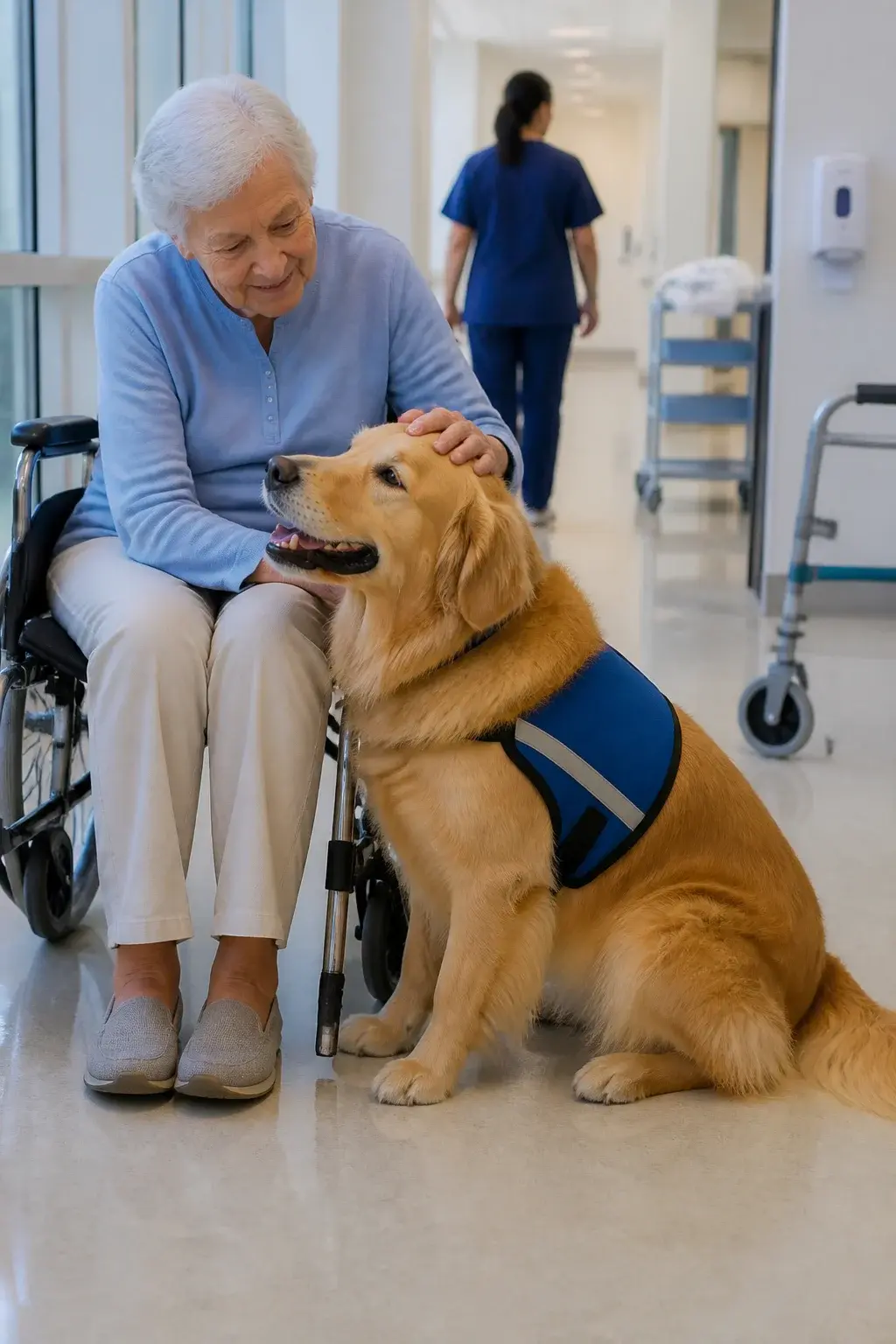
Therapy work means clean, tidy, and safe. Facilities care about infection control and comfort for vulnerable people.
Prep checklist before every visit:
- Clean coat and paws: Quick brush, wiped paws, clipped nails.
- Fresh breath: Dental wipes or a vet-approved dental chew earlier in the day.
- Appropriate gear: Flat collar or harness, 4-foot leash, ID tags, and waste bags. No retractables.
- Go bag: High-value treats, hand sanitizer, lint roller, water, small towel, and your dog’s mat.
- Rules check: Confirm the facility’s policies on feeding, paws on beds, and photo permissions.
Handler Skills That Impress Staff
– Introduce your dog and ask, “Where would you like us?” Staff know who wants visits and who needs quiet.
– Keep your dog on your body’s far side when passing equipment.
– Advocate kindly. If a situation feels too crowded or loud, say you’ll circle back. Everyone appreciates a safety-first team.
Certification, Insurance, And Getting In The Door
Most facilities prefer teams evaluated and insured through a recognized therapy dog organization. They aren’t trying to be annoying. They want consistent standards.
Typical steps:
- Basic training: Build manners and social skills at home and in class.
- Canine Good Citizen (CGC): Many orgs use it as a baseline. It tests real-world manners.
- Therapy-specific evaluation: Assesses response to crowds, medical gear, and unusual handling.
- Mentored visits: Shadow experienced teams for feedback.
- Registration and insurance: Coverage protects you and the facility.
FYI: Therapy dogs are not service dogs. Therapy teams volunteer to comfort others. Service dogs help one person with a disability and have public access rights. Different roles, different rules.
Training Games That Build Rock-Solid Skills
Let’s make it fun. These quick games layer obedience, confidence, and impulse control without boring your dog.
1. The “Go Say Hi” Game
– Friend stands still with hands at their sides.
– You cue “go say hi.” Dog approaches, gets gentle petting for two seconds, then you call back to “here.”
– Reward big for the return. You build polite greetings and a snappy recall all at once.
2. The “Moving Hug” Practice
– Walk slowly while a helper briefly rests a hand on your dog’s shoulder.
– Treat for loose-leash walking plus accepting touch.
– Add longer touches and different angles gradually.
3. Elevator Confidence
– Practice on a stationary platform or a small room first.
– Cue “in,” then reward calm standing.
– Add tiny movements like door openings, then real elevator rides with treats for relaxed behavior.
4. Leave-It Levels
– Level 1: Closed fist with a treat. Dog backs off, say “yes,” reward from the other hand.
– Level 2: Treat on the floor under your shoe.
– Level 3: Tissue decoy. Your dog learns that ignoring temptations pays better than scavenging.
Common Mistakes To Avoid
– Skipping rest days: Therapy work drains social batteries. Schedule decompression time with sniffy walks and naps.
– Over-cueing: If you repeat “sit sit sit,” your dog learns to tune you out. Say it once, then help them succeed.
– Forcing interactions: Your dog can decline a greeting. Respect the no.
– Rushing certification: Build habits first, test later. Confidence beats cramming.
– Using punishment: Corrections can sour social behavior. Reward what you want. Redirect the rest.
Sample Training Schedule That Won’t Fry Your Brain
– Mon: 10-minute leash manners walk, 5-minute mat training at home.
– Tue: Socialization field trip to a hardware store parking lot. Work on “leave it.”
– Wed: Handling practice and chin rest. Short sniff walk for decompression.
– Thu: Pattern games, recall tunes up, elevator ride test if available.
– Fri: CGC-style run-through with a friend acting as evaluator.
– Sat: Practice a short mock visit: greet, settle, say hi, exit.
– Sun: Rest day. Couch cuddles and a gentle nature walk. IMO the rest day matters most.
FAQ
What age should I start therapy dog training?
Start socialization and manners right away with puppies, but wait for emotional maturity before official evaluations. Many dogs feel ready around 1.5 to 2 years old. Older rescue dogs can succeed too if they enjoy people and handle novelty well.
How long does it take to get certified?
Plan for a few months to a year. It depends on your dog’s starting skills and your practice routine. Focus on steady progress and quality reps over speed.
Can reactive or shy dogs become therapy dogs?
Some can build confidence, but consistent reactivity usually disqualifies therapy work. Your dog’s comfort comes first. If crowds stress your pup, consider alternative jobs like reading buddy sessions at home with known visitors or scent work for fun.
What treats and rewards work best during visits?
Use small, soft treats that your dog chews quickly and swallows easily. Keep hands clean and follow facility food rules. If treats aren’t allowed, use quiet praise, gentle scritches, or a brief sniff break.
Do therapy dogs need special grooming?
Keep nails short, coat brushed, and paws clean before every visit. Wipe drool and eye goop, and avoid heavy perfumes. A tidy, neutral bandana or vest can signal “working team,” but check the organization’s dress code.
How often should we visit?
Start with short, low-frequency visits, like 30 minutes once a week. Watch your dog’s energy and adjust. Quality beats quantity every time.
Conclusion
Therapy dog training looks simple on the surface: be friendly, be calm, be clean. The magic happens when you layer those basics with thoughtful socialization, rock-solid manners, and crystal-clear consent. Build the skills slowly, keep sessions fun, and honor your dog’s needs. You’ll create a team that brightens rooms, lifts hearts, and leaves everyone a little lighter. That’s the good stuff, FYI.
About the Author

David
Blogger/YouTuber
A guitar nerd, the myth, the legend.