
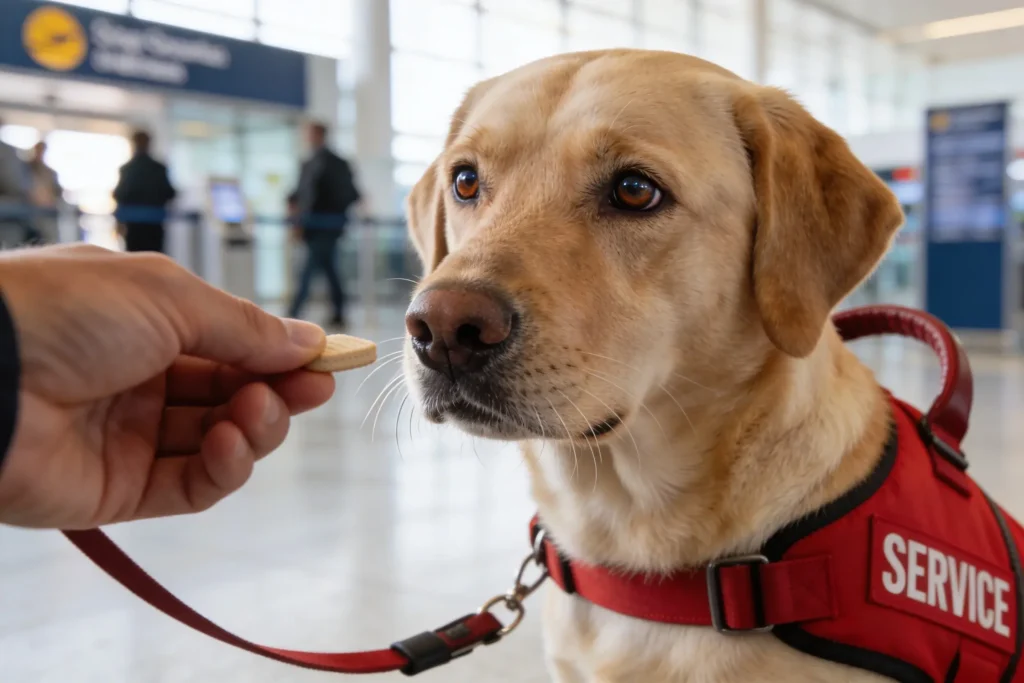
You want a calm, unflappable service dog who handles chaos like a Zen master. Totally doable.
We’ll cover the essentials that actually matter in the real world, not just fancy tricks for Instagram.
Ready to build a partnership that works everywhere from crowded airports to quiet libraries? Let’s go.
Know The Mission: Task First, Everything Else Second
Before you worry about perfect heel work or a photo-ready sit, define the dog’s job. Service dog training centers on legally defined, disability-mitigating tasks. That means your dog does specific actions that help with your day-to-day, not general obedience flexes.
Write down the top three tasks you need. Think item retrieval, deep pressure therapy, mobility support, medical alert, or interruption of harmful behaviors. Crystal-clear tasks guide everything: gear, environments, and how you reward.
Match Temperament To The Job
– Mobility support: confident, sturdy, slow-to-react dog.
– Medical alert: scent-driven, persistent, loves routine.
– Psychiatric support: gentle, people-neutral, steady recovery after startle.
– Hearing dog: curious, responsive, quick to target and nudge.
If your dog’s vibe screams “social butterfly,” asking for laser focus in busy places will feel like pushing a beach ball uphill. Choose or adapt wisely.
Foundation Skills That Make Everything Easier
Solid basics keep your dog safe and focused. Aim for reliability at home, then proof them everywhere.
– Name Response: Say the name, dog snaps eyes to you. Reward like you mean it.
– Marker Training: Use a clear “Yes!” or clicker to mark correct behavior. Timing beats volume.
– Loose-Leash Walking: No pulling, no zigzagging. You control the route, your dog controls four feet.
– Settle On Mat: Your portable off-switch for restaurants, waiting rooms, and flights.
– Leave It / Drop It: Trash chicken bones do not count as street tapas. Your dog needs to know that.
Micro-Sessions Win
Train for 3-5 minutes, several times a day. Stop while your dog still wants more. Short, frequent reps beat long marathons and prevent sloppy work.
Task Training: Turn Behaviors Into Real Help
Pick one task, break it into tiny steps, and chain them only after each step looks smooth.
Example: Deep Pressure Therapy (DPT)
1. Teach “Paws Up” onto a lap or cushion using a lure, then add a cue.
2. Add duration. Count in your head. Reward at 3s, 5s, 8s, 12s.
3. Add gentle weight with chest across thighs. Reward calm stillness.
4. Add a release cue so the dog gets off only when told.
Example: Item Retrieval
– Start with a dumbbell or soft object. Mark any nose touch.
– Shape to mouth hold, then a one-second hold, then walking with it.
– Add “Take” and “Give.”
– Generalize to keys, wallet, medication bag. Use different textures and shapes.
Proof Tasks Under Pressure
Once the behavior works at home, add:
– Distance: You cue from across the room.
– Duration: Long holds or sustained pressure.
– Distraction: TV on, doorbell, people chatting, food nearby.
Only raise one difficulty at a time. If your dog struggles, lower criteria and win again.
Public Access Skills: Calm, Neutral, Invisible
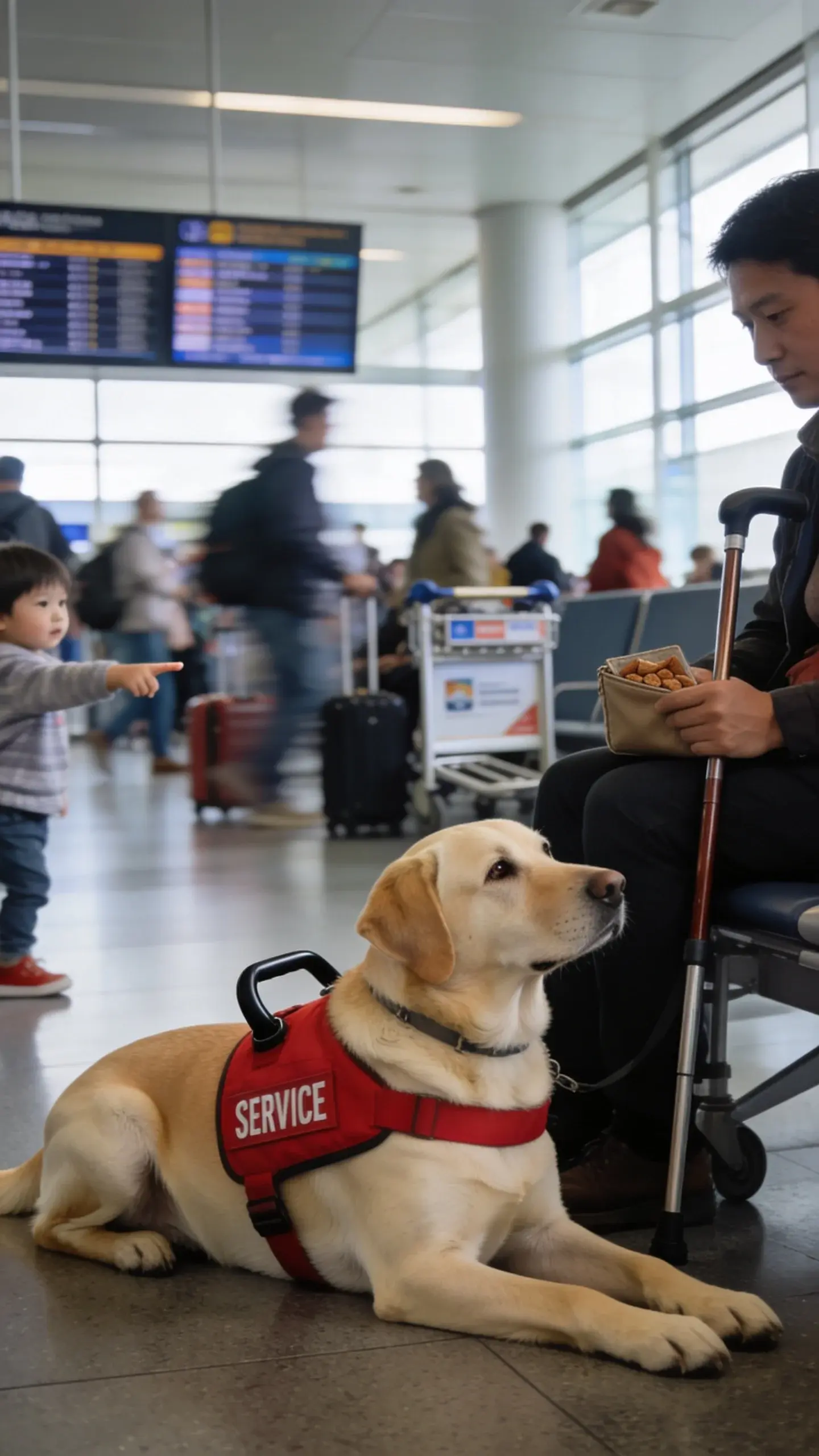
A service dog must behave like a polite shadow. The public should barely notice them, and IMO that’s a flex.
Core behaviors for public spaces:
– Neutrality to people and dogs: No greeting unless cued.
– Ignore food on the floor: Yes, even the french fry that calls to all living creatures.
– Stationing: Tuck under chairs and out of foot traffic.
– Noise recovery: Startle is normal, rapid recovery is trained.
– Grooming tolerance: Handle paws, ears, harness adjustments without drama.
Desensitization Game Plan
– Start with low-intensity versions: quiet store at off-hours, distant carts, slow elevators.
– Pair new stimuli with high-value rewards.
– Gradually decrease distance and increase intensity as your dog stays calm.
– Track triggers and progress in a simple log. Data beats vibes.
Equipment: Tools, Not Magic Wands
Use gear that supports the job but never replaces training. FYI, fancy harnesses can’t fix weak foundations.
– Front-clip harness: Helps with control and turning power.
– Mobility harness: Only after vet clearance and mature musculoskeletal development.
– Treat pouch + clicker: Keep rewards fast and consistent.
– Mat: Your portable relaxation zone.
– Muzzle training (optional): Good life skill for vet procedures and emergencies. Condition it positively.
Reward Strategy That Works
– Use soft treats, pea-sized. Pay more for harder stuff.
– Phase to variable reinforcement only after behaviors reach fluency.
– Mix in real-life rewards: entering a store, hopping on the couch, greeting a friend.
Common Pitfalls You Can Skip
– Skipping temperament screening: Love your dog, but not every dog enjoys this job.
– Rushing public access: If you can’t nail it at home, a mall won’t save you.
– Training when stressed: Dogs read you like subtitles. Train when you feel calm and patient.
– Over-cueing: One cue, one behavior. If your dog ignores it, your cue lost value. Rebuild.
– Inconsistent rules: Couch today, off tomorrow creates chaos. Decide the rules and stick to them.
Socialization That Actually Builds Resilience
No, you don’t need fifty strangers petting your puppy. You need positive, controlled exposures that teach neutrality.
Focus on:
– Surfaces: metal grates, slick floors, grass, gravel.
– Sounds: carts, alarms at low volume first, PA systems, blenders.
– Motion: bikes, scooters, luggage wheels, strollers.
– Handling: collar grabs, ear checks, gentle restraint, nail trims.
– Varying environments: bus stops, park benches, store entrances, parking garages.
Keep sessions short, feed generously for calm observation, and leave before your dog tips into worry. Quality over quantity, always.
Build Stamina: Brains And Body
Service work demands focus and endurance. Train both.
– Cardio: Walks, structured fetch, swimming if safe.
– Strength: Cavaletti poles, hill walks, controlled sit-to-stand reps.
– Impulse control games: It’s Yer Choice, food bowl waits, threshold manners.
– Focus under fatigue: Practice easy tasks after light exercise to mimic real life.
Check in with your vet, especially for large breeds or mobility tasks. Growth plates close late, and joints deserve respect.
Record-Keeping: Your Secret Weapon
A simple spreadsheet or notes app can level up your program, IMO.
Track:
– Behaviors in training and current criteria
– Success rate per session
– Distractions present
– Notes on stress signals: lip licking, yawns, shake-offs, sniffing detours
– Next steps before your next session
Patterns jump out fast on paper. You’ll adjust smarter and progress cleaner.
When To Get A Pro Involved
Bring in a certified trainer with service dog experience if you hit:
– Fear or reactivity to people or dogs
– Task training plateaus longer than three weeks
– Leash frustration that escalates
– You feel stuck, frustrated, or your dog shuts down
A few targeted sessions can save months of confusion. Worth it.
Legal And Etiquette Basics
I’m not a lawyer, but here’s the gist for many places like the U.S. (check your local laws):
– Service dogs perform disability-mitigating tasks. Emotional support animals are not the same.
– No certification card required by law, but solid behavior matters.
– Businesses may ask only two questions: is it a service dog required because of a disability, and what tasks it performs.
– Keep your dog under control at all times. If they bark, lunge, or eliminate indoors, you can be asked to leave.
Etiquette tip: keep interactions short and polite. You’re there to live your life, not run a meet-and-greet.
FAQ
How old should a service dog be to start training?
Start foundations early with puppies, but keep it gentle and fun. Socialization, name response, and mat work can begin right away. True task training and heavier work waits until your dog matures emotionally and physically.
Can I train my own service dog?
Yes, in many places you can. The bar for behavior and reliability stays high though, so plan for a year or more of daily training and public proofing. Many owner-trainers work with pros for specific hurdles or public access polishing.
What breeds make the best service dogs?
Temperament and health beat breed stereotypes. Labs, goldens, and poodles show up a lot because they offer biddability and stable nerves. That said, any individual dog with the right temperament and structure can succeed.
How long does it take to fully train a service dog?
Expect 12 to 24 months for consistent, reliable performance. Some tasks come quickly, but public access neutrality and bombproof confidence take time. Rushing creates holes that show up in high-stress moments.
Should my service dog interact with the public?
Usually no. Interaction blurs the job and charges up social expectations. Teach polite neutrality so your dog focuses on you and the task, not random compliments about their cute eyebrows.
What if my dog fails a session or melts down in public?
Abort mission with grace. Step away, find quiet, and let your dog reset. Later, train the same scenario at a lower intensity and rebuild confidence with easy wins.
Wrap-Up: Train The Dog In Front Of You
Service dog training isn’t about perfection. It’s about building reliable tasks, bulletproof neutrality, and a relationship that holds under pressure. Go slow, reward generously, and celebrate tiny wins. If you stack enough small victories, you’ll wake up one day with a teammate who handles life like a pro.
About the Author

David
Blogger/YouTuber
A guitar nerd, the myth, the legend.