
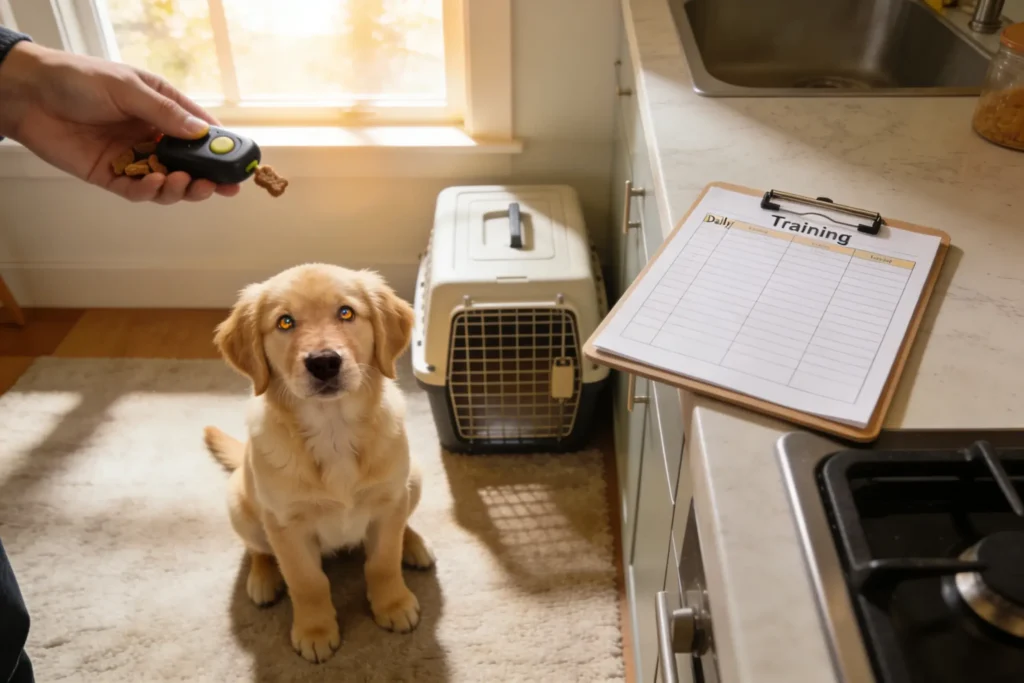
You brought home a tiny tornado with paws. Congratulations and condolences.
You need a plan before the zoomies hit and the rug becomes a chew toy. Good news: a simple schedule can turn chaos into cuddles without you losing your mind.
Let’s map out a day-by-day rhythm that builds great habits fast. Spoiler: consistency beats perfection every time.
Why A Schedule Beats “Winging It”
You can train skills without a schedule, but your puppy won’t connect the dots. Routine tells your pup when to potty, when to nap, and when you mean business. Fewer surprises equals fewer accidents.
Structure builds confidence. Puppies love predictability. You’ll see calmer behavior when meals, potty breaks, and play all happen at steady times.
Habits form around timing. If potty breaks always happen after meals and naps, your pup learns to hold it and go outside. That’s the dream, right?
The Daily Puppy Rhythm (8–16 Weeks)
Use this as your baseline. Adjust 30–60 minutes either way. Younger puppies need more breaks.
- 6–7 AM: Wake, Potty, Breakfast — Straight outside, then feed within 15 minutes. Short calm walk or play after.
- 8 AM: Potty + Crate Nap — Quick outside, then crate or pen for 60–90 minutes. Puppies sleep a lot. Let them.
- 9:30 AM: Potty, Training Burst — 5–10 minutes of sits, downs, name game, recall. Keep it upbeat.
- 10:30 AM: Potty + Chew/Quiet Time — Safe chew in crate or pen. Prevents chaos and teaches chill.
- 12 PM: Potty, Lunch (if under 4 months) — Some pups still eat three meals. Then potty again 10–15 minutes later.
- 1 PM: Nap — Crate or pen. Cover part of the crate to reduce FOMO.
- 2:30 PM: Potty, Play/Walk — Light walk or fetch. Keep sessions short. Young joints need care.
- 3 PM: Training Burst — Leash walking basics, place, or leave-it. End on a win.
- 4 PM: Potty + Quiet Time — Offer a frozen Kong or lick mat. Mental work tires more than sprints.
- 5–6 PM: Dinner, Potty — Feed, then outside again. Expect a bowel movement within 30 minutes.
- 7 PM: Social + Play — Low-key exposure to sounds, surfaces, grooming brushes. Treats for bravery.
- 8 PM: Last Training Burst — Settle on a mat, gentle handling, brief crate practice.
- 9–10 PM: Final Potty + Bed — Out one last time, then lights out. Keep bedtime consistent.
Nighttime Reality Check
Under 12 weeks, expect 1–2 overnight potty trips. Keep lights low, skip talking, go out, back in, done. Boring equals sleep.
The 3 Golden Windows: Potty Timing You Can Trust
When do accidents happen? Always around the same triggers. Catch these windows and you’ll win house training fast.
- Right After Waking — Morning or naps. Pick them up and go straight outside.
- 10–20 Minutes After Eating or Drinking — Watch for sniffing, circling, sudden quiet.
- After Play Sessions — Excitement loosens the bladder. Quick potty breaks prevent “surprises.”
Simple Potty Routine
- Same door, same potty spot, same cue every time.
- Minimal chatter until they finish. Then party: praise + tiny treat at the spot.
- If nothing happens in 5 minutes, back inside for 10 minutes of crate time, then try again.
Micro-Training Sessions That Build A Rockstar Dog
Keep sessions short and spicy. Think TikTok attention span, not lectures. Aim for 3–5 mini sessions a day.
Week 1–2 Focus
- Name Game — Say name once, reward eye contact. Repeat in different rooms.
- Sit and Down — Lure with treat, reward the position, release often.
- Come When Called (Recall) — Start indoors. Run away cheerfully, reward when they catch you.
- Crate = Cookie Cave — Feed meals in crate, toss treats in, door open at first.
Week 3–4 Focus
- Leash Foundations — Reward for a loose leash at your side, 5 steps at a time.
- Place/Mat — Lure onto mat, treat for staying put. Build calm on cue.
- Leave It/Drop It — Trade for a better treat. No chasing. No tug-of-war with forbidden socks.
Rule of thumb: End sessions before your puppy gets bored. One win, treat, and done beats a long slog. IMO, overtraining creates chaos and chewy shoes.
Socialization Without Overwhelm
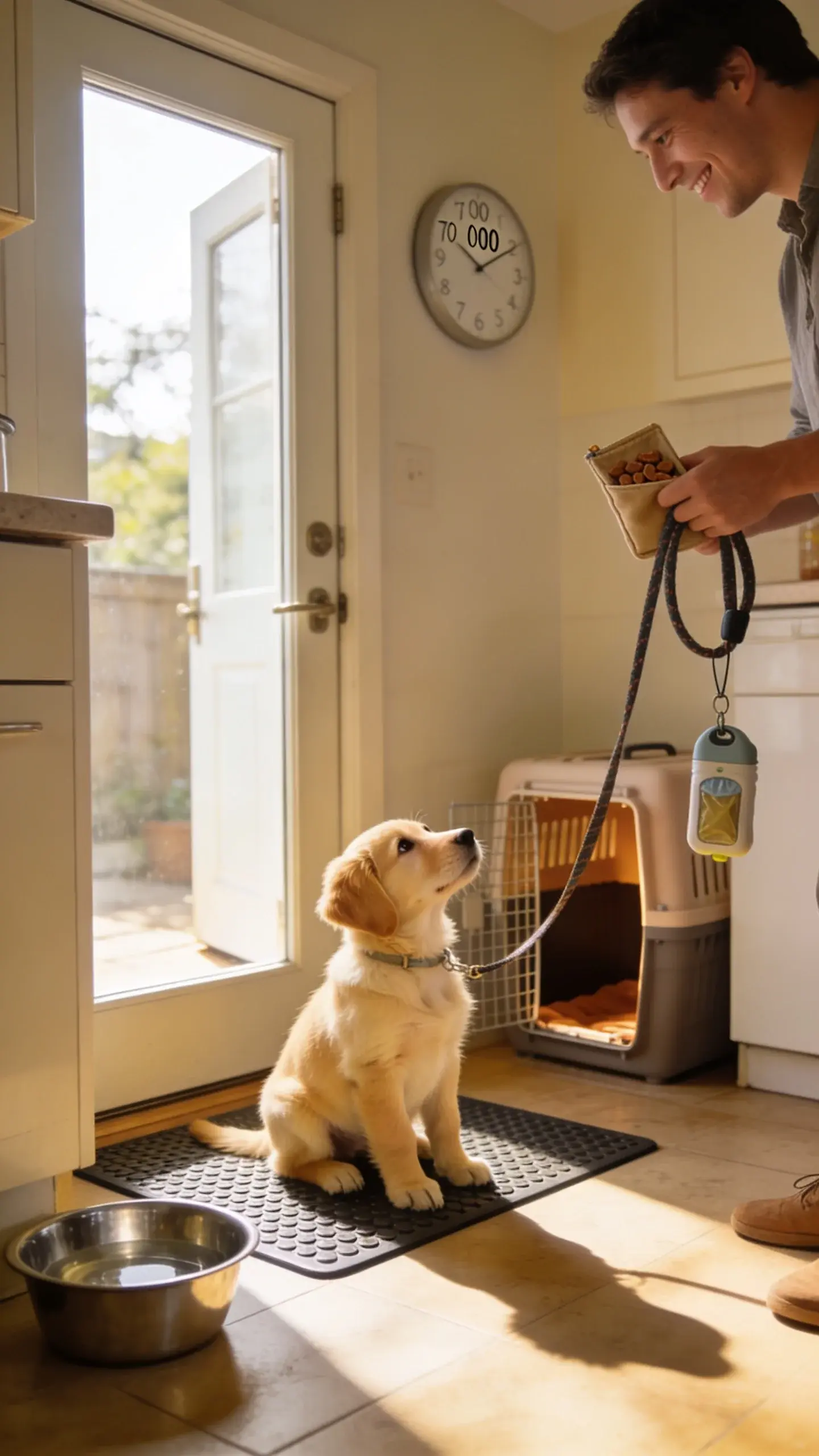
You don’t need a dog park to socialize. You need variety and good vibes. The goal: positive exposures to the world.
Safe Social Checklist
- Surfaces — Grass, gravel, tile, wood floors, rubber mats.
- Sounds — Vacuum, blender, doorbell, traffic, kids playing. Start quiet, pair with treats.
- Sights — Hats, bikes, strollers, wheelchairs, umbrellas.
- People — Friendly adults and calm kids. Advocate for your pup’s space.
- Dogs — Fully vaccinated, stable adult dogs only, one at a time.
Keep sessions under 10 minutes. If your puppy tenses, lip-licks, or avoids, create distance and feed. You’re building confidence, not testing bravery.
Crate, Pen, and Alone-Time Training
Puppies need off-switches. Crates and pens teach calm and protect your stuff. Also, separation skills matter long term.
Crate Basics
- Location — Bedroom at night, living area by day. Make it cozy with a blanket and safe chew.
- Entrance Game — Toss treats in, let puppy go in and out freely.
- Close the Door Briefly — 10–60 seconds, treat for quiet, open while calm.
Alone-Time Steps
- Start with 1–3 minutes out of sight while you’re home.
- Use a stuffed Kong when you leave.
- Build up to 20–30 minutes. If whining escalates, you went too fast. Scale back.
FYI: Whining happens. If it ramps down, you can wait it out. If it escalates to panic, you need shorter sessions and bigger chew bribes.
Exercise: Not Too Much, Just Right
We all want a tired puppy. But over-exercise fries growing joints and creates overtired gremlins.
- Rule: About 5 minutes of structured walking per month of age, up to twice daily.
- Mix in sniff walks, puzzle feeders, training, and short fetch on soft surfaces.
- Watch for the zoomie-to-gremlin pipeline. Overtired pups bite more and listen less.
Brain Games That Beat Endless Fetch
- Scatter kibble in the yard or on a snuffle mat.
- Hide-and-seek recalls indoors.
- Frozen Kongs and lick mats for decompression.
Common Hiccups And Quick Fixes
Things go sideways sometimes. You’re still a good dog parent.
- Accidents Inside — Interrupt gently, go outside, reward if they finish. Clean with enzymatic cleaner. Tighten the schedule.
- Mouthing and Nipping — Redirect to a toy, then end play for 30 seconds. Repeat. Hands are not chew ropes.
- Jumping on Guests — Reward four paws on the floor or a “place” cue. Brief time-outs if they pogo-stick.
- Barking in the Crate — Check needs. If met, wait for a second of quiet, then reward. Build duration slowly.
Consistency beats cleverness. Pick your cues, pick your rules, and stick to them. FYI, everyone in the house needs to play by the same rulebook.
Weekly Planner At A Glance
Here’s a simple template. Print it, tweak it, own it.
- Daily: 6–8 potty breaks, 3 mini training sessions, 2 naps longer than 90 minutes, 1 social exposure, 1 brain game.
- Monday: Leash skills focus.
- Tuesday: Handling and grooming practice.
- Wednesday: Place cue and settle time.
- Thursday: Recall games.
- Friday: Leave it and drop it.
- Weekend: New environment field trip, plus extra nap time.
IMO, this rotation keeps things fresh without overwhelming either of you.
FAQ
How long can my puppy hold it during the day?
Rule of thumb: months of age plus one equals hours they can try to hold it, up to about 4–5 hours. That’s a ceiling, not a goal. Young pups still need frequent breaks and lots of praise for outdoor success.
When should I start formal training?
Start day one with micro sessions. You’re teaching everyday life skills, not prepping for a PhD. Name recognition, sit, and recall happen in minutes when you keep it fun and pay well.
What treats should I use for training?
Use soft, pea-sized, high-value treats like tiny bits of chicken, cheese, or commercial training treats. Rotate flavors to keep motivation high. Kibble works for easy stuff; save jackpots for big wins.
My puppy hates the crate. What now?
Pair the crate with meals, chews, and calm vibes. Start with the door open, then close for seconds, not minutes, while you feed steady treats. Build slowly and never use the crate as punishment. If panic shows up, regress and go smaller.
Can I socialize before all vaccines?
Yes, with smart choices. Invite healthy, vaccinated dogs you know, visit friends’ yards, carry your pup in public, and attend well-run puppy classes that require vaccine proof. Avoid dog parks and high-risk areas until your vet gives the green light.
How do I stop biting and zoomies in the evening?
Plan for a late-afternoon potty, sniff walk, and brain game, then a nap. During witching hour, keep play structured with toy swaps, then switch to a frozen chew. If biting escalates, end the game and offer quiet time.
Conclusion
A good puppy training schedule keeps your days simple and your floor cleaner. Anchor the routine around meals, naps, and potty windows, then stack tiny training wins between. Celebrate progress, laugh at the chaos, and stay consistent. That little tornado will turn into your calm, confident sidekick before you know it.
About the Author

David
Blogger/YouTuber
A guitar nerd, the myth, the legend.