
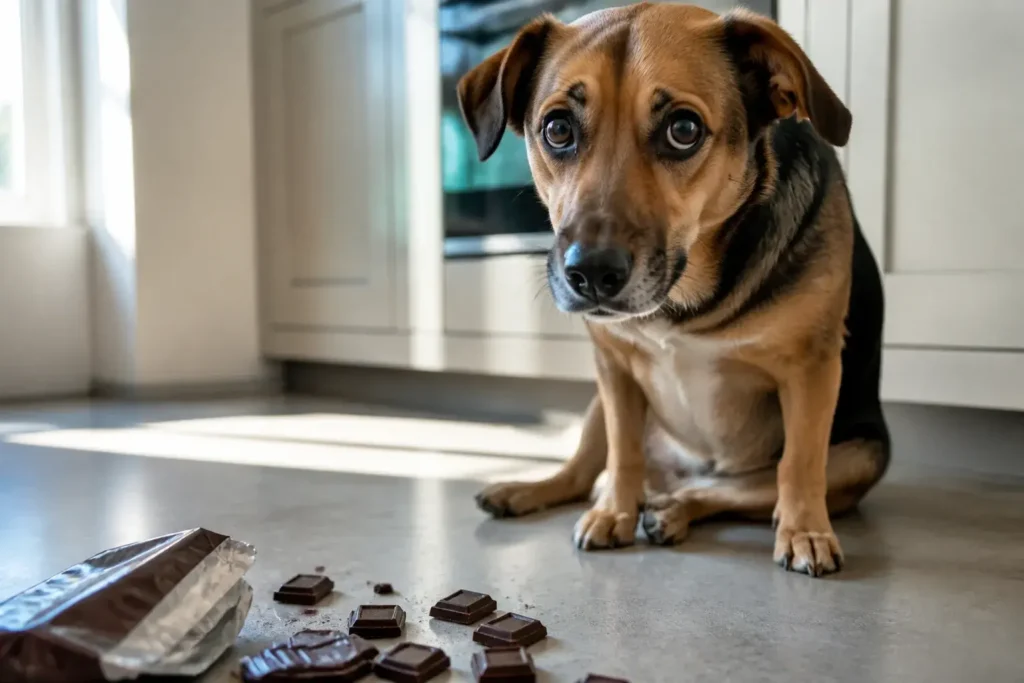
Your dog just ate chocolate and your heart dropped. Breathe. You’ve got this.
Chocolate can be dangerous, but smart, fast action makes a big difference. I’ll walk you through exactly what to do, what to watch, and when to sprint to the vet. No fluff, just clear steps from someone who’s been there, panicked, and learned what actually helps.
Let’s keep your pup safe and get you out of freak-out mode.
Why Chocolate Is Dangerous For Dogs
Chocolate contains theobromine and caffeine. Dogs can’t process these like we do, which means they build up and cause trouble. Think racing heart, stomach upset, and in serious cases, tremors or seizures.
The danger depends on what type of chocolate and how much your dog ate relative to their weight. Darker equals more dangerous. White chocolate? Mostly fat and sugar. Baking chocolate and cocoa powder? Yikes.
Chocolate Types Ranked By Risk
- Highest risk: Cocoa powder, unsweetened baking chocolate
- High risk: Dark chocolate, espresso chocolate
- Moderate risk: Semisweet chocolate chips
- Lower risk (but still not safe): Milk chocolate
- Lowest risk: White chocolate (still can cause pancreatitis from fat)
Step-By-Step: What To Do Right Now
First, don’t waste time googling random charts while your dog eyes the rest of the brownie pan. Move fast.
- Figure out what and how much. Check the label: type of chocolate, percent cacao, ounces or grams.
- Weigh your dog or estimate. Close counts here.
- Call your vet or an emergency clinic immediately. FYI, you can also call a pet poison hotline for guidance.
- Follow instructions on inducing vomiting only if a professional tells you to. Timing matters and it’s not always safe.
- Secure the rest of the chocolate so your dog doesn’t make round two happen.
Numbers That Help
Keep these handy:
- Your regular vet
- Nearest emergency vet clinic
- Pet Poison Helpline or ASPCA Animal Poison Control
When you call, have the chocolate type, amount, dog’s weight, and time of ingestion ready. You’ll get targeted advice fast.
How To Gauge Risk Without Guessing
I love a good calculator as much as the next nerd. You can use a chocolate toxicity calculator online if you have the details, but always confirm with a vet.
General idea:
- Mild signs often appear around lower doses, especially with milk chocolate.
- Moderate to severe signs show up more with dark and baking chocolate.
- Tiny dogs face higher risk from even small amounts.
If your gut says “hmm this seems like a lot,” trust it and call. Better an eye-roll than a crisis, IMO.
What Symptoms To Watch For
Symptoms can start within 1 to 6 hours, sometimes sooner. If you see these, don’t wait.
- Early signs: Restlessness, hyperactivity, panting, vomiting, diarrhea
- Cardiac signs: Fast heart rate, high blood pressure
- Neurological signs: Tremors, twitching, seizures
- Other concerns: Excessive thirst or urination, belly discomfort
When It’s An Emergency
Head to the ER now if:
- Your dog is very small and ate any dark/baking chocolate
- You suspect cocoa powder or unsweetened baking chocolate
- They show tremors, collapse, seizures, or a very fast/irregular heartbeat
- They ate a large amount or you can’t confirm the amount
What The Vet Might Do
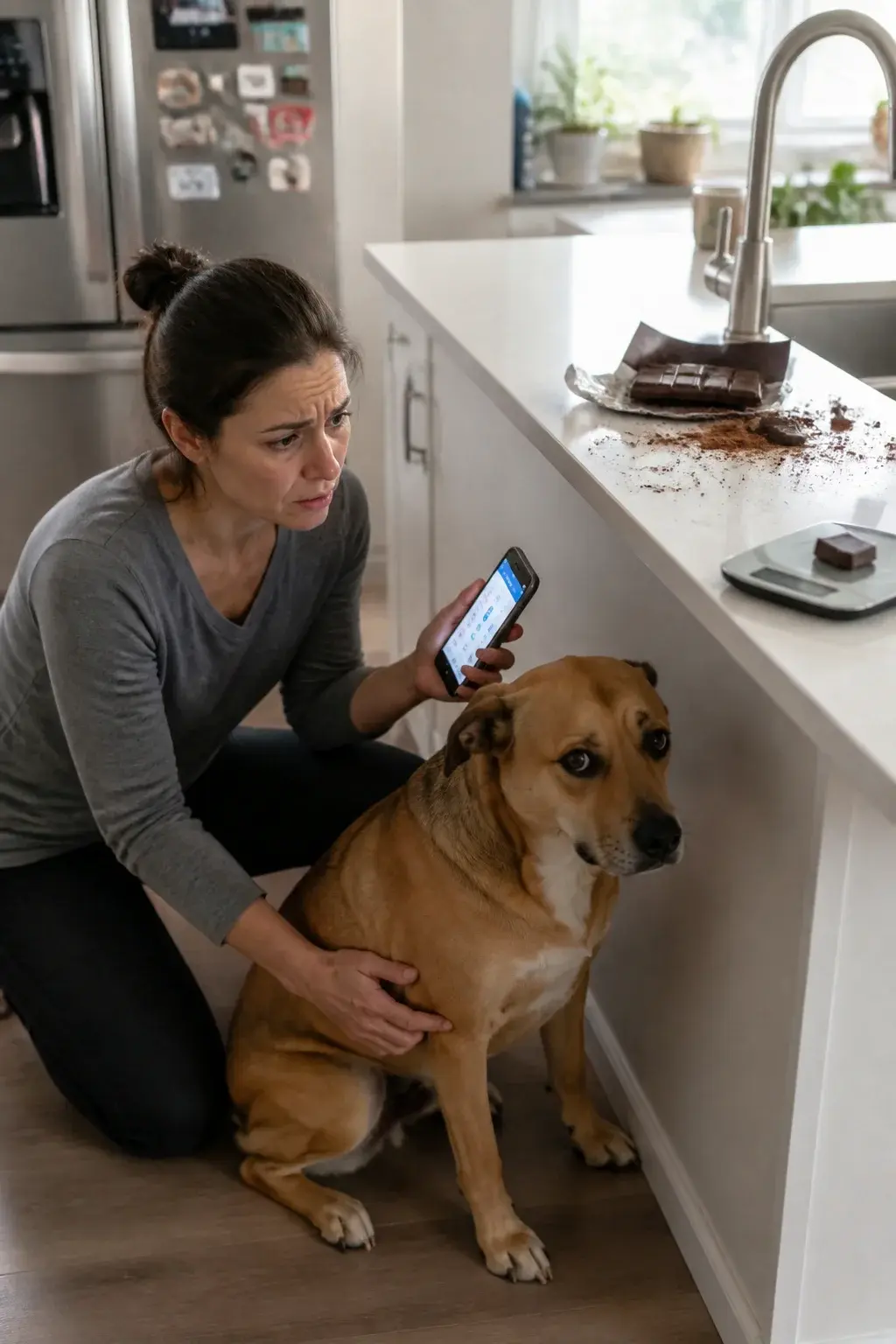
No surprise surgeries here. Treatment focuses on getting the toxin out and supporting the body.
- Induce vomiting if within a safe window
- Activated charcoal to limit absorption
- IV fluids to support circulation and help eliminate toxins
- Medications for nausea, heart rhythm, blood pressure, tremors, or seizures
- Monitoring of heart rate, temperature, and neurological signs
Most dogs do great with prompt care. Delay makes it harder. Time matters.
What Not To Do (Even If The Internet Says So)
Let’s bust a few myths before they cause trouble.
- Do not give hydrogen peroxide unless a vet tells you the dose and confirms it’s safe for your dog. Wrong dosing can injure the stomach.
- Do not wait “to see how it goes” if dark or baking chocolate was involved or you have a small dog.
- Do not give milk to “dilute” the chocolate. It won’t help and can worsen tummy upset.
- Do not use home remedies like salt to induce vomiting. Dangerous and not effective.
Aftercare At Home
Once your vet clears your pup to rest at home, you can help them bounce back.
- Offer small amounts of water frequently. Don’t let them chug.
- Feed a bland diet if your vet okays it: boiled chicken and plain white rice, tiny portions.
- Keep activity low for 24 to 48 hours. No zoomies, even if they’re feeling spicy.
- Watch their poop and energy. Normalizing is a good sign.
- Follow medication instructions strictly if prescribed.
Signs To Recheck With Your Vet
Call back if you notice:
- Persistent vomiting or diarrhea beyond 24 hours
- Lethargy that doesn’t improve
- Shaking, twitching, or a racing heartbeat
Prevention That Actually Works
Let’s stop the chocolate heist before it starts. Dogs are ninjas when snacks are involved.
- Store chocolate high and sealed. Top cabinets beat countertops every time.
- Crate or gate during baking. Cocoa powder loves chaos.
- Teach “leave it” and “drop it”. Training saves lives and your sanity.
- Holiday alert: Halloween, Christmas, Easter, Valentine’s Day. Candy bowls and gift boxes are dog magnets.
- Tell guests your dog can’t have chocolate. Yes, even Aunt Linda’s fancy truffles.
Safe Treat Swaps Your Dog Will Love
Because treats should be fun, not terrifying.
- Peanut butter that’s xylitol-free
- Banana slices or blueberries
- Plain pumpkin puree spoonfuls
- Dog-safe carob treats
Realistic Scenarios And What I’d Do (IMO)
Sometimes examples beat charts.
- Scenario 1: 60-pound dog ate two milk chocolate fun-size bars 10 minutes ago. My move: Call vet for guidance. Likely mild risk, might monitor at home if advised.
- Scenario 2: 15-pound dog ate a square of unsweetened baking chocolate 30 minutes ago. My move: ER now. That’s high-risk chocolate.
- Scenario 3: 40-pound dog licked cocoa powder from the floor during baking. Unknown amount. My move: Call poison control or vet immediately, probably go in.
- Scenario 4: 10-pound dog ate white chocolate bark. My move: Call vet. Toxicity is lower, but fat and sugar can cause pancreatitis, so watch closely.
FAQ
How long after eating chocolate will my dog get sick?
Most dogs show signs within 1 to 6 hours, but it can vary with the type of chocolate and whether your dog ate on an empty stomach. If symptoms haven’t started yet, you still need to call your vet. Early action beats waiting every time.
Can one chocolate chip hurt my dog?
One chip usually won’t harm a medium or large dog, but small dogs are more vulnerable. Also, dogs rarely stop at one chip. Keep chocolate out of reach and don’t gamble if you’re unsure.
Should I make my dog vomit at home?
Only if a veterinarian tells you to and gives the exact dose and timing. It’s not safe for every situation, like if your dog shows neurological signs or has certain medical conditions. The wrong attempt can cause more harm.
What if my dog ate chocolate yesterday and seems fine?
Call your vet with details anyway. Some signs can be subtle or delayed, and pancreatitis from high-fat candies can show up later. Better to check than miss something brewing.
Is dark chocolate worse than milk chocolate?
Yes. Dark chocolate and baking chocolate pack much more theobromine and caffeine. That means a smaller amount can cause serious symptoms, especially in small dogs.
Can I give my dog activated charcoal at home?
Not without veterinary instruction. Charcoal dosing depends on weight and timing, and aspiration risk is real. Let your vet decide if it’s appropriate.
Conclusion
If your dog ate chocolate, don’t panic, take action. Identify the type and amount, call your vet or a poison hotline, and follow the plan. Watch for symptoms, err on the side of caution, and keep chocolate locked down for the future. You’ve got a smart head on your shoulders and a good dog who deserves many safe, delicious treats, just not the cocoa kind.
About the Author

David
Blogger/YouTuber
A guitar nerd, the myth, the legend.