

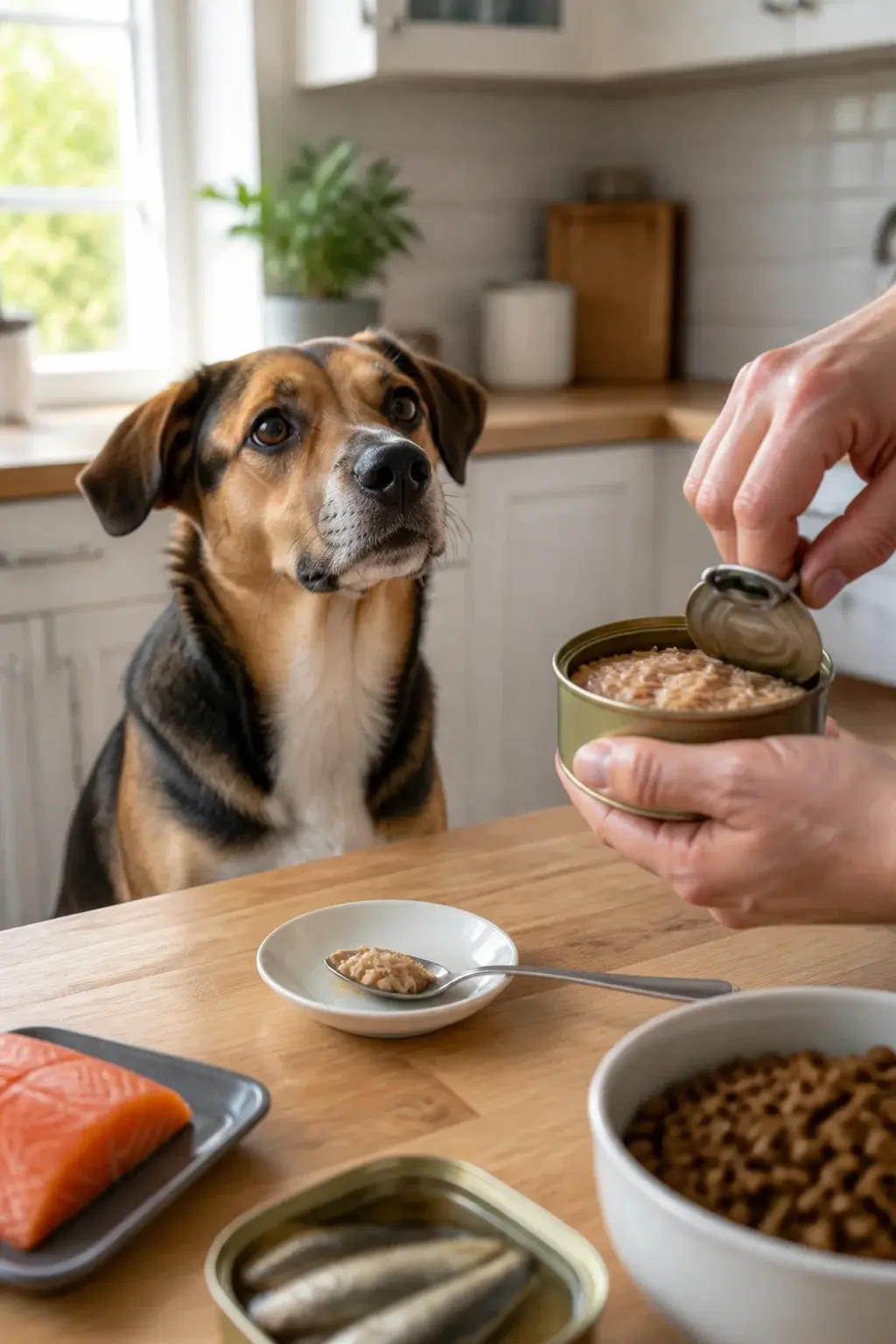
You crack open a can of tuna and your dog teleports to the kitchen. Those eyes. That tail. The guilt.
So can dogs eat tuna or are you one bite away from a vet visit?
Let’s get the facts straight, keep your pup safe, and still enjoy your sandwich without a furry guilt trip.
The Short Answer: Yes, But With Big Asterisks
Dogs can eat tuna in small amounts. I’m talking occasional bites, not daily meals. Fresh or canned tuna can be safe if you choose wisely and keep portions tiny.
Here’s the kicker: tuna has higher mercury levels than many other fish. That’s the main reason we go slow and selective with it. If you want a fish your dog can eat more regularly, choose salmon, sardines in water, or whitefish.
Why Tuna Can Be Tricky
Tuna isn’t evil. It’s just high-risk if you overdo it. The two big concerns:
- Mercury: Bigger, older fish accumulate more mercury. Tuna is a big fish. Mercury can affect your dog’s nerves over time.
- Sodium and seasonings: Many canned tunas are packed in salt-heavy brine or oil, sometimes with onions, garlic, or spices. Dogs do not need this stuff.
Mercury 101 (Without the Snooze)
Think of mercury like junk mail for the body. A little is annoying. A lot becomes a problem. Signs of mercury buildup can include:
- Weakness or wobbly walking
- Shaking or tremors
- Loss of appetite or vomiting
If you stick to tiny portions once in a while, your risk stays low. But daily tuna? Hard pass.
Choosing the Right Tuna For Dogs
Not all tuna is created equal. Some choices are much safer than others.
- Best: Canned light tuna in water with no salt added. This usually comes from skipjack, which tends to have less mercury.
- Okay: Fresh or frozen skipjack or albacore tuna, cooked plain and thoroughly.
- Avoid: Tuna in oil, with added salt, lemon, onion, garlic, or spicy seasonings.
- Raw tuna: Skip it. Raw fish can carry parasites and bacteria your dog’s gut did not RSVP for.
Light vs Albacore
Albacore (often labeled “white tuna”) tends to have more mercury than light tuna. For dogs, light tuna wins for the rare treat.
How Much Tuna Is Safe?
Aim for “tiny taste” territory. Frequency matters more than the exact grams, but here’s a friendly guide for otherwise healthy adult dogs:
- Small dogs (under 20 lb): 1 to 2 teaspoons once every 1 to 2 weeks.
- Medium dogs (20–50 lb): 1 to 2 tablespoons once every 1 to 2 weeks.
- Large dogs (50+ lb): Up to 3 tablespoons once every 1 to 2 weeks.
For puppies, pregnant dogs, or dogs with kidney, liver, or neurological issues, avoid tuna and talk to your vet first. FYI, treats from all sources should stay under 10% of daily calories.
Health Perks (When You Keep It Occasional)
Used sparingly, tuna can bring a few nice benefits:
- Protein boost: Lean, complete protein for muscle maintenance.
- Omega-3s: Supports skin, coat, and joints. That glossy-dog look? Yes please.
- Low carbs: Works for most standard dog diets.
But you can get similar benefits with lower-mercury fish like salmon or sardines in water. IMO, those make better staples if you want fish in your dog’s life more than once in a blue moon.
How To Serve Tuna Safely
Keep it simple. Dogs don’t need fancy marinades or chef vibes.
- Rinse canned tuna in water to reduce sodium. Drain well.
- Cook fresh tuna plain: Bake, steam, or boil until fully cooked. No oil, garlic, onion, salt, or pepper.
- Mix into food instead of serving a giant chunk. Think topper, not entree.
- Watch for GI upset after the first try. Start with a half-teaspoon for small dogs and work up, if at all.
Dog-Safe Tuna Treat Topper
Try this super simple add-on for a special meal:
- 1 teaspoon to 1 tablespoon rinsed light tuna in water
- 1 tablespoon plain unsalted mashed pumpkin or steamed sweet potato
- Optional: a few chopped steamed green beans
Mash together and spoon over your dog’s regular food. That’s it. No salt, no oil, no nonsense.
Great Alternatives To Tuna
Want fish benefits with less drama? These get my vote:
- Sardines in water, no salt added: Small fish, lower mercury, dogs love them.
- Salmon: Cooked plain. Canned salmon in water works too. Remove bones if they’re large or hard.
- Whitefish or pollock: Mild, low mercury, easy on tummies.
- Commercial omega-3 supplements: Fish oil or algal oil measured for dogs. Ask your vet for dosing.
FYI, fish skin treats can be great if they’re single-ingredient, dehydrated, and portioned small.
Red Flags: When Tuna Is a No-Go
Skip the tuna and call your vet if your dog:
- Has kidney or liver disease, seizures, or any neurological condition
- Is pregnant or still a puppy
- Shows sensitivities to fish or has a history of pancreatitis
Also say no if your only option is tuna in oil or with seasonings. Your dog’s pancreas will not send you a thank-you card.
FAQ
Can dogs eat canned tuna every day?
No. Daily tuna is too risky because of mercury buildup. Keep it as an occasional treat, or switch to safer fish like sardines or salmon for more frequent use.
Is tuna in oil okay for dogs?
Not ideal. Oil adds unnecessary fat and calories, which can trigger GI upset or pancreatitis in sensitive dogs. Choose tuna in water, no salt added, and rinse it before serving.
What about tuna salad or tuna with mayo?
Hard no. Mayo adds fat and sometimes seasonings. Tuna salad can include onions or garlic, which are toxic to dogs. Stick to plain tuna only, mixed with dog-safe veggies if you want a topper.
Can puppies have tuna?
I wouldn’t. Puppies are still developing and more sensitive to mercury. If you want to share fish with a puppy, choose cooked salmon or sardines in water in tiny amounts and talk to your vet first.
How do I know if my dog had too much tuna?
Watch for vomiting, diarrhea, loss of appetite, weakness, tremors, or unusual behavior. If anything feels off after tuna, call your vet. Better to overreact than underreact here, IMO.
Does tuna help with my dog’s coat?
Omega-3s can help skin and coat, but tuna isn’t the best source due to mercury concerns. Try fish oil made for dogs or sardines in water for a safer omega-3 boost.
The Bottom Line
Can dogs eat tuna? Yes, in small amounts and not often. Choose light tuna in water, rinse it, and keep portions tiny. If you want fish more regularly, pick safer options like sardines or salmon, or use a dog-friendly omega-3 supplement.
Share the occasional tuna treat if you like, but don’t let it become a habit. Your dog will still adore you if the can opener stays closed. And your peace of mind? Worth it.
About the Author

David
Blogger/YouTuber
A guitar nerd, the myth, the legend.