
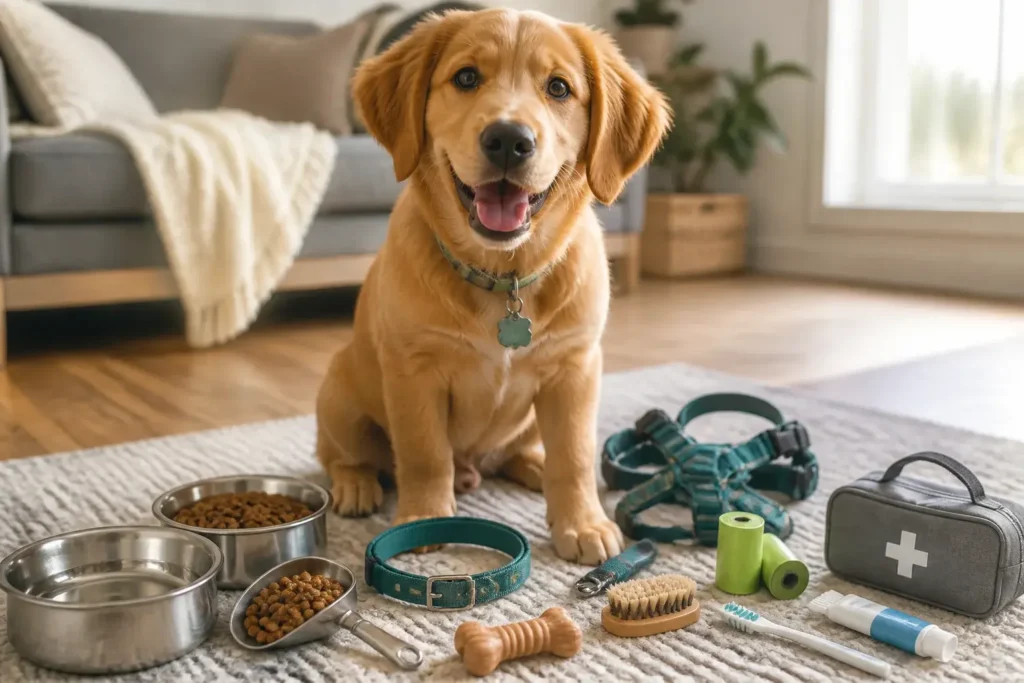
Bringing a dog home feels like winning the life lottery. Then you remember you need, well, stuff.
Skip the guesswork. Here’s the gear and guidance vets actually recommend so your pup stays healthy, happy, and not eating your socks.
We’ll cover food, health basics, safety gear, training tools, and a few underrated lifesavers you’ll wish you had sooner.
Nutrition That Doesn’t Mess Around
You don’t need a pantry full of mystery treats. You need balanced, vet-approved fuel that fits your dog’s size, age, and health.
What to look for in a main diet:
- Complete and balanced statement from AAFCO on the label
- Life stage-appropriate: puppy, adult, or senior
- Transparent ingredients and a company with nutritionists on staff
- Consistent stools and good coat after 2–3 weeks on the food
Puppies vs. adults vs. seniors:
- Puppies need extra protein, fat, and calcium control, especially large breeds
- Adults need steady calories, not bulk; watch waistlines like a hawk
- Seniors often benefit from joint support, easier-to-digest proteins, and kidney-friendly formulas
Treats and Chews That Won’t Backfire
Treats should be under 10% of daily calories. Choose single-ingredient options like freeze-dried salmon or turkey. For chews, pick size-appropriate, digestible options. Avoid cooked bones, antlers for heavy chewers, and anything that doesn’t bend. The rule of thumb: if it could break a tooth, skip it.
Water and Bowls
Use stainless steel or ceramic bowls and wash them daily. Flat-faced breeds benefit from slightly elevated or tilted bowls. Add a travel water bottle to your go-bag because your dog suddenly gets thirsty exactly when there’s no faucet.
Health Basics You Should Nail From Day One
Don’t wing the healthcare plan. Set it up once and you’ll save headaches and money later.
Core essentials:
- Vaccinations: set a schedule with your vet; puppies need a series, adults need boosters
- Parasite prevention: year-round heartworm, flea, and tick protection
- Spay/neuter timing: discuss breed and size-specific timing with your vet
- Annual wellness exam: bloodwork for seniors or any dog with chronic issues
First-Aid Kit for Real Life
Keep a small kit at home and in the car:
- Gauze, non-stick pads, and self-adhesive wrap
- Saline for flushing eyes or wounds
- Tweezers and tick remover
- Digital thermometer and petroleum jelly
- Benadryl (diphenhydramine): only with your vet’s dose guidance
- Emergency contacts and your dog’s vaccine records
FYI: Chocolate, xylitol, grapes, raisins, ibuprofen, and onions are no-go zones. Save the human snacks for, well, humans.
Gear That Keeps Your Dog Safe and Sane
Before you order twelve cute collars, get the safety basics right.
Leashes and walking gear:
- Standard 4–6 ft leash for control and training
- No-pull front-clip harness for strong pullers and flat-faced breeds
- Reflective or LED gear for early or late walks
Identification that actually works:
- Microchip with up-to-date contact info
- Collar tag with two phone numbers
- GPS tracker if your dog is an escape artist or you hike off-leash areas
Car Safety Isn’t Optional
Use a crash-tested harness that clips into a seatbelt or a secured crate. Back seats beat front seats. Windows down a little? Fun. Head out the window at 60 mph? Vet bills waiting to happen.
Home Setup: Calm, Clean, and Chew-Resistant
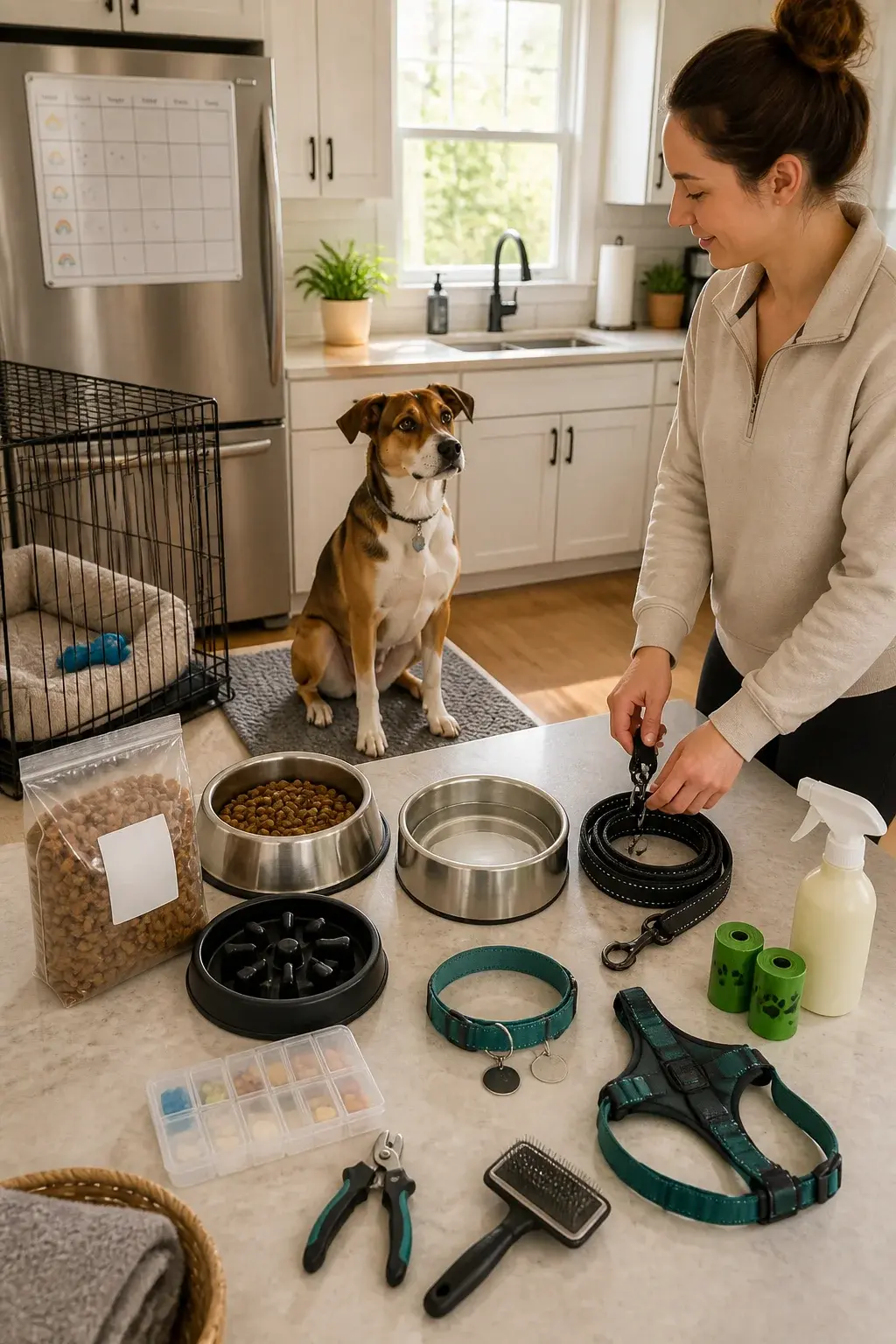
Create a zone where your dog can decompress. Yes, even velcro dogs need quiet time.
Sleeping and relaxing:
- Supportive bed that fits their sleep style: donut for curlers, orthopedic for sprawlers
- Crate or pen sized for standing and turning, with cozy bedding
- White noise or calming music for anxious pups
Chew toys and enrichment:
- Food puzzles to slow meals and work their brain
- Rubber stuffables you can freeze with dog-safe fillings
- Soft toys only if your dog doesn’t shred and swallow everything
DIY Dog-Safe Stuffable Ideas
Try these vet-friendly combos in a rubber toy, then freeze:
- Plain unsweetened Greek yogurt with mashed banana
- Pumpkin puree with kibble and a sprinkle of ground flax
- Low-sodium bone broth with green beans and shredded chicken
Always avoid xylitol, garlic, onions, grapes, raisins, macadamia nuts, and high-fat add-ins.
Grooming: Clean Dog, Healthy Skin
You don’t need a spa. You need a routine.
Weekly basics:
- Brushing suited to coat type: deshedding tool for double coats, slicker for long coats
- Paw and nail checks: trim when nails click on floors
- Ear checks: clean only what you can see with a vet-safe ear cleaner
Bathing tips:
- Use a gentle dog shampoo; human shampoos mess up skin pH
- Rinse longer than you think; residue causes itch
- Dry thoroughly, especially skin folds and between toes
Red Flags You Shouldn’t Ignore
Itching that disrupts sleep, red or gunky ears, hair loss patches, foul breath, or scooting. These point to allergies, infection, dental disease, or anal gland issues. Call your vet before Google convinces you it’s everything at once.
Training and Mental Health: Happy Brain, Happy Dog
Perfect dogs don’t exist. Consistent training does.
Training must-haves:
- High-value treats reserved just for training
- Clicker or marker word to time rewards
- Mat or place bed to teach chill on cue
Core skills to teach early:
- Leave it and drop it to prevent vet visits and treasure hunts
- Recall because your dog will ignore you at the worst time otherwise
- Loose-leash walking so shoulders survive puppyhood
Socialization That Doesn’t Overwhelm
Expose puppies to surfaces, sounds, people, and gentle dogs at their pace. Keep sessions short and positive. If your dog looks stressed, create distance and try again. Quality beats quantity, IMO.
Anxiety Helpers That Vets Like
ThunderShirts, white noise, puzzle feeders before you leave, predictable routines, and vet-approved supplements for mild cases. If panic happens, ask your vet about a behavior plan and medication. No shame in that game.
Lifesavers People Forget Until It’s Too Late
These aren’t flashy, but they matter.
- Pet insurance or a savings fund: pick one before you need it
- Poop bags stashed everywhere: car, leash, coat pocket
- Baby gates to block stairs, kitchens, and chaos
- Backup power plan for refrigerated meds or hot climates
- Photo log with clear face and body shots for lost-pet posters
Seasonal Add-Ons
- Summer: cooling mat, shade, booties for hot pavement, extra water
- Winter: paw balm, insulated coat for short-haired breeds, wipe off road salt
- Allergy seasons: more frequent wiping of paws and belly after walks
FAQs
How do I choose the right food for my dog?
Start with your dog’s life stage and health history. Look for an AAFCO complete and balanced statement and brands with veterinary nutritionists on staff. Transition over 7 to 10 days and watch stools, coat shine, and energy. If your dog has allergies or medical conditions, ask your vet for a therapeutic diet.
What vaccines are non-negotiable?
Core vaccines usually include rabies, distemper, parvo, and adenovirus. Depending on lifestyle, your vet may add leptospirosis, Bordetella, influenza, or Lyme. Puppies need a series until around 16 weeks. Adults need boosters on a schedule your vet sets.
Do I really need a harness if my dog walks fine?
Yes, in most cases. A well-fitted harness protects the neck, gives you better control, and helps prevent tracheal irritation, especially for small or flat-faced breeds. Collars still matter for ID, but a harness carries the workload.
What’s the safest chew for strong chewers?
Pick large, durable rubber or nylon chews designed for power chewers and always supervise. The chew should show gentle wear, not sharp shards. If you can’t make a slight fingernail dent, it might be too hard. Rotate toys to keep interest and reduce overuse injuries.
How often should I bathe my dog?
Most dogs do well every 4 to 8 weeks, but it depends on coat type, skin health, and lifestyle. Use a gentle dog shampoo and thorough rinsing. If your dog itches after baths or gets oily quickly, ask your vet about skin-friendly products or underlying issues.
Is pet insurance worth it?
IMO, yes for most dogs, especially puppies and adventurous adults. It turns scary surprise bills into manageable ones. Compare plans for coverage, reimbursement rates, and exclusions, then enroll before problems start for best coverage.
The Bottom Line
Set up the essentials once and you’ll relax more and worry less. Prioritize balanced food, routine vet care, safe gear, and enrichment that works your dog’s brain. Toss in some training, a solid first-aid kit, and ID that can’t fail. Do that, and you’ve basically unlocked dog parent easy mode, FYI.
About the Author

David
Blogger/YouTuber
A guitar nerd, the myth, the legend.