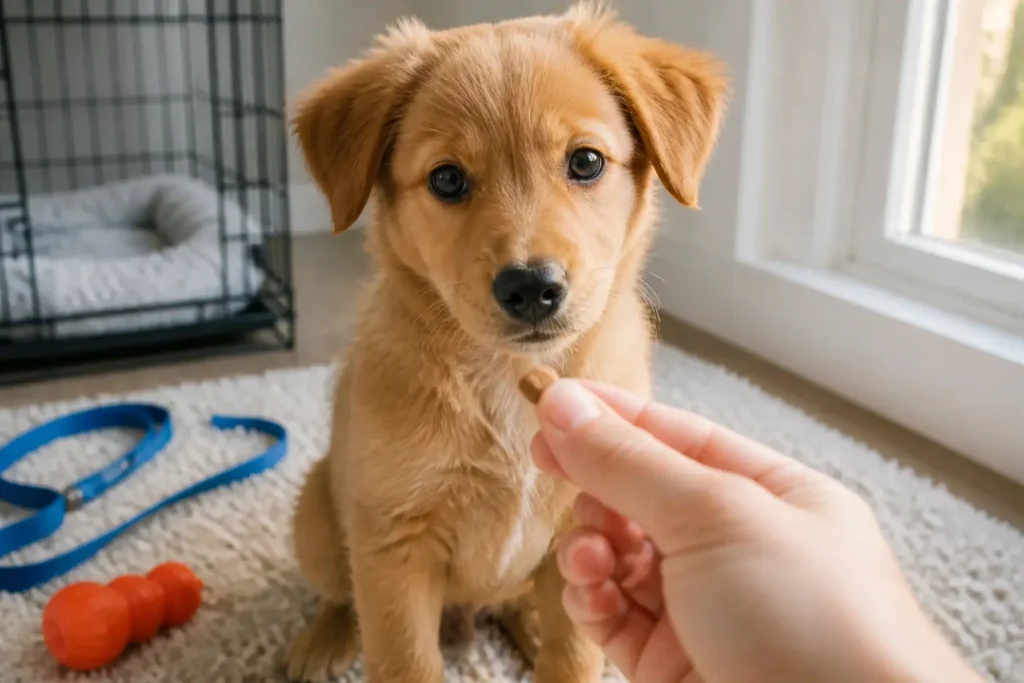
You brought home a furry tornado with paws, and now you need a plan. Good news: you don’t need to be a pro trainer to raise a well-mannered pup.
This guide gives you the exact steps, tools, and routines that actually work. Let’s turn that adorable chaos into a confident, happy dog you’re proud to take anywhere.
Why Early Training Matters (And Saves Your Sanity)
Puppies learn fast. They also learn the stuff you didn’t mean to teach them, like how jumping earns attention. Start now and you’ll prevent bad habits before they stick.
Training builds your puppy’s confidence and strengthens your bond. You’ll shape a dog who trusts you, listens around distractions, and can handle the big, noisy world.
Set Up Your Puppy’s Success: Environment and Essentials
You don’t need fancy gear. You need consistent routines and a few basics that make good choices easy.
- Crate: A cozy den, not a punishment box. Size it so your pup can stand up, turn around, and lie down.
- Playpen or gated area: Limits access so shoes and wires stay safe.
- Leash and harness: A flat leash and a comfortable harness keep pressure off the neck.
- Treats: Small, soft, smelly. Think pea-sized. Variety keeps motivation high.
- Chews and toys: Give your pup legal outlets for chewing and tugging.
- Poo bags and enzyme cleaner: For the inevitable “oops.”
House Rules From Day One
Decide where your pup sleeps, eats, and potties before they arrive. Keep rules simple and consistent. If you allow the couch today and ban it tomorrow, you’ll confuse your pup and frustrate yourself.
Puppy Schedule: The Daily Rhythm That Trains For You
Puppies thrive on predictable routines. Think short bursts of activity, then naps. Repeat.
- Morning: Potty break, breakfast, 5–10 minutes of training, play, then nap.
- Midday: Potty, brief walk or sniffari, training, chew time, nap.
- Afternoon/Evening: Potty, play, training, dinner, calm enrichment, last potty before bed.
Pro tip: After sleeping, playing, or eating, take them out. That’s when nature calls. Set timers if you forget. FYI, younger puppies need more frequent breaks.
Core Skills Every Puppy Should Learn
You don’t need 50 tricks. Nail these essentials first and everything else gets easier.
Name Recognition
Say their name once. The second they glance at you, mark with a cheerful “Yes!” and treat. Practice 10 times in a quiet room, then in new places. No nagging. One name cue equals one opportunity to earn cookies.
Sit, Down, and Stand
Lure with a treat at their nose. Raise slightly for sit. Lower between paws for down. Move forward for stand. Reward each position change. In a week, you’ll have a calm default behavior you can use anywhere.
Come When Called
Start in a hallway with zero distractions. Say “Puppy, come!” in a happy voice, then run backward. Celebrate like you just won a game show. Pay heavily. Never call your pup for something they hate. IMO, recall deserves the best treats in the house.
Leave It and Drop It
– Leave It: Present a closed fist with a treat. When the pup stops mugging your hand, mark and reward from the other hand. Build up to open-palm and floor items.
– Drop It: Trade up. Offer a better treat the instant your pup has something in their mouth. Say “Drop.” When they release, mark, reward, and sometimes give the original item back. That teaches them you’re not a thief.
Leash Skills
Reward your pup for walking near your leg, even for a second. If they forge ahead, stop. When the leash slackens, mark and move again. You’re teaching “pulling makes the world stop, checking in makes it go.”
Potty Training Without Tears (Or Ruined Rugs)
Consistency wins. Your puppy isn’t stubborn. They’re young and have tiny bladders.
- Take out frequently: After naps, meals, playtime, and every 1–2 hours for young pups.
- Pick a potty spot: Go to the same area. Say a cue like “Go potty.” Quietly praise when they finish.
- Accidents happen: Interrupt gently if you catch them mid-squat, then hustle outside. Clean with an enzyme cleaner. No scolding. Ever.
- Track patterns: Note times and habits. Adjust meals and water to set them up for success.
Nighttime Tips
Limit water an hour before bed, do a calm potty trip, then crate with a safe chew. If they wake, keep it boring: out, potty, back to bed. Party vibes can wait till sunrise.
Socialization: The World Tour Before 16 Weeks
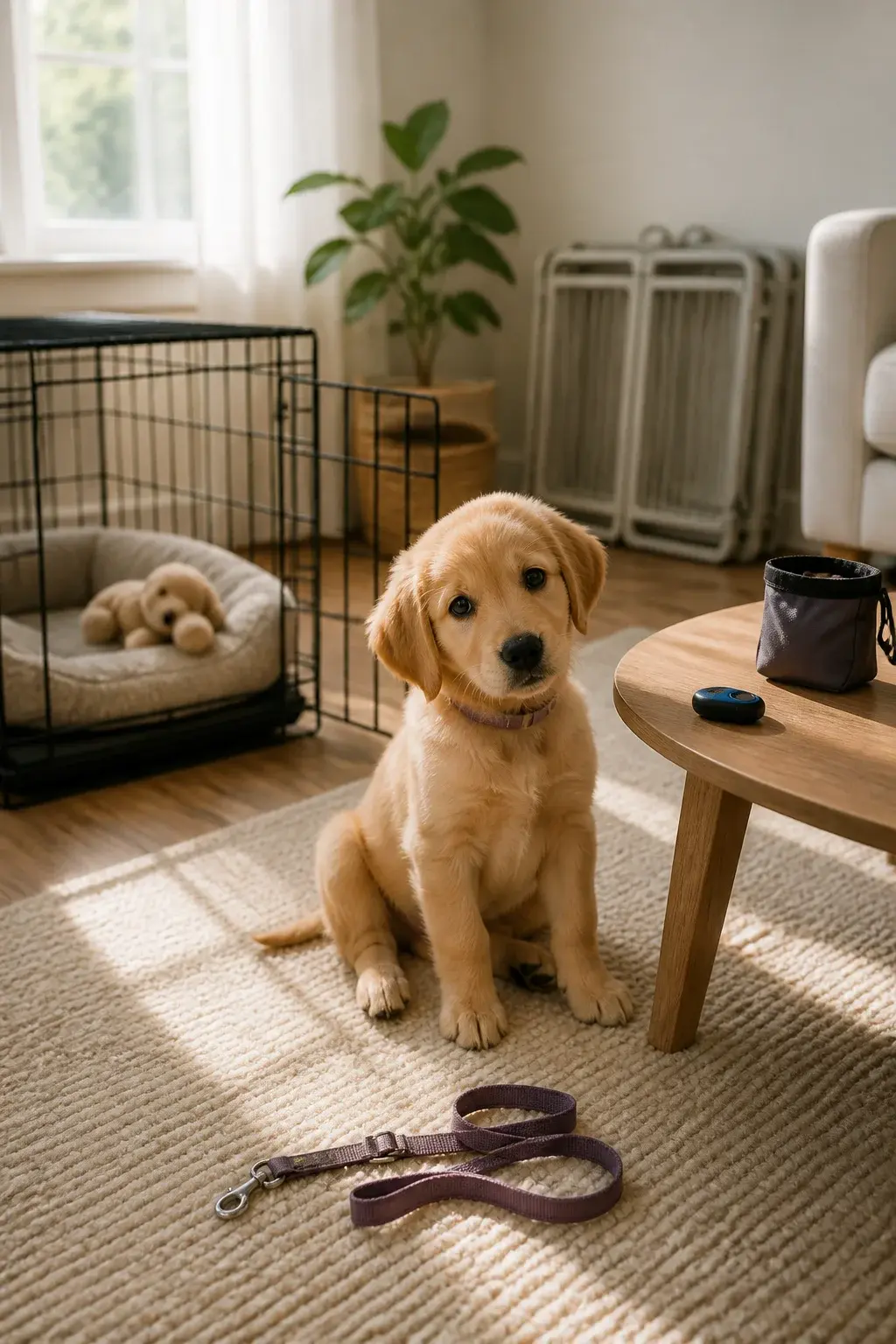
Socialization means positive exposure to people, dogs, sounds, surfaces, and places. You want “Huh, neat” not “Whoa, scary.”
- Quality over quantity: One calm meet-and-greet beats ten chaotic ones.
- Pair with treats: New thing appears, food rains from the sky. Magic.
- Control the scene: Choose steady adult dogs over rowdy puppy parties.
- Sound library: Play recordings of fireworks, traffic, and thunder at low volume during calm times.
Vet and Grooming Prep
Touch paws, ears, and mouth while feeding tiny treats. Practice standing on a mat, gentle brushing, and collar grabs. Your future self and your groomer will send you thank-you cupcakes.
Fixing Common Puppy Problems
We’ve all been there. Here’s how to redirect chaos without drama.
Biting and Nipping
Puppies use teeth to explore. Redirect to a chew or toy. If they latch onto skin, say “Ouch,” freeze, and disengage for 5–10 seconds. Then offer a toy. Reinforce gentle play like it’s your job.
Jumping
Teach sit-for-greetings. Step in when the pup approaches, ask for sit, then deliver pets and attention. If they jump, remove attention. Predictable rules make polite greetings stick.
Barking
Figure out the why. Boredom? Fear? Demand? Meet the need. Enrich with sniff walks, puzzle toys, and training games. For demand barking, reward quiet moments, not the noise. Timing is everything.
Chewing Everything
Puppies chew to soothe teething and burn energy. Puppy-proof your space and rotate legal chews. Praise chewing the right stuff. Management isn’t cheating. It’s smart.
Reward Strategies That Don’t Backfire
You control the paycheck. Pay well for tough tasks, pay less for easy ones.
- Use a marker: A crisp “Yes!” or click pinpoints the exact winning moment.
- Mix rewards: Treats, toys, sniff time, or access to the yard. Life rewards stick.
- Fade lures, not rewards: Move the treat out of your hand early. Keep paying for good choices, then gradually thin the schedule.
- Short sessions: 3–5 minutes. Quit while your pup wins. IMO, three micro-sessions beat one marathon.
When to Raise the Difficulty
Follow the 3D rule: Distance, Duration, Distraction. Change one at a time. If your pup fails twice, you leveled up too fast. Go back a step and crush it there.
Games That Build Skills Without Feeling Like “Training”
Make it fun, and your pup will choose you over the environment.
- Find It: Toss a treat on the ground, say “Find it,” and let them sniff. Builds nose work and impulse control.
- Pole-to-Pole Recall: Two people call the pup back and forth, paying big each time. Increase distance gradually.
- Hand Target: Present your palm. When their nose boops it, mark and reward. Use it to guide your pup past distractions.
- Settle On A Mat: Feed calm behavior on a mat. Great for cafes, vet lobbies, and your sanity during dinner.
Health, Safety, and Ethical Training
Your puppy’s body and brain grow fast. Keep training positive and age-appropriate.
- Vet checks and vaccines: Coordinate safe socialization with your vet’s schedule. Avoid unknown dog areas until protected.
- Age-appropriate exercise: Lots of sniffy walks and soft play. Avoid long runs or high-impact jumps.
- No punishment tools: Skip prongs, shocks, and harsh corrections. You can teach everything with rewards and smart management.
- Enrichment: Snuffle mats, lick mats, food puzzles, cardboard box shredding with supervision. A tired brain equals a calm pup.
FAQs
How long can my puppy focus during training?
Most puppies give you 2–5 focused minutes at a time. Train in tiny bursts sprinkled through the day. End while your pup still wants more so they can’t wait for the next session.
When should I start formal training classes?
As soon as your vet gives the green light for puppy socials or classes, usually after initial vaccines. Pick a trainer who uses reward-based methods. Observe a class first if you can.
What treats work best for puppies?
Soft, pea-sized bits your pup can swallow fast. Think cooked chicken, turkey, or commercial training treats. Rotate options to keep interest high. Avoid grapes, raisins, onions, chocolate, and anything unsafe for dogs.
My puppy ignores me outside. What now?
You jumped difficulty too fast. Go back to basics in a quiet yard. Use higher-value treats, shorten sessions, and practice name recognition and hand targets. Gradually add mild distractions.
How do I stop resource guarding before it starts?
Teach trades. Approach while your pup eats, toss a better treat, then leave. Practice “drop” with swaps and sometimes give the item back. Guarding often fades when pups learn you bring goodies, not theft.
Is crate training cruel?
Not at all when you introduce it kindly. Make the crate comfy, feed meals inside, and give safe chews. Keep stints short at first. The crate becomes a safe bedroom, not a jail cell.
Conclusion: Your Future Well-Trained Dog Starts Today
You don’t need perfection. You need consistency, kindness, and five minutes here and there. Celebrate tiny wins and keep sessions fun. With clear routines, positive rewards, and a little humor, your puppy will grow into the dream dog you imagined. And yes, you’ll finally drink coffee while it’s still hot.
About the Author

David
Blogger/YouTuber
A guitar nerd, the myth, the legend.