
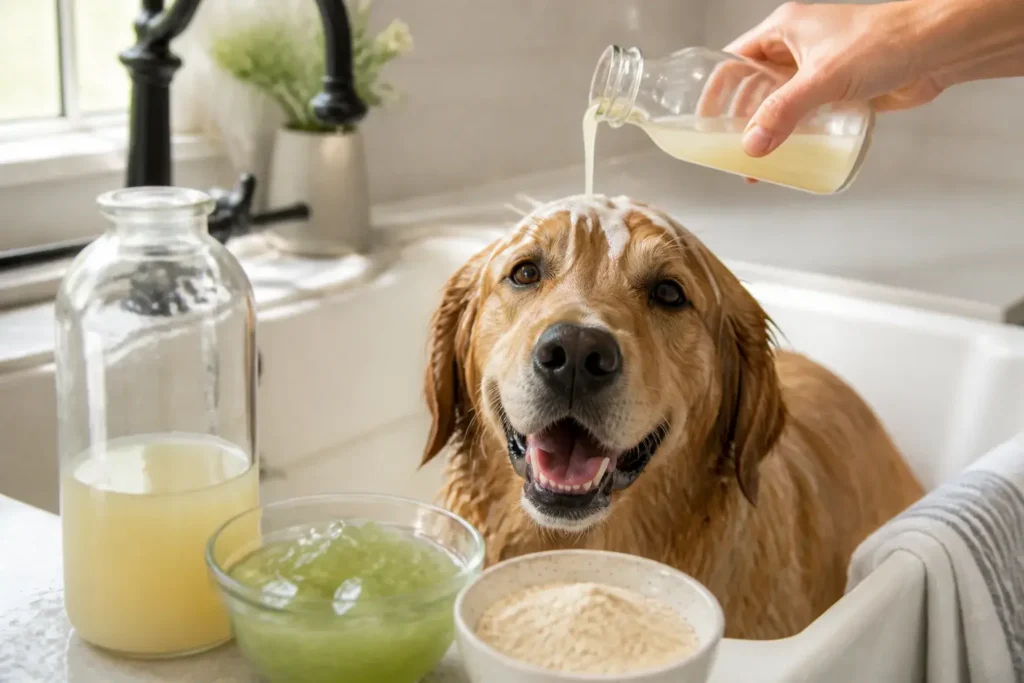
Let’s be real: store-bought dog shampoo can get pricey fast, and some formulas read like a chemistry exam. Good news? You can make safe, gentle shampoo at home with simple ingredients you probably already have.
I’ll walk you through dog-safe recipes, when to use each one, and what to avoid so you don’t irritate your pup’s skin. Quick, easy, and wallet-friendly. Ready to turn bath time from “uh oh” to “aw yeah”?
Why DIY Dog Shampoo Rocks
Homemade shampoo puts you in control. You pick the ingredients and skip harsh fragrances and dyes that can bug your pup’s skin.
You also save money and reduce packaging waste. Plus, you can tailor a shampoo to your dog’s coat type and sensitivities. Win, win, win.
Most important rule: Dogs have a different skin pH than humans. Human shampoo often strips oils and can cause dryness. Always stick to dog-safe ingredients and keep formulas mild and pH-aware.
Dog-Safe Ingredients to Keep on Hand
You don’t need a lab. Just a few pantry and pet-safe staples:
- Unscented Castile Soap: A gentle cleanser. Go unscented to avoid extra fragrance.
- Food-Grade Aloe Vera Gel: Soothes and lightly moisturizes itchy skin.
- Vegetable Glycerin: Adds slip and moisture without heaviness.
- Colloidal Oatmeal (finely ground oats): Calms irritation and softens coats.
- Apple Cider Vinegar (diluted): Helps balance pH and reduce odor when used correctly.
- Distilled or Boiled-Then-Cooled Water: Reduces contamination and extends shelf life.
- Fractionated Coconut Oil or Sunflower Oil: Light conditioner in tiny amounts.
Skip these for dogs: Essential oils (especially tea tree, peppermint, citrus, eucalyptus), human shampoo, baking soda-only washes, hydrogen peroxide, and raw vinegar on skin. IMO, the risk isn’t worth it.
Choose the Right Recipe for Your Dog
Not every coat needs the same cleanser. Here are three reliable, dog-friendly formulas.
1) Everyday Gentle Shampoo (Most Dogs)
Great for normal skin and regular baths.
- 1 cup distilled water
- 1/4 cup unscented liquid castile soap
- 1 tablespoon aloe vera gel
- 1 teaspoon vegetable glycerin
Instructions:
- Add water to a squeeze bottle. Slowly stir in castile soap.
- Mix in aloe and glycerin. Swirl gently to combine.
- Use within 3–4 weeks. Store in the fridge if your home runs warm.
Why it works: Mild cleansing plus moisture, no heavy residue.
2) Oatmeal Soothing Shampoo (Itchy or Sensitive Skin)
Perfect for pups who scratch or have seasonal dry skin.
- 1 cup warm distilled water
- 1/2 cup colloidal oatmeal (blend rolled oats to a fine powder)
- 1/4 cup unscented castile soap
- 1 tablespoon aloe vera gel
Instructions:
- Whisk the oatmeal into warm water until smooth.
- Stir in castile soap and aloe. Avoid foaming it like crazy.
- Use immediately for the best texture. You can refrigerate up to 3 days, but shake well.
Why it works: Oatmeal soothes irritation and adds slip for easier rinsing.
3) Deodorizing Rinse (Not a Full Shampoo)
Use between baths if your dog rolled in… something mysterious.
- 2 cups warm distilled water
- 2 teaspoons apple cider vinegar
- 1 teaspoon aloe vera gel
Instructions:
- Mix ingredients. After shampooing, pour over coat (avoid eyes). Massage in.
- Rinse thoroughly with lukewarm water. Do not leave on. FYI, the vinegar smell fades fast.
Why it works: Lightly balances pH and neutralizes odors without heavy fragrance.
Bath Time: Step-by-Step for a Stress-Free Wash
Let’s keep this drama-free for you and your dog.
- Brush First: Remove tangles and loose fur. You’ll avoid matting when the coat gets wet.
- Use Lukewarm Water: Test it on your inner wrist. Too hot dries skin. Too cold equals chaos.
- Wet Thoroughly: Soak from neck to tail. Water should reach the undercoat if your dog has one.
- Apply Shampoo: Start at the neck and work back. Massage to the skin. Avoid eyes and ears.
- Rinse, Then Rinse Again: Leftover soap causes itchiness. Keep rinsing until water runs clear and slick-free.
- Optional Deodorizing Rinse: Use the ACV rinse, then rinse clean.
- Dry Gently: Towel off. Use a pet-safe dryer on low, or air dry in a warm room. Keep it fun with treats.
Quick Safety Notes
- Eyes and Ears: Shield eyes with your hand. Place cotton balls loosely in ears if your vet says it’s okay.
- Allergy Check: Spot-test any new recipe on a small patch. Wait 24 hours for redness or itching.
- Puppies: Use extra-diluted formulas and lukewarm water. Keep baths short.
Dial In the pH Without Getting Nerdy
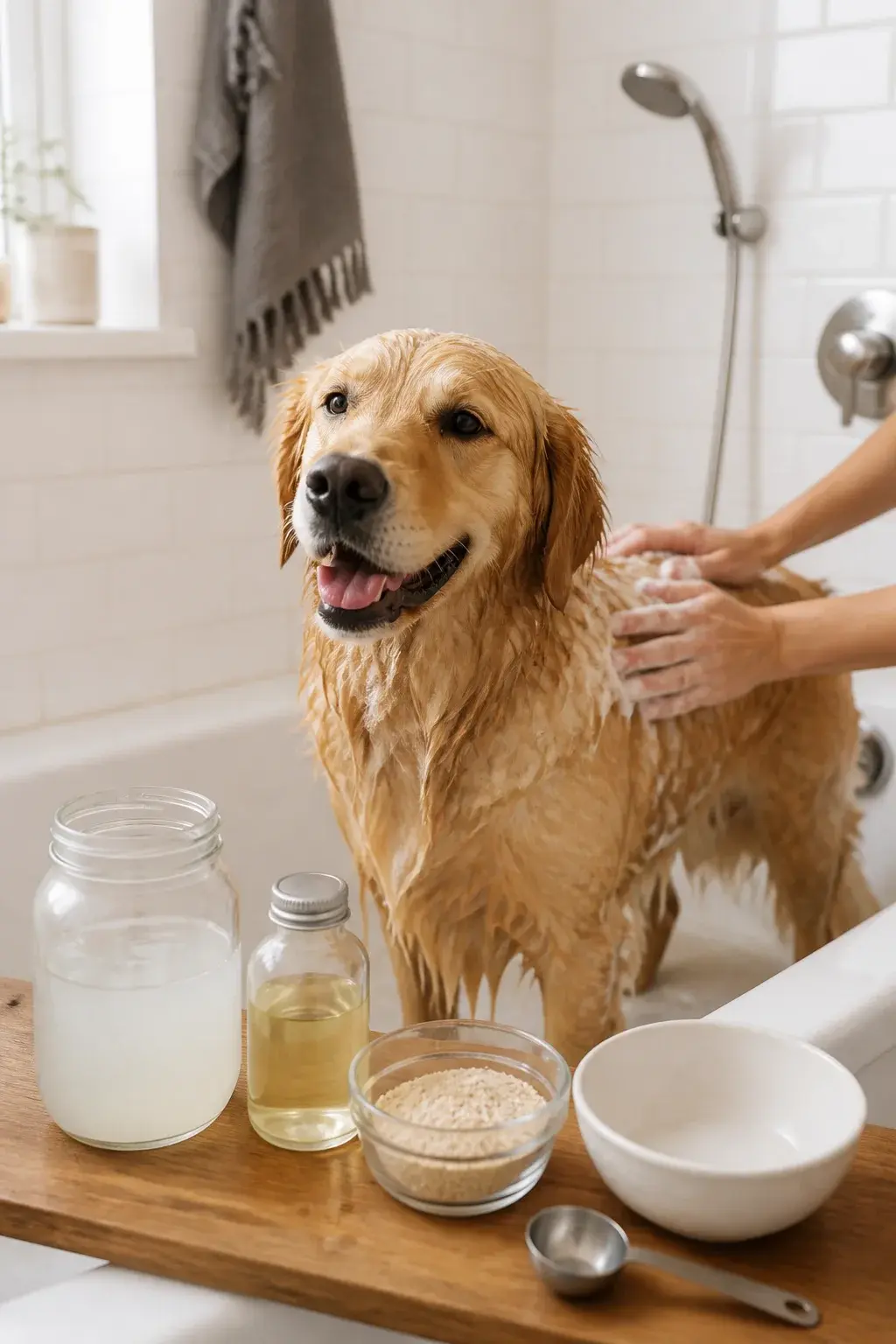
Dog skin sits around pH 6.5–7.5. You don’t need lab gear, but balance matters.
Simple pH Tweaks
- If the shampoo feels squeaky or drying, add a bit more aloe or a tiny splash of water.
- A very small amount of ACV in a rinse helps if your water runs hard.
- Skip citric acid and strong acids unless you can test pH with strips. Keep it simple.
Coat-Specific Tips
Every coat behaves differently. A few easy adjustments keep things easy.
Short Coats
Use the Everyday Gentle Shampoo as-is. You can add 1/2 teaspoon glycerin for extra shine in dry climates.
Double Coats
Wet deeply and use less product than you think. Rinse for twice as long as you shampooed. Trapped suds = itch city.
Curls and Doodles
Follow with a light conditioner: 2 cups warm water + 1 teaspoon fractionated coconut oil. Work through ends, then rinse well.
Oily or “Roll-in-Anything” Dogs
Try a pre-rinse: 1 tablespoon castile soap in 2 cups warm water, pour on greasy areas, rinse, then regular shampoo. Do not over-wash or you’ll trigger more oil.
Storage, Shelf Life, and Hygiene
Homemade products skip strong preservatives, so you need a few habits.
- Make Small Batches: 1–2 weeks of use is ideal. Oat-based mixes last only a few days.
- Use Clean Bottles: Wash with hot soapy water, then air dry.
- Refrigerate anything with aloe or oatmeal if you won’t use it right away.
- Toss It if the smell changes, color shifts, or separation won’t mix back in.
Troubleshooting: When Bath Time Backfires
Stuff happens. Here’s how to fix it fast.
Dry, Flaky Skin After Bath
Use less castile soap next time and add 1 more teaspoon glycerin. Space baths to every 3–4 weeks unless your vet says otherwise.
Greasy Residue
You used too much oil or didn’t rinse fully. Reduce any added oil by half and rinse longer.
Redness or Itching
Rinse thoroughly with cool water. Switch to the oatmeal recipe. If redness lingers, call your vet. FYI, skin infections can look like “sensitivity.”
Still Smelly
Shampoo once, rinse, then repeat on problem spots. Follow with the deodorizing rinse and rinse it out well.
FAQ
Can I use human shampoo or baby shampoo on my dog?
I wouldn’t. Human shampoos usually sit at a lower pH and contain fragrances that irritate dog skin. You might get away with it once, but regular use can cause dryness and scratching. Dog-safe DIY formulas keep things balanced and gentle.
How often should I bathe my dog?
Most dogs do great with a bath every 3–6 weeks. Active or messy pups may need more, but focus on rinsing and targeted cleanup between full shampoos. Too many baths strip natural oils, which can backfire.
Is apple cider vinegar safe for dogs in shampoo?
Yes, if diluted and rinsed out. A small amount in a rinse helps with odor and balance. Never use it near eyes, never apply it undiluted, and always rinse thoroughly.
Can I add essential oils for scent?
Skip them. Many essential oils can irritate or even harm dogs. If you want a fresh smell, clean the coat well and use the deodorizing rinse. Fresh dog beats perfumed dog, IMO.
What if my dog has hot spots or open sores?
Avoid DIY mixes and book a vet visit. Open or inflamed skin needs targeted care and sometimes medicated shampoo. You can make things worse if you guess.
Do these recipes work for puppies?
Yes, with extra dilution and gentle handling. Keep the bath short, lukewarm, and avoid the face. If your puppy has skin issues, ask your vet before trying anything new.
Bottom Line
DIY dog shampoo doesn’t need to be complicated. Start with a gentle base, keep ingredients simple, and rinse like a pro. Your pup gets a clean, soft coat without harsh stuff, and you get bragging rights for being the savvy bath-time wizard. Honestly, that’s a solid upgrade for both of you, FYI.
About the Author

David
Blogger/YouTuber
A guitar nerd, the myth, the legend.