
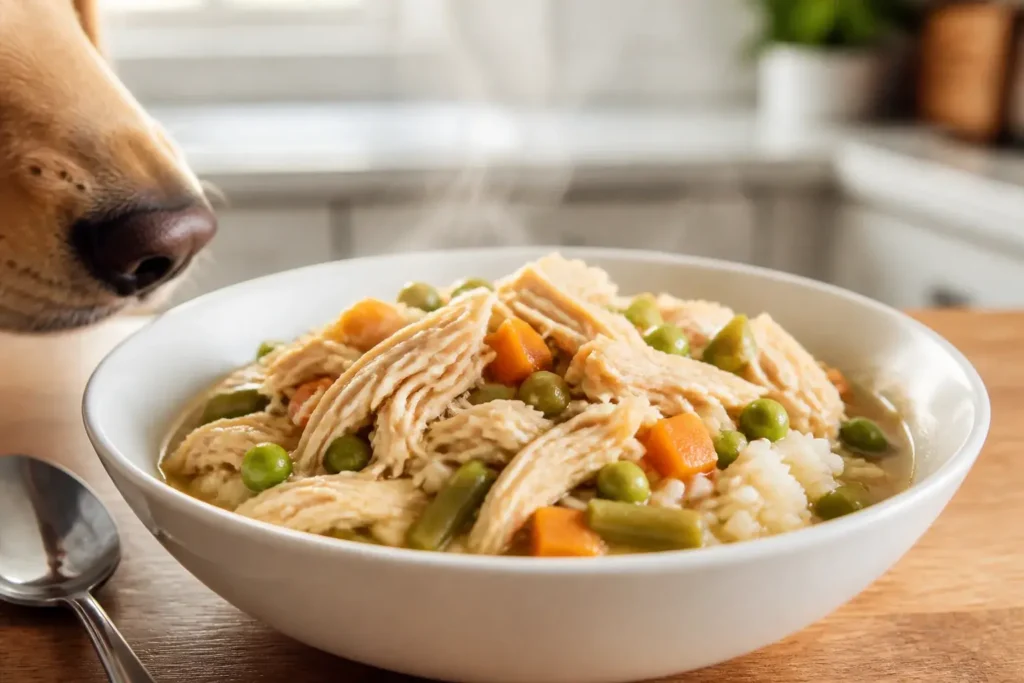
You want an easy, healthy meal your dog will actually eat? Same. Let’s make a slow-cooked chicken dinner that smells amazing, costs less than fancy kibble, and doesn’t require you to hover over the stove.
No sketchy seasonings, no weird fillers, just real food you can pronounce. Your crockpot does the work while you get all the tail wags.
By dinner, you’ll have a balanced dog-friendly dish you can portion and freeze like a pro. Ready?
Why Cook a Crockpot Chicken Dog Meal?
You control the ingredients. That means clean protein, dog-safe carbs, and veggie goodness. Plus, you skip the salt, butter, and onions that sneak into human food.
Your crockpot makes it almost impossible to mess up. Set it, walk away, and enjoy your day while those flavors gently meld. Your pup will act like a five-star critic by dinnertime.
Finally, homemade can support sensitive stomachs. If your dog gets itchy or gassy with certain commercial foods, a simple, whole-food recipe can help, IMO.
The Dog-Safe Ingredient Game Plan
Keep it simple. Keep it safe. Here’s a solid blueprint:
- Protein: Skinless, boneless chicken breast or thigh. Thighs have more flavor and a little more fat, which many dogs love.
- Carb Base: Brown rice, white rice, or quinoa. White rice works great for sensitive tummies. Avoid heavy grains like barley if your vet advised low-fiber meals.
- Veggies: Carrots, green beans, peas, pumpkin, or zucchini. All dog-friendly and easy on digestion.
- Healthy Fats: A splash of salmon oil or olive oil at the end for skin and coat support.
- Calcium Source: Crushed dog-safe eggshell powder or a vet-approved canine supplement if you serve this as a primary diet longer term.
- Liquid: Water or unsalted low-sodium broth. No onion or garlic, ever.
Absolute No-Gos
- No onions or garlic in any form.
- No salt, seasoning blends, bouillon cubes, or nutmeg.
- No grapes, raisins, leeks, or mushrooms.
- No cooked bones, especially chicken bones. They splinter.
The Easiest Crockpot Chicken Dog Meal Recipe
This makes about 6 to 8 cups, depending on your crockpot and exact measurements.
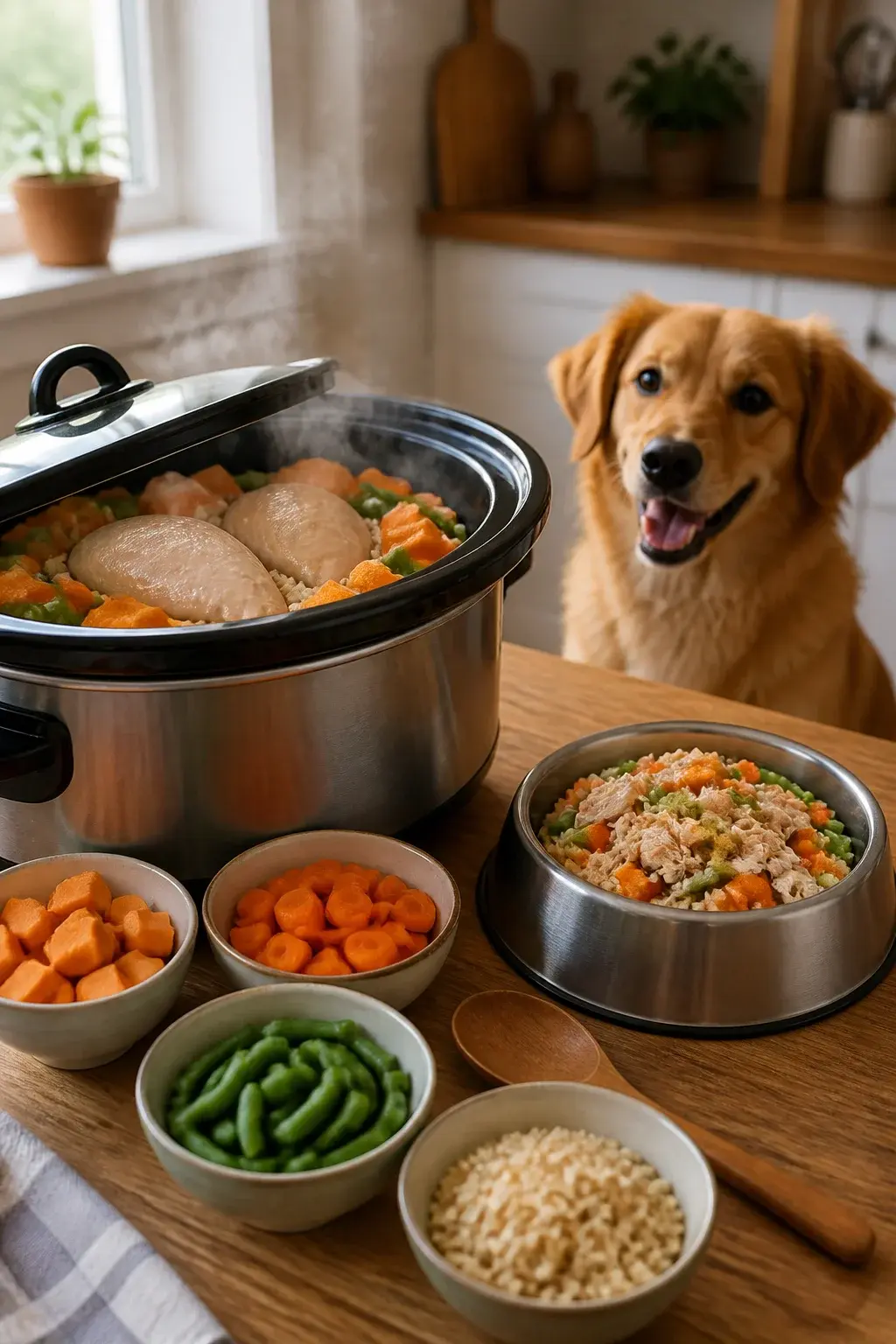
- 2 pounds skinless, boneless chicken thighs or breasts
- 1 cup white rice (or 3/4 cup brown rice; brown needs a bit more liquid and time)
- 2 cups chopped carrots and green beans (fresh or frozen)
- 1/2 cup plain canned pumpkin or peas
- 3 to 4 cups water or unsalted broth (enough to cover contents by about 1 inch)
- 1 tablespoon olive oil (added at the end)
- Optional: eggshell powder or a vet-approved calcium supplement if feeding as a primary diet
Step-by-Step
- Add chicken, rice, veggies, and liquid to the crockpot. Stir to distribute rice so it doesn’t clump.
- Cook on Low for 6 to 7 hours or High for 3 to 4 hours, until chicken shreds easily and rice turns soft.
- Shred the chicken with two forks. Stir well so rice and veggies combine evenly.
- Let it cool to warm room temperature. Stir in olive oil. Add calcium per product directions if using.
- Serve appropriate portions and refrigerate the rest for up to 4 days. Freeze portions for up to 2 to 3 months.
Texture Tips
If your dog prefers softer textures, add an extra half cup of water during cooking. If it looks soupy, just let it rest with the lid off for 10 minutes and it thickens up.
How Much Should You Feed?
Every dog is different. Age, activity, and metabolism matter. As a general ballpark for a complete meal:
- Small dogs (10–20 lb): 3/4 to 1.5 cups per day, split into two meals
- Medium dogs (20–50 lb): 1.5 to 3 cups per day, split
- Large dogs (50–90 lb): 3 to 5 cups per day, split
FYI, these are starting points. Watch your dog’s body condition. Ribs should be easy to feel but not visible. Adjust by 10 to 20 percent as needed, and check with your vet if you plan to feed homemade long term.
Complete Diet or Tasty Topper?
This recipe works beautifully as a topper over balanced kibble. If you want to make it a complete diet, talk to your vet about adding a balanced canine multivitamin and calcium and ensuring appropriate omega-3s. Homemade meals can lack certain micronutrients if you don’t plan them out.
Flavor Variations Your Dog Will Love
Let’s mix it up without hurting tummies:
- Turkey Swap: Use ground turkey or turkey breast. Keep it lean and skip any seasonings.
- Sweet Potato Twist: Replace rice with diced sweet potatoes. They cook tender and add fiber.
- Quinoa Boost: Use 3/4 cup rinsed quinoa instead of rice, with an extra cup of water.
- Green Machine: Stir in chopped spinach in the last 10 minutes. It wilts fast.
- Omega Add-On: Mix in 1 teaspoon salmon oil per cup of food right before serving.
What About Herbs?
A tiny pinch of dried parsley or dried rosemary can be OK for dogs, but it’s optional and you should keep it minimal. When in doubt, leave it out. Dogs care more about aroma and texture than your culinary flair, IMO.
Smart Storage and Meal Prep
Batch cooking makes life easier. Portion the cooled meal into single-serve containers or silicone molds. Label with the date because you will forget, and then you’ll play freezer roulette.
- Fridge: Up to 4 days in an airtight container.
- Freezer: 2 to 3 months. Thaw in the fridge overnight.
- Reheat: Warm gently to room temp. Avoid hot or steaming food. Stir and check for hot spots.
Food Safety Notes
- Wash hands and utensils after handling raw chicken.
- Cool cooked food within 2 hours and refrigerate promptly.
- When in doubt, toss it out. Dogs are tough, but bad chicken is not a vibe.
Signs Your Pup Loves It (And When To Tweak)
You’ll know it’s a hit if your dog dances at mealtime and licks the bowl like it owes them money. Nice stool quality and steady energy also tell you the recipe suits them.
If your dog seems gassy, try switching to white rice, reduce peas, or skip cruciferous veggies entirely. Itching or ear issues after new foods? Chat with your vet about potential sensitivities and consider a single-protein, single-carb version.
FAQ
Can I add salt or seasoning for flavor?
Nope. Dogs do not need added salt and many seasonings can harm them. The chicken and veggies create plenty of aroma. If you want extra scent appeal, add a teaspoon of salmon oil per cup of food at serving time.
Is brown rice better than white rice?
Both can work. Brown rice has more fiber, which some dogs handle well. Dogs with sensitive stomachs often do better on plain white rice because it digests easily. Go with what keeps your dog’s belly happy.
Can I use chicken with skin or bones?
Use skinless, boneless chicken. Skin adds too much fat and can cause tummy upset. Bones turn dangerous when cooked because they splinter. Save raw meaty bones only for supervised raw-feeding protocols with a vet’s guidance.
How do I make this a complete diet?
Add a vet-approved canine multivitamin and calcium, and ensure omega-3s like fish oil. The exact amounts depend on your dog’s weight and the product labels. For long-term feeding, ask your vet or a veterinary nutritionist to help you balance the recipe properly.
What if my dog is overweight?
Use chicken breast, go with white rice or lower-starch veggies like green beans and zucchini, and measure portions carefully. You can also add a bit more non-starchy veggies to add volume without many calories. Keep treats minimal and track progress weekly.
Can puppies eat this?
Yes, with adjustments. Puppies need more calories and calcium relative to weight, so you must balance the recipe with a puppy-appropriate supplement and follow your vet’s portion guidance. When in doubt, use this as a topper on a complete puppy food.
Wrap-Up: Set It, Forget It, Tail Wags Guaranteed
Crockpot Chicken Dog Meal keeps things simple, budget-friendly, and dog-approved. You toss real ingredients in the pot, come back to tender chicken with soft rice and veggies, and serve a bowl that disappears fast. Build it as a topper or balance it with supplements for a full diet. Either way, your crockpot just became your dog’s new favorite chef.
About the Author

David
Blogger/YouTuber
A guitar nerd, the myth, the legend.