
You got a dog. Congrats on adding a furry chaos machine to your life.
Now you want a well-behaved buddy who listens without bribing them with your entire snack drawer.
Good news: a few simple commands can transform daily life from “oh no” to “I’ve got this.”
Let’s keep it fun, kind, and effective so your dog learns fast and actually enjoys it.
Before You Start: Set Up For Success
Training works best when you nail the basics first. Think of this as your “preheat the oven” moment.
- Short sessions: 3 to 5 minutes, 2 to 4 times a day. End on a win.
- Great rewards: pea-sized soft treats, favorite toy, or quick play. Pay well for good work.
- Quiet space: few distractions at first, then level up slowly.
- One cue = one word: Keep commands short and consistent. Say it once.
- Positive only: No yelling, no yanking. Reward what you like. Manage what you don’t.
Marker Words: Your Secret Decoder
Pick a marker like “Yes!” or a clicker. Say or click the instant your dog does the right thing, then reward. This speeds up learning like Wi-Fi on full bars.
Command #1: Sit — The Universal Reset Button
Sit stops the wiggles and builds impulse control. It’s also the “please” of dog language.
- Hold a treat to your dog’s nose. Slowly lift it up and back over their head.
- As their butt hits the ground, say “Yes!” then treat.
- Add the cue “Sit” once they start offering it easily.
Pro tip: Reward calm sits everywhere: before meals, doors, leashes, and greetings. You’ll install manners without lectures.
Common Sit Mistakes
- Repeating “Sit sit sit.” Say it once. Lure or wait, then mark and reward.
- Pushing their rear. It’s uncomfortable. Lure or reset instead.
Command #2: Down — Settle The Zoomies
Down helps your dog chill in busy places. It also looks impressive, which is always fun.
- From a sit, bring a treat to the nose, then glide it straight down to the floor.
- When elbows hit the ground, “Yes!” then treat on the floor between paws.
- Add the cue “Down” when they follow the hand easily.
Make It Cozy
Teach “Down” on a mat or bed to build a portable relax cue. Reward generously at first, then space out treats as they settle longer.
Command #3: Stay — For That Whole Patience Thing
Stay keeps your dog safe and still when you need a second. Start tiny and build slowly.
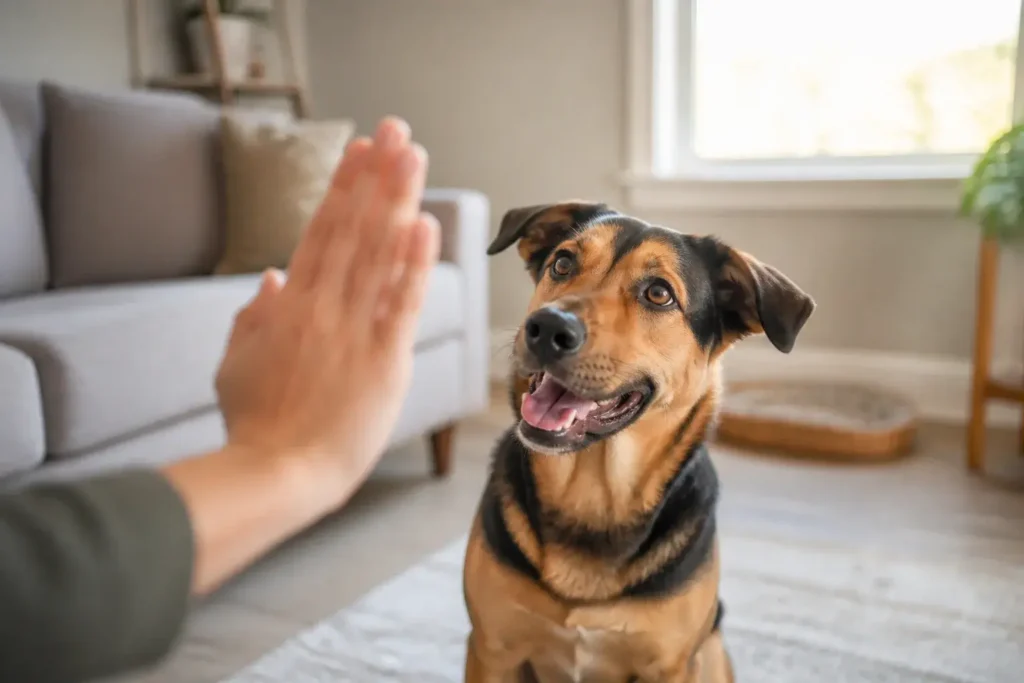
- Ask for “Sit.” Open your palm like a stop sign and say “Stay.”
- Count to one, “Yes!” treat. Release with a cheerful “Free!” or “All done!”
- Gradually add time, then a step back, then small distractions.
Golden rule: Return to your dog to pay them in place. Don’t call them out of a stay every time or they’ll anticipate breaking.
Troubleshooting Stay
- If they pop up, you went too far. Shorten time or reduce distractions.
- Use high-value rewards for harder reps. Think chicken or cheese.
Command #4: Come — Your Lifeline Recall
A rock-solid recall saves lives. Make it the happiest thing ever, every time.
- Start indoors. Say your recall word once, like “Come!”
- When your dog turns toward you, “Yes!” then shower them with treats and praise.
- Play recall ping-pong with a partner across the room.
Upgrade The Game
- Use a long line outside so they can’t practice ignoring you.
- Pay big for tough recalls: 3 to 5 treats or a short tug session.
- Never poison the cue: Don’t call them for baths, nail trims, or to end play. Go get them instead.
Command #5: Leave It — The “Don’t Eat The Sock” Button
Leave It prevents bad choices before they happen. You’ll use it a lot, IMO.
- Hold a treat in a closed fist. Let your dog sniff or paw. Say nothing.
- When they back off even a little, “Yes!” then reward from your other hand.
- Open your fist next round. If they move in, close it. When they wait, “Yes!” and reward from the other hand.
Real-life drill: Place a boring item on the floor. Say “Leave it.” When your dog looks up at you, jackpot and toss a better treat behind you to reset.
Leave It vs. Drop It
- Leave It: Don’t touch that thing.
- Drop It: Spit out the thing already in your mouth.
Command #6: Drop It — Save The Sock, Save The Day
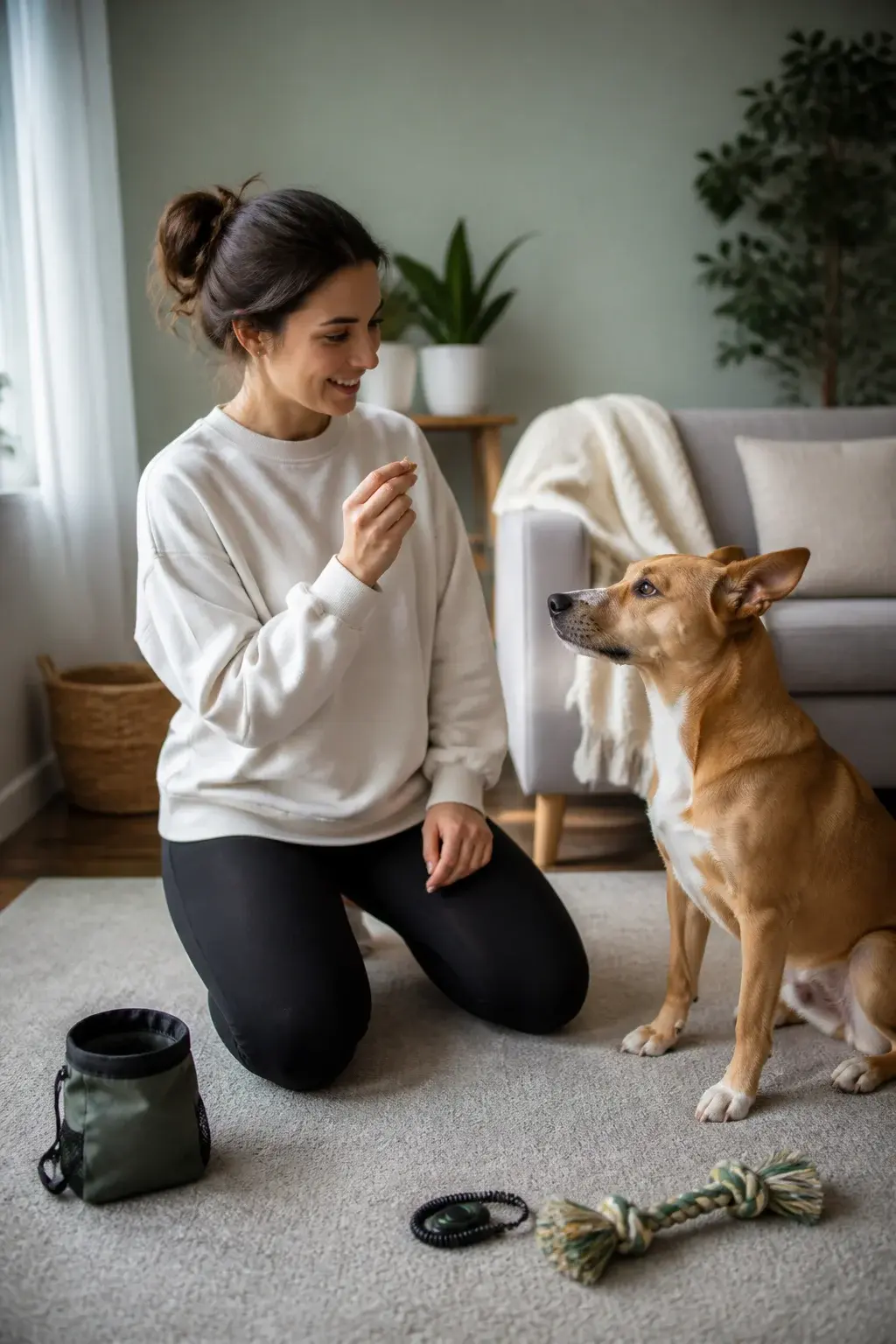
Teach Drop It with trades so your dog doesn’t guard.
- Offer a toy. Let them grab it.
- Present a treat to their nose. When they drop, “Yes!” and give the treat.
- Add the cue “Drop it.” Then give the toy back often so they don’t fear losing it.
FYI: If they sprint away, attach a light house line indoors to prevent keep-away.
Command #7: Loose-Leash Walking — No More Sled Team
You don’t need a perfect heel. You need a polite stroll without arm wrestling.
- Start in a quiet area. The moment the leash slackens, “Yes!” and treat by your leg.
- Use a high rate of reinforcement at first: treat every two to three steps of slack leash.
- When they pull, stop. Don’t yank. Wait for slack or lure them back, then move forward again.
Gear That Helps
- Front-clip harness redirects pulling without pressure on the neck.
- Treat pouch so you can pay fast. Speed matters.
- Sniff breaks as earned rewards. Sniffing is dog gold.
Proofing: Make Commands Work Everywhere
Dogs don’t generalize well. They think Sit in the kitchen is a different skill than Sit at the park. Let’s fix that.
- Change locations: living room, hallway, yard, sidewalk, pet-friendly stores.
- Vary your position: sitting, standing, on a chair, back turned.
- Add distractions: one squeak, a mild passerby, a tossed treat on the floor.
- Adjust payment: easy place = kibble, wild place = chicken party.
Three Ds Formula
– Duration: how long they hold it
– Distance: how far you are
– Distraction: how interesting the world feels
Only raise one D at a time for clean success.
Reading Your Dog: Find the Sweet Spot
Your dog talks with their body. Listen and training gets easier, IMO.
- Relaxed: soft eyes, loose tail, normal breathing. Great time to teach.
- Stressed or overexcited: dilated pupils, pulling, barking, ignoring food. Lower difficulty.
- Shut down: tucked tail, backing away. End session and try later with easier steps.
Reward Variety
Rotate paychecks to keep engagement high:
- Food: soft, smelly, tiny pieces
- Toys: quick tug or fetch
- Life rewards: door opens, sniff time, greeting a friend
Sample 7-Day Starter Plan
Keep it bite-sized. You’ll see progress fast.
- Day 1: Sit and marker word. Five 1-minute games.
- Day 2: Add Down. Sprinkle sits before meals and doors.
- Day 3: Start Come indoors. Play recall ping-pong.
- Day 4: Leave It with hand drill. Introduce short Stay.
- Day 5: Drop It with trades. Practice Come in yard on long line.
- Day 6: Loose-leash basics in a quiet area. Reward every few steps.
- Day 7: Light proofing: new room, mild distractions, celebrate wins.
Common Pitfalls And How To Dodge Them
- Overtraining: Dog checks out after 3 minutes. Keep sessions short and fun.
- Inconsistent cues: “Down,” “Lie Down,” and “Lay Down” aren’t the same to your dog. Pick one.
- Late rewards: If your timing lags, your dog won’t connect the dots. Mark first, then pay.
- Only training at home: Take it on the road once basics look easy indoors.
- Using the dog’s name as a command: Name means “look at me,” not “do a behavior.” Pair it with a cue.
FAQs
How many times a day should I train my dog?
Aim for 2 to 4 short sessions daily, each 3 to 5 minutes. You’ll also do quick “real-life reps” before meals, walks, or play. Frequent, tiny wins beat marathon sessions every time.
What treats work best for training?
Use soft, small, smelly treats your dog loves. Think tiny bits of chicken, cheese, or store-bought training treats. Rotate flavors so your dog stays excited, and adjust meal portions to avoid overfeeding.
My dog ignores me outside. What do I do?
Lower the difficulty. Use a long line, go to a quieter spot, and pay with higher-value rewards. Mark the moment your dog checks in with you and build up distractions slowly. Outside is basically a theme park for dogs, so budget bigger prizes.
Is it okay to use punishment when they mess up?
Skip it. Corrective methods create stress and confusion, and they can damage trust. Reinforce the right choices and manage the environment so the wrong choices don’t pay off. You’ll get faster, happier results, FYI.
When can I stop using treats?
Fade treats gradually once the behavior looks reliable. Shift to intermittent rewards, use life rewards like sniffing or greeting, and keep surprise jackpots sometimes. You wouldn’t work for free; neither should your dog.
Do I need a professional trainer?
If you feel stuck, frustrated, or worried about behavior like reactivity or guarding, a certified force-free trainer helps a ton. They’ll spot tiny issues and speed up progress. Think of it like hiring a coach, not admitting defeat.
Wrap-Up: Simple Cues, Happy Life
Teach Sit, Down, Stay, Come, Leave It, Drop It, and loose-leash skills with short, upbeat sessions. Pay generously at first, keep your cues consistent, and practice in new places as your dog improves. Keep it kind, keep it fun, and your dog will learn to love the game. And hey, enjoy the bragging rights when your dog nails that recall at the park.
About the Author

David
Blogger/YouTuber
A guitar nerd, the myth, the legend.