
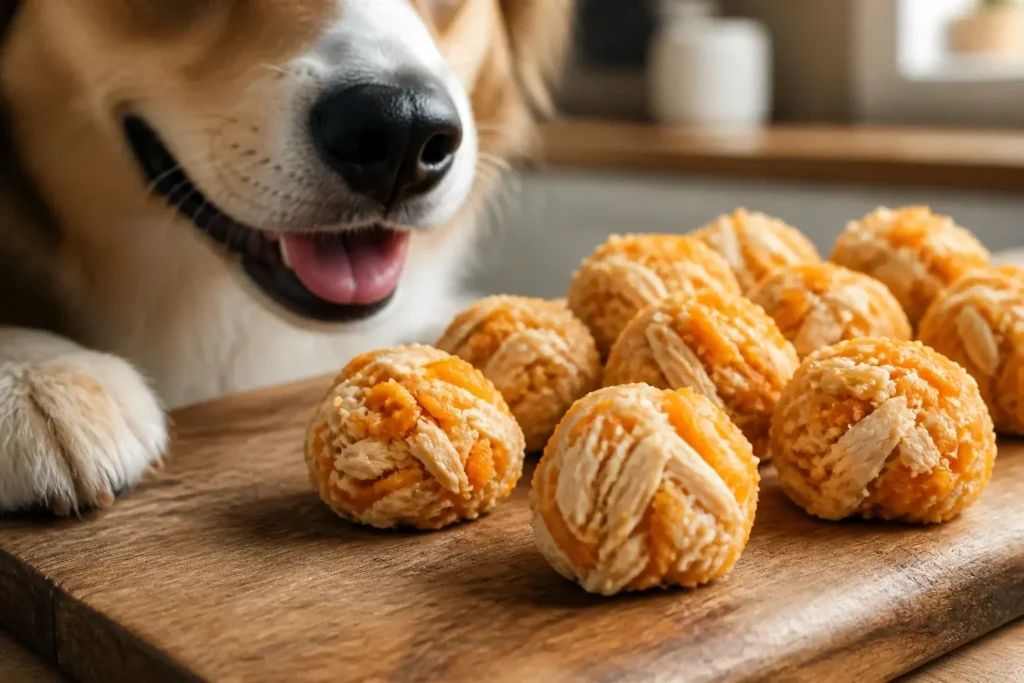
You want simple, healthy treats your dog will actually beg for? You’re in the right place.
We’re talking juicy chicken, crunchy carrots, and zero weird fillers.
Quick to make, high in lean protein, pup-approved. Let’s get into it.
Why Chicken and Carrot Make a Power Duo
Chicken brings lean, highly digestible protein that supports muscle maintenance and everyday zoomies. Carrots add crunch, fiber, and beta-carotene for eye and skin health. Together, they create a snack that’s light, tasty, and easy on most tummies.
Plus, you control the ingredients. No onion, garlic, salt, or mystery powders. Just whole foods your dog understands.
The Nutrition Snapshot
- Protein: Chicken breast packs muscle-supporting amino acids.
- Vitamins: Carrots bring vitamin A precursors and antioxidants.
- Fiber: A little helps stool quality and satiety.
- Low Fat: Great for training and for pups watching calories.
Safety First: Dog-Friendly Rules You Shouldn’t Skip
We all want happy bellies and zero vet visits, right? Keep these simple rules in mind.
- No seasonings like onion, garlic, chives, or salt. These are unsafe for dogs.
- Cook chicken thoroughly to 165°F until no pink remains.
- Chop carrots to safe sizes to prevent choking, especially for small dogs.
- Watch portions if your dog has pancreatitis or needs low-fat diets. Use breast meat and bake, not fry.
- Introduce slowly if your dog has a sensitive stomach. Start with tiny bits.
Recipe 1: Oven-Baked Chicken Carrot Bites
These bite-size snacks bake up tender and chewy. Perfect for training or everyday bribes.
Ingredients
- 1 pound skinless, boneless chicken breast, finely chopped or ground
- 1 cup very finely grated carrots
- 1 large egg (optional binder)
- 2 tablespoons oat flour or finely ground rolled oats
- 1 tablespoon plain unsweetened applesauce or water, as needed
Instructions
- Preheat oven to 350°F. Line a baking sheet with parchment.
- Mix chicken, carrots, egg, and oat flour. Add a splash of applesauce or water if dry. The mix should hold together like a soft meatball.
- Pinch off 1-teaspoon portions and flatten into small coins about 1/4 inch thick. Smaller coins bake evenly and make great training treats.
- Bake 15 to 18 minutes until firm and cooked through. Internal temp 165°F, edges just turning golden.
- Cool completely. Store in the fridge up to 4 days or freeze up to 2 months.
Why This Works
- Low fat, high protein: Chicken breast keeps calories in check.
- Carrot moisture: Gives a soft texture so treats don’t crumble in your pocket.
- Oats: Gentle on tummies and help bind without wheat.
Recipe 2: Crispy Chicken-Carrot Jerky Strips
If your dog loves crunch, this is the one. Minimal ingredients, big flavor.
Ingredients
- 2 large chicken breasts, sliced lengthwise into 1/4-inch strips
- 1/2 cup carrot puree (steamed carrots blended with a splash of water)
Instructions
- Preheat oven to 200°F or use a dehydrator set to 160°F.
- Pat chicken strips dry. Brush both sides lightly with carrot puree.
- Arrange on a wire rack set over a baking sheet. This helps airflow and crisping.
- Dry in the oven 2.5 to 3.5 hours, flipping halfway, until completely dry and leathery with no soft spots.
- Cool fully before storing. Keep in an airtight container in the fridge up to 2 weeks, or freeze for longer.
Pro Tips
- Thickness matters: Thinner slices dry faster and safer.
- Done test: Tear a piece. It should pull apart fibrously with no moisture beads.
Recipe 3: No-Bake Frozen Chicken-Carrot Pupsicles
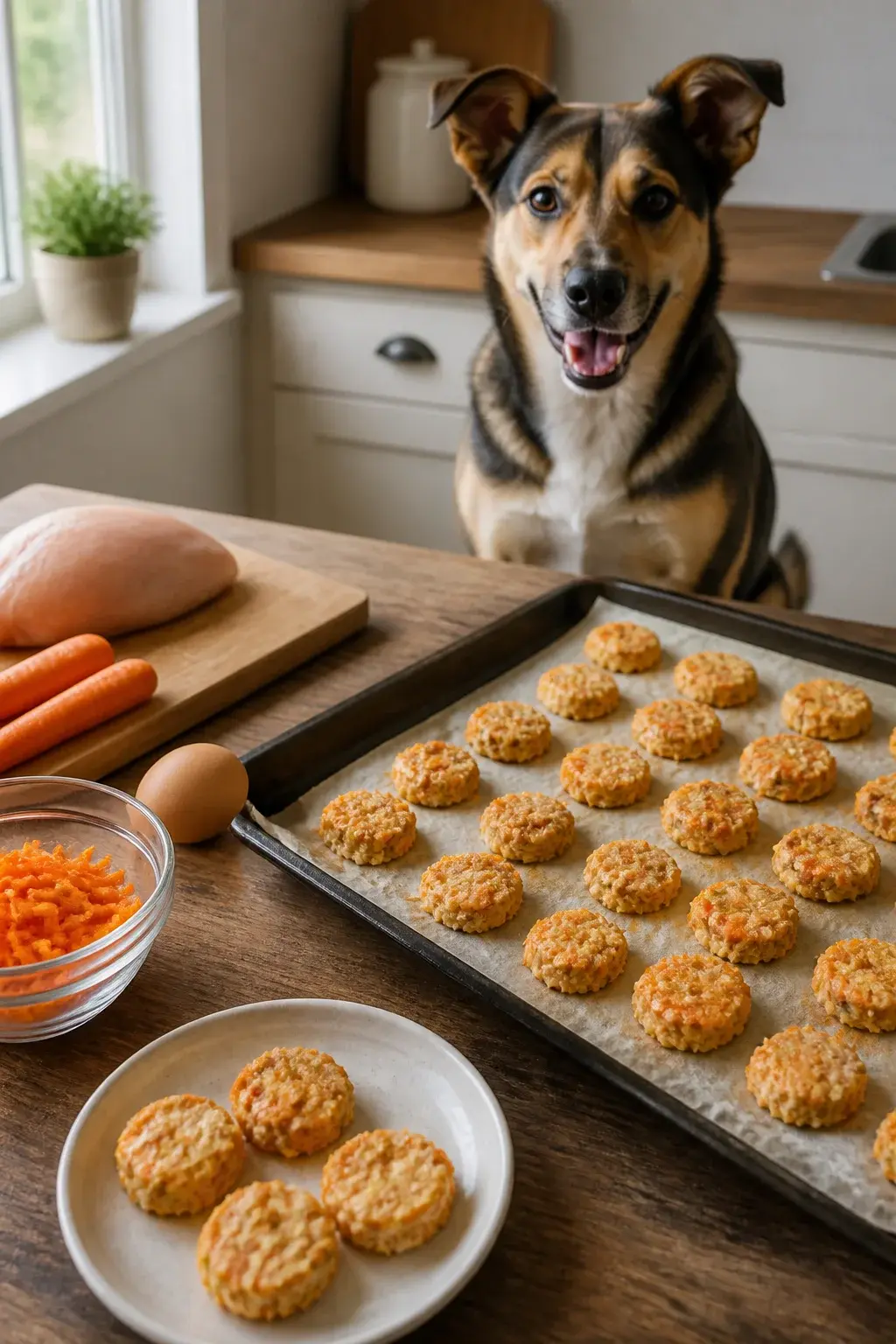
Hot day? Your dog deserves a chilly treat. These come together fast.
Ingredients
- 1 cup cooked, shredded chicken breast
- 1 cup very finely grated carrot
- 1/2 to 3/4 cup low-sodium, onion-free chicken broth or water
- 2 tablespoons plain unsweetened yogurt (optional for creaminess; skip if dairy-sensitive)
Instructions
- Stir everything in a bowl. Add enough liquid to make a spoonable mixture.
- Spoon into silicone molds or ice cube trays.
- Freeze 3 to 4 hours until solid.
- Serve one or two cubes depending on dog size.
Serving Idea
Drop a cube into your dog’s slow feeder to make mealtime more exciting. IMO, enrichment plus protein is a double win.
Smart Portioning: Keep Treats, Well, Treats
Treats should stay under 10% of your dog’s daily calories. Training days can sneak up fast, so plan ahead.
Quick Guide
- Tiny dogs (under 10 lb): 1 to 2 small coins or one jerky strip per day.
- Small dogs (10 to 20 lb): 2 to 4 coins or 1 to 2 jerky strips.
- Medium dogs (20 to 50 lb): 3 to 6 coins or 2 to 3 jerky strips.
- Large dogs (50+ lb): 5 to 10 coins or 3 to 5 strips.
FYI, adjust if your dog trains hard that day or needs weight management. Bodies vary.
Add-Ins That Stay Dog-Safe
Want to mix it up? Keep it simple and safe.
- Blueberries: A handful, mashed into the mixture for antioxidants.
- Parsley: A pinch of chopped fresh parsley for breath, not a salad.
- Pumpkin puree: 1 to 2 tablespoons for fiber and moisture.
- Flaxseed meal: 1 teaspoon for omega-3s and binding.
Things to Skip
- Salt, garlic powder, onion powder, artificial sweeteners like xylitol.
- High-fat add-ins like bacon or cheese if your dog needs low fat.
- Too much dairy if your pup gets gassy. Your couch will thank you.
Training Uses: Make Every Bite Count
Turn these snacks into training gold. Small, soft coins work best for rapid rewards.
- Jackpot moments: Save a special jerky strip for a big win like a perfect recall.
- Sniff games: Break coins into tiny bits and scatter on grass or a snuffle mat.
- Pill pockets: Wrap a mini piece around small tablets and seal.
Storage, Shelf Life, and Food Safety
You cooked with care, so store with care.
- Fridge: Baked bites last 3 to 4 days in a sealed container.
- Freezer: Up to 2 months. Thaw what you need for 24 hours in the fridge.
- Jerky: Refrigerate up to 2 weeks; freeze for longer. If it bends and feels moist, dry it more.
- Label: Date your containers. Future you will appreciate it.
FAQ
Can puppies eat chicken carrot protein snacks?
Yes, in tiny portions. Use soft, well-cooked pieces and avoid hard jerky for very young pups. Treats should be small so they don’t displace balanced puppy meals.
What if my dog has a chicken sensitivity?
Swap chicken with turkey breast or lean pork loin. Keep the same cooking method and portion size. If your dog reacts to multiple proteins, chat with your vet before experimenting.
Are raw carrots safe?
Raw carrots are fine for many dogs, but chop them small to prevent choking. For sensitive stomachs, steam carrots until tender. Cooked carrots digest easier.
How many treats can my dog have daily?
Stick to under 10% of daily calories. If you use a lot of training treats, reduce meal portions slightly. We want a happy pup, not a muffin-shaped one.
Can I add peanut butter?
A tiny smear works, but choose unsalted peanut butter with no xylitol. It adds fat and calories, so use sparingly, IMO.
Do these recipes work for dogs with pancreatitis?
Maybe, with caution. Use skinless chicken breast, bake or poach, and keep portions very small. Always follow your vet’s fat and calorie guidance for your specific dog.
Conclusion
Chicken carrot protein snacks check every box: quick to make, simple ingredients, and big tail-wag energy. Start with the baked bites, stash a batch of jerky, and keep pupsicles on standby for hot afternoons. Your dog gets clean protein and crunch, and you get that proud “I made this” moment. Win-win, FYI.
About the Author

David
Blogger/YouTuber
A guitar nerd, the myth, the legend.