Let’s be real: dogs bring joy… and mysterious carpet funk. You sniff, they wag, and the rug tells a story you did not ask to hear.
Good news: you can kick the stink without harsh chemicals or $$$ cleaners. I’ll show you easy, dog-safe recipes and when to call in the big guns.
Ready to make your place smell like a home again and not a kennel? Let’s fix it.
Why Your Carpet Smells Like Dog (Even After You Clean)
Dogs roll, drool, nap, and occasionally “whoops” on the rug. Carpets trap proteins and oils from fur, paws, and accidents, then hold onto them like a grudge. Humidity and foot traffic make odors bloom again.
You need two things: something to absorb stink and something to neutralize it. Bonus points if it’s safe for your pupper and your carpet’s dye.
The Gold-Standard DIY Odor Eliminator (Dog-Safe and Carpet-Friendly)
This simple combo tackles everyday doggy odors from normal life, not fresh pee. Use it for “my carpet smells like dog” vibes.
Ingredients
- 1 cup baking soda
- 10–15 drops dog-safe essential oil (optional, see notes)
- Fine-mesh sieve or shaker jar
- Vacuum with a clean bag/filter
Directions
- Prep the area: Vacuum slowly to pull up hair, dander, and crumbs. Odor fighters work better when the carpet’s not a crumb buffet.
- Mix: Combine baking soda with pet-safe essential oil only if you truly want scent. IMO plain baking soda is best. If you do add oil, stick to cedarwood (Atlas), frankincense, or chamomile in tiny amounts and skip anything like tea tree, eucalyptus, clove, or peppermint. When in doubt, leave oils out.
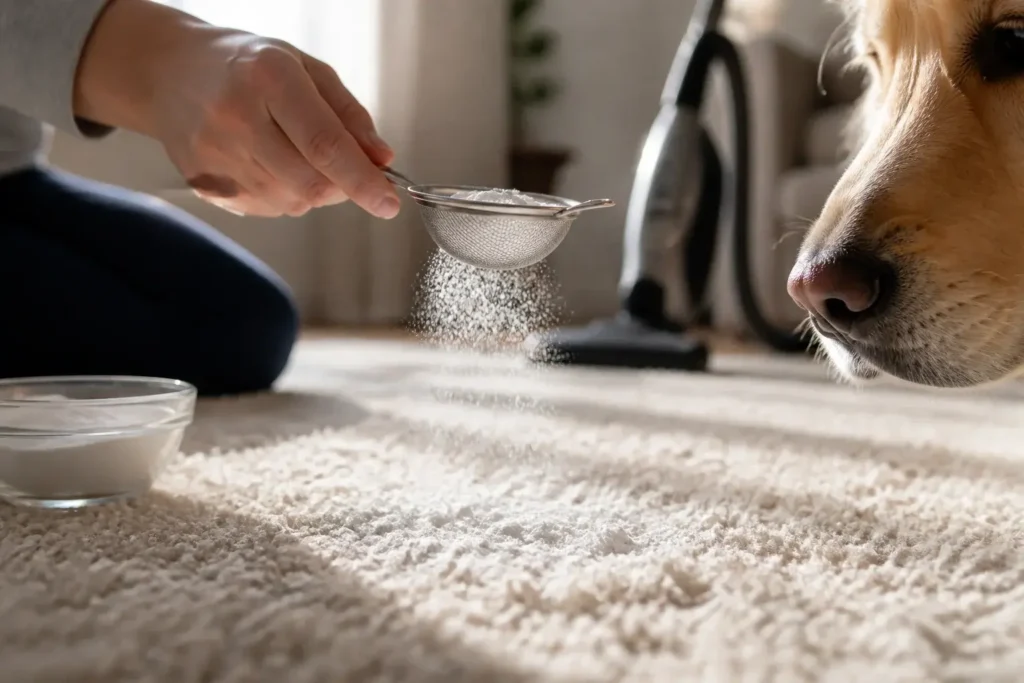
- Apply: Sift a light, even layer across the smelly area. Don’t cake it.
- Wait: Let it sit 30–60 minutes. For deep funk, go up to 3 hours.
- Vacuum thoroughly: Go over the area multiple directions to remove all powder.
Why it works
- Baking soda absorbs acids and basey odors while pulling moisture and oils from fibers.
- Light scent (if used safely) offers a quick “ahh” without covering up problems.
Important Safety Notes
- Keep pets out of the room while powder sits. You don’t want your dog rolling in it or sniffing clouds.
- Vacuum thoroughly before letting your dog back on the carpet.
- Skip essential oils if your dog has allergies, asthma, or you aren’t 100% sure about safety. FYI many essential oils can harm pets if concentrated or ingested.
For Old Urine Odors: The Enzyme Attack Plan
If your dog had an accident last week (or last year) and the area still smells when it’s humid, you need enzymes. DIY chemistry alone won’t break down urine crystals. Use a pet-specific enzyme cleaner designed for carpets.
How to use it right
- Blot first if the spot is fresh. Use paper towels or an old towel. Don’t rub and don’t use steam.
- Saturate with enzyme cleaner. It must reach the pad beneath the carpet. Use enough liquid to match the original spill size.
- Cover with plastic (like cling film) and let it work 8–24 hours so it doesn’t evaporate before the enzymes finish their snack.
- Air dry, then vacuum. Repeat for stubborn ghosts.
Why Not DIY for Urine?
Vinegar and baking soda change odor temporarily but don’t fully break down uric acid crystals. Those crystals reactivate with humidity and boom, Eau de Dog returns. Enzymes munch those molecules for good.
Quick Deodorizing Spritz (No Heavy Perfume, Dog-Friendly)
This fabric refresher works between deep cleans. It won’t fix urine, but it tones down general musk and “wet dog after a walk” vibes.
Ingredients
- 1 cup distilled water
- 1 tablespoon vodka or rubbing alcohol (helps drying and disperses scent)
- 1 teaspoon baking soda
- Optional: 2–3 drops dog-safe essential oil or a splash of unscented pet-safe hydrosol
- Spray bottle with a fine mist
Directions
- Mix water, alcohol, and baking soda until dissolved.
- Optional safe scent: add 2–3 drops max, or skip entirely.
- Spot test in a hidden area for colorfastness.
- Lightly mist the carpet from 12 inches away. Don’t soak. Let dry.
Pro tip: Keep pets out until dry. No licking the rug, please and thank you.
Deep Clean Day: The DIY Routine That Actually Pays Off
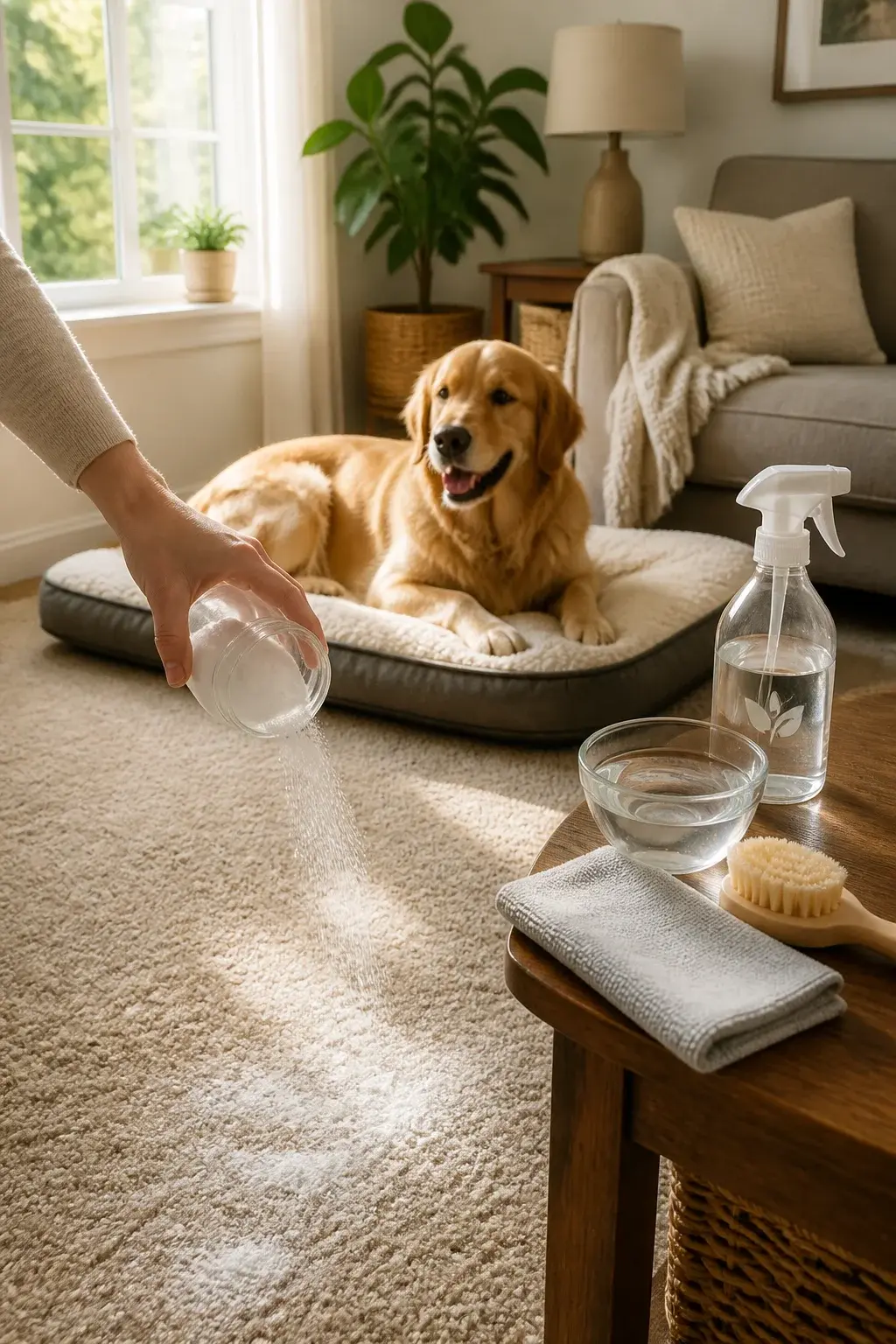
Do this monthly if you have a heavy shedder or a drooler. It keeps odors from building and makes your home smell like you actually have your life together.
- Declutter and dry vacuum slowly. Multiple passes. Change the bag or empty the canister after.
- Baking soda treatment as in Section 2. Let it sit, then vacuum again.
- Spot-treat stains with an enzyme cleaner. Let it work fully before moving on.
- Rinse-extract if needed: If you own a carpet extractor, use plain warm water or a pet-safe solution. Do not use hot steam on urine spots, because it can set the odor.
- Dry with airflow: Fans, windows, HVAC. Moisture equals mildew equals smell.
What About Vinegar?
Vinegar can neutralize some odors, but it can also set certain dyes and leave a lingering salad smell. Also, dogs might pee again over a strong vinegar scent. IMO, save vinegar for hard floors and laundry, not carpets.
Prevent Odor Like a Pro (Future You Will Thank You)
- Groom regularly: Brush out loose fur and dander. Clean paws after walks, especially in rain or snow.
- Wash dog beds and blankets weekly: Use hot water if the fabric allows. Toss tennis balls in the dryer to fluff.
- Add an air purifier with a HEPA filter in the main hangout room.
- Use washable area rugs on top of wall-to-wall carpet in high-traffic zones.
- Hydration and diet can affect odor. If your dog’s smell changes suddenly, check with your vet.
Signs You Need a Pro
- Persistent urine smell that returns after enzyme treatments
- Large areas soaked to the pad (hello, puppy days)
- Mystery smells plus visible mold or repeated dampness
Dog-Safe Scent Options (If You Really Want a Hint of Nice)
I get it. You want fresh, not fragrance overload. The safest move is unscented. If you still want a little something, keep it minimal.
- Hydrosols like chamomile or lavender hydrosol are gentler than essential oils. Use sparingly, and test first.
- If you use an essential oil, stick to 1–2 drops per cup of baking soda and avoid potent or risky oils. Keep your dog out during application and vacuum thoroughly.
- Watch your dog: sneezing, pawing, or rubbing the carpet means the scent is too strong. When in doubt, go scent-free.
Common Mistakes That Keep Carpets Smelly
- Half-vacuuming: Quick passes don’t lift embedded hair and dander.
- Using steam on urine: Heat can bake the odor into the fibers and pad.
- Masking with heavy perfume: Your dog will hate it, and it won’t solve anything.
- Skipping the dry time: Damp carpets trap smells and invite mildew.
- Overdoing baking soda: Caking it in can clog vacuums and be tough to remove.
FAQs
Is baking soda safe for dogs?
Used correctly, yes. Keep pets out while the powder sits, then vacuum thoroughly before they return. Do not let dogs lick or roll in it. Used as a deodorizer in small amounts and cleaned up, it’s fine.
Can I use essential oils around dogs?
Many essential oils can irritate or harm pets if concentrated or ingested. If you choose to use any, stick to extremely small amounts, avoid risky oils like tea tree and eucalyptus, and keep pets away during application. Honestly, unscented is the safest bet, IMO.
Will vinegar remove dog urine smell from carpet?
Vinegar might reduce the odor temporarily, but it doesn’t break down uric acid crystals. Use a pet enzyme cleaner that can reach the carpet pad and let it sit long enough to work.
What if the smell keeps coming back?
That usually means residue remains in the pad. Re-treat with an enzyme cleaner and give it a long dwell time under plastic. If it still returns, you may need professional extraction or pad replacement in that spot.
Can I use baking soda in a carpet cleaner?
Nope. It can gum up machines. Use baking soda as a dry treatment, vacuum it up, then if needed use a carpet extractor with plain water or a pet-safe detergent.
How often should I deodorize my carpet with a dog at home?
Light baking soda treatments monthly work well for most homes. High-traffic households or multiple dogs might do biweekly. Always follow with a slow, thorough vacuum.
Conclusion
You don’t need harsh chemicals to evict doggy odors from your carpet. Tackle everyday funk with a smart baking soda routine, save enzymes for urine, and keep things dry and well-vacuumed. Add a whisper of safe scent if you must, but unscented wins for most pups. Do this consistently and your carpet will smell clean, your dog will stay comfy, and your nose will finally relax, FYI.
About the Author

David
Blogger/YouTuber
A guitar nerd, the myth, the legend.